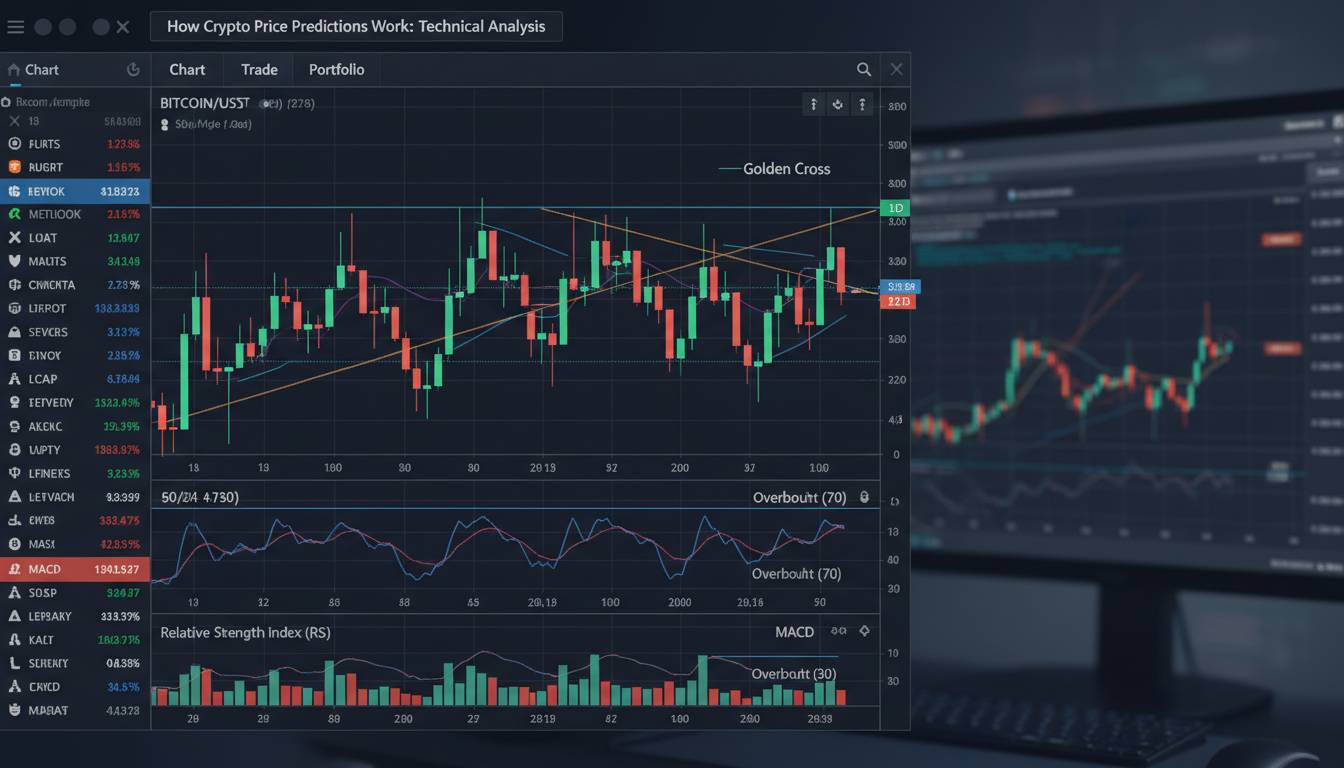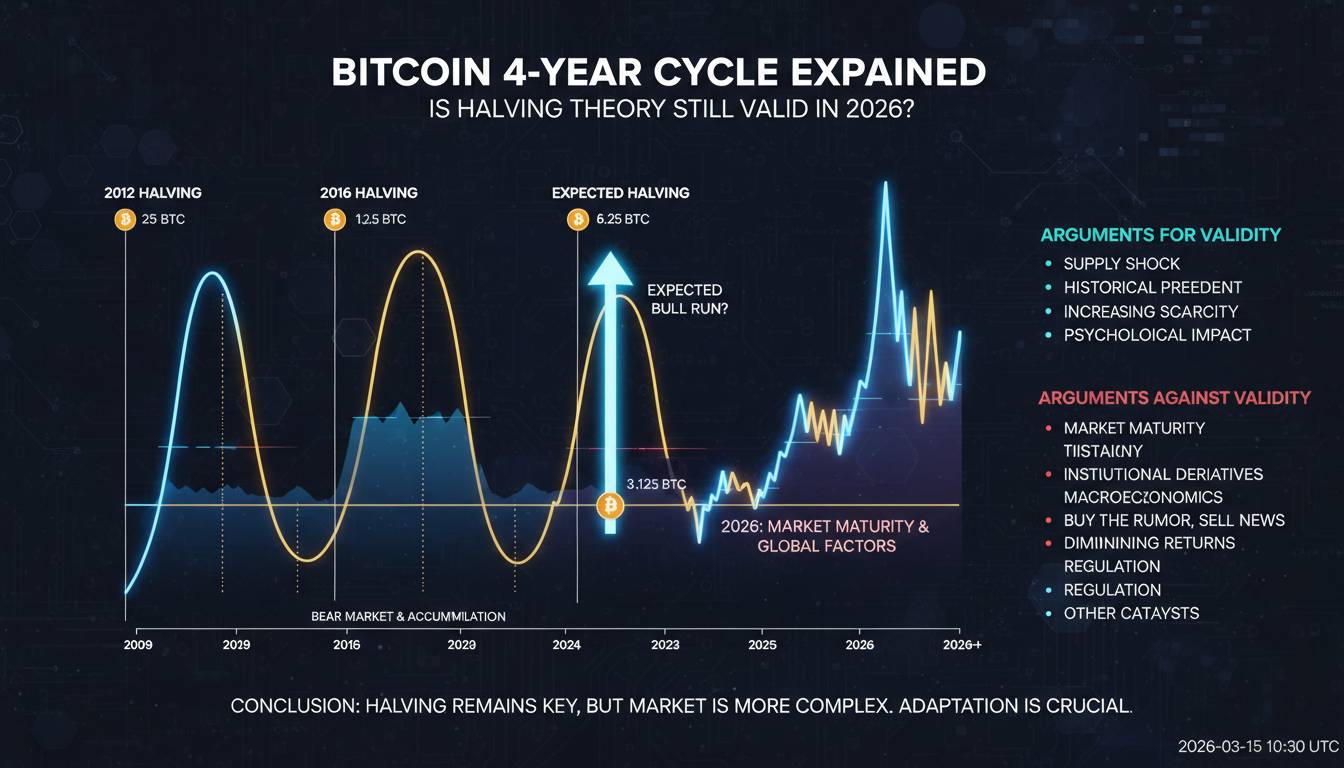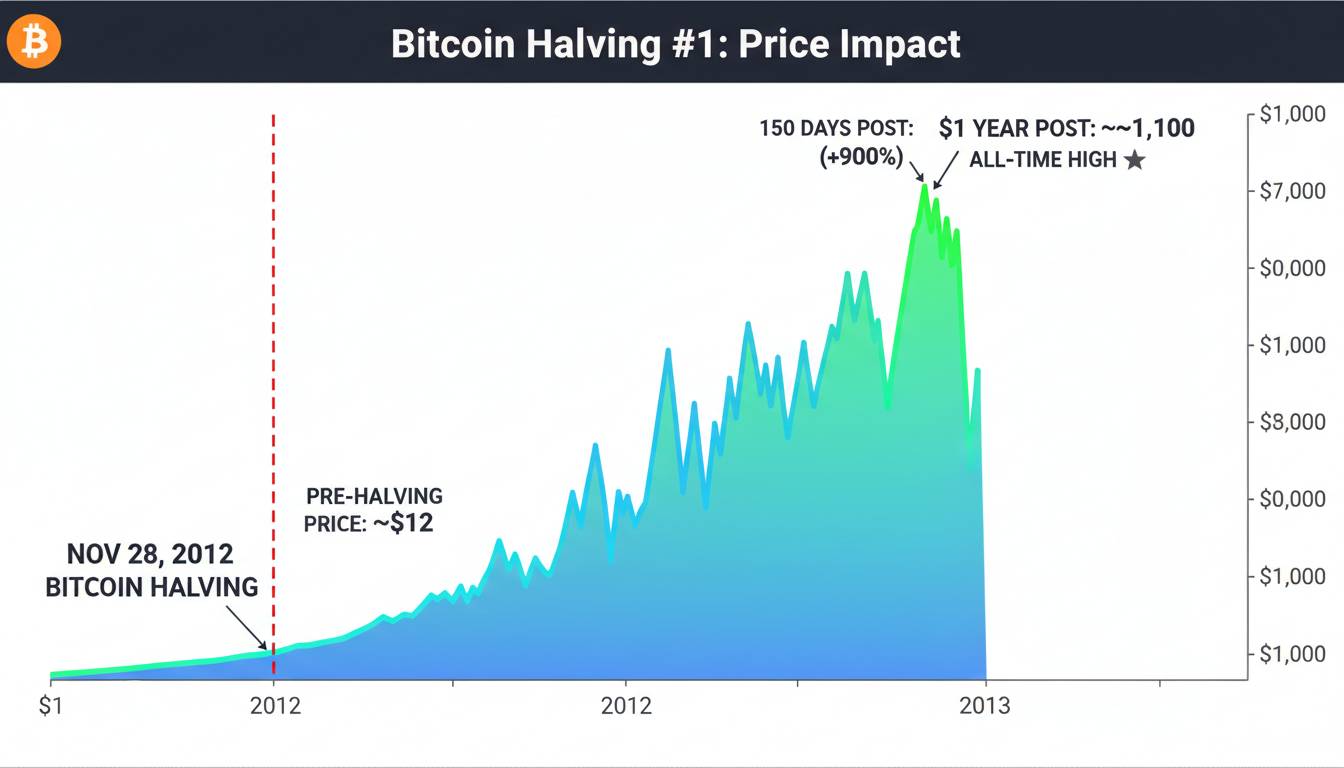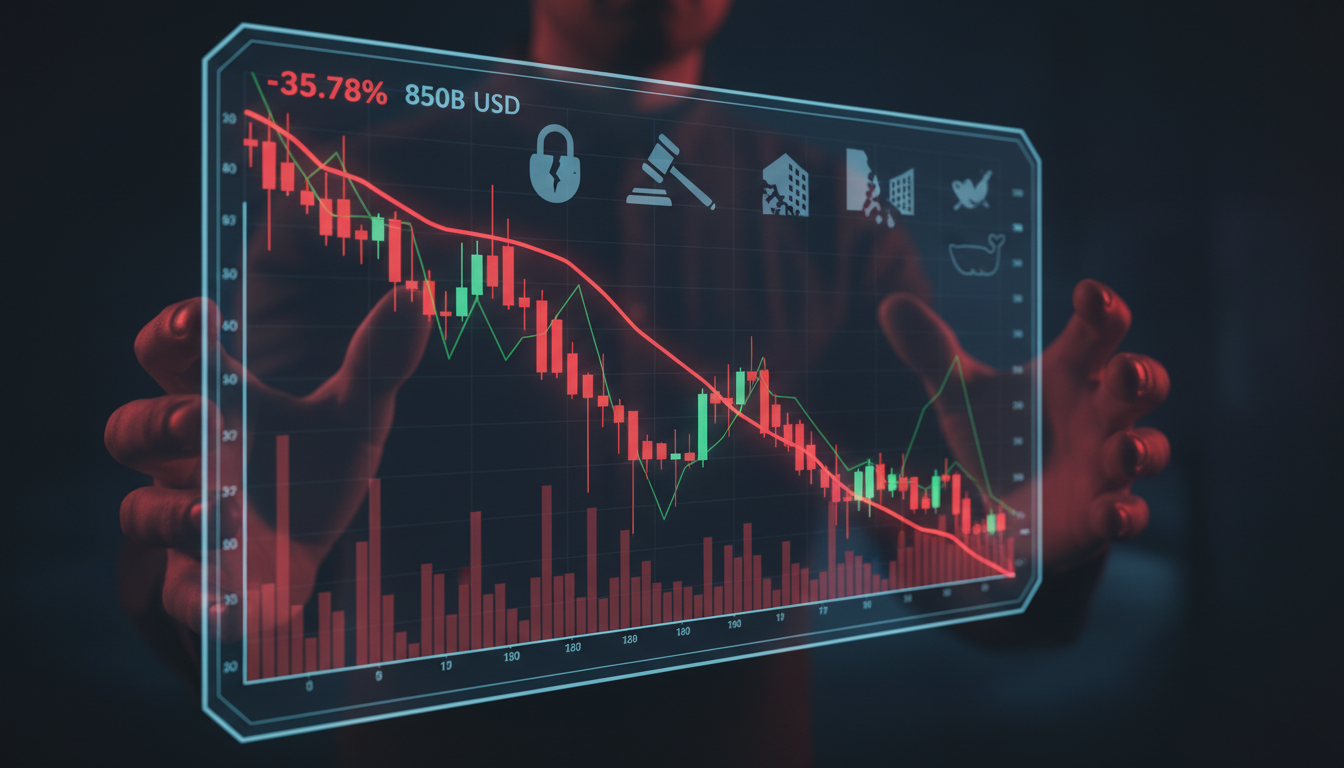

The cryptocurrency space runs on prediction addiction. Every day, someone on Twitter promises $500K Bitcoin by December. Every week, a YouTuber drops a “guaranteed” price target with the confidence of a used car salesman. And every month, some analyst with a cryptic username posts a chart that “proven” will print in 72 hours.
Here’s the uncomfortable truth: most Bitcoin price predictions are worthless at best, and deliberately manipulative at worst. But that doesn’t mean all predictions are useless—it means you need a framework to separate signal from sophisticated nonsense. I’ve spent years watching this market, and what I’ve learned is that manipulation isn’t some rare exception. It’s the default mode. The question isn’t whether you’re being manipulated. It’s whether you can spot it in time.
The Economics of Bad Predictions
Before diving into manipulation tactics, you need to understand why they exist in the first place. The prediction economy surrounding Bitcoin is massive, and “being wrong” carries almost no consequences.
Consider the incentive structure. A trader can post 50 different predictions across forums, social media, and newsletters. When 48 of them fail, nobody remembers. When 2 happen to hit—even loosely—the screenshots get preserved, shared, and used as proof of “expertise.” This is called survivorship bias, and it’s the foundation of the entire prediction industrial complex.
The real money in Bitcoin predictions often isn’t from trading. It’s from attention. A YouTuber with 500,000 subscribers earns more from ad revenue and sponsorships when they post dramatic price predictions than from any actual trading. The more extreme the prediction, the more engagement it generates. The algorithm rewards certainty, not accuracy.
There’s also the matter of conflict of interest that’s rarely discussed. Many loud Bitcoin “analysts” are simultaneously running crypto funds, selling paid courses, or promoting tokens they hold. A prediction that drives retail FOMO into a token they own? That’s not analysis—that’s a distribution mechanism. I’ll get into specific examples of this later, but the pattern is consistent enough that you should assume conflict of interest until proven otherwise.
The uncomfortable reality is that the prediction market is structurally designed to reward confidence and volume over precision. Understanding this changes how you evaluate any prediction.
Seven Manipulation Tactics You Need to Recognize
Wash Trading Signals
Wash trading is one of the oldest manipulation tricks in markets, and crypto has made it embarrassingly easy to execute. The concept is simple: someone trades with themselves to create artificial volume and movement. In Bitcoin markets, this happens at scale on exchanges with weak oversight.
How it shows up in predictions: You’ll see an analyst point to “massive buying volume” on a specific exchange—usually one with low liquidity and questionable jurisdiction—as proof that “institutional money is entering.” But that volume might be the same wallet moving Bitcoin back and forth 100 times. There’s no way to know for certain without on-chain analysis, which brings us to a critical point: treating exchange volume as a pure signal without understanding exchange-specific dynamics is naive at best and manipulated at worst.
A real example from recent years: the BitMEX and Binance futures markets have historically shown suspicious correlation patterns during volatile periods, with high open interest but questionable actual trading behind it. Analysts who cited these numbers as “proof” of directional moves were either naive or complicit.
Influencer Pump Schemes
The influencer pump is perhaps the most visible manipulation tactic, and it’s evolved beyond simple coordinated tweets. These days, it works through a playbook: a group of influencers—often with overlapping sponsorship deals—begin mentioning a specific token or price level simultaneously. The coordination is subtle enough to avoid detection but obvious enough to move markets in the short term.
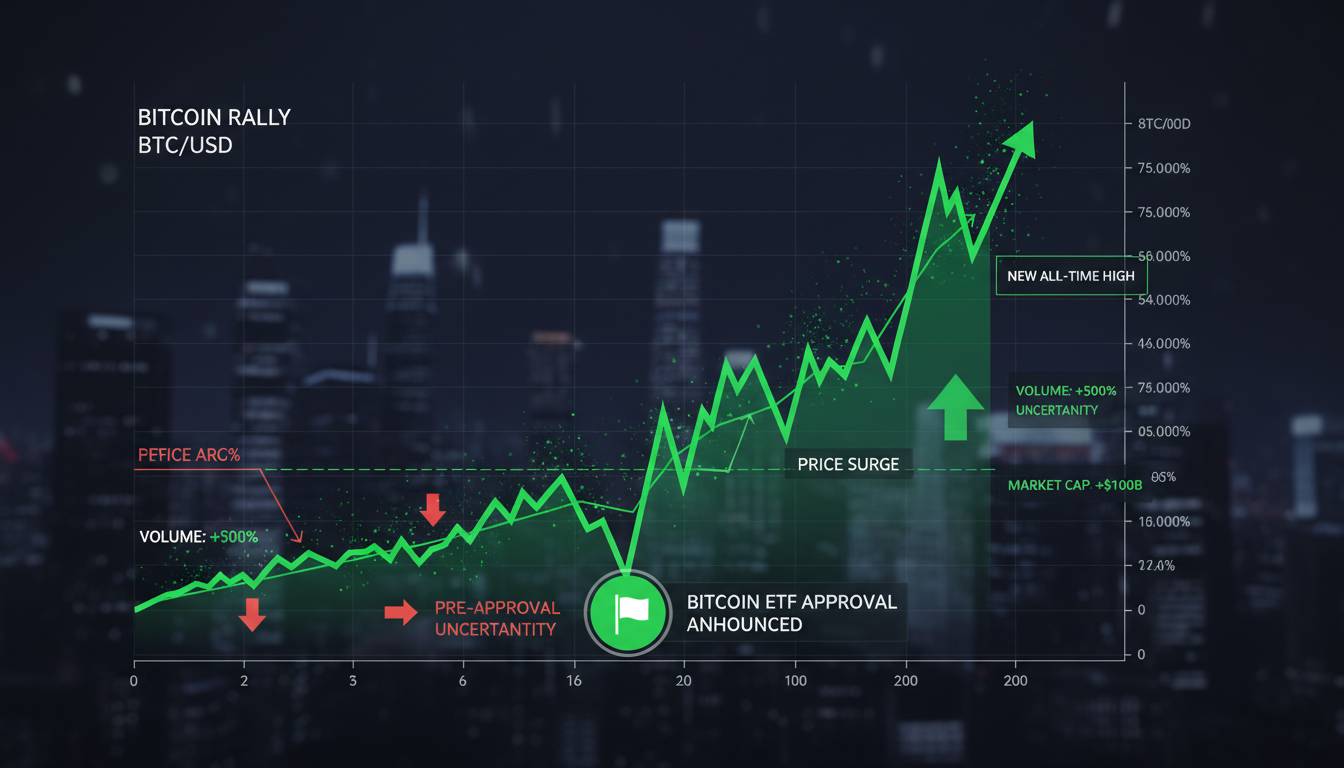
The mechanism is simple: when enough accounts with large followings mention a target simultaneously, their combined audience creates actual buying pressure. The prediction becomes self-fulfilling in the short term, which then gets cited as “proof” the prediction was accurate. Except the prediction was never about genuine analysis—it was about coordination.
I want to be clear about something: not every influencer is deliberately manipulative. Many genuinely believe what they’re saying. But the structure of influencer economics—where engagement rewards certainty and drama—creates predictable patterns of manipulation regardless of intent.
Coordinated FUD Campaigns
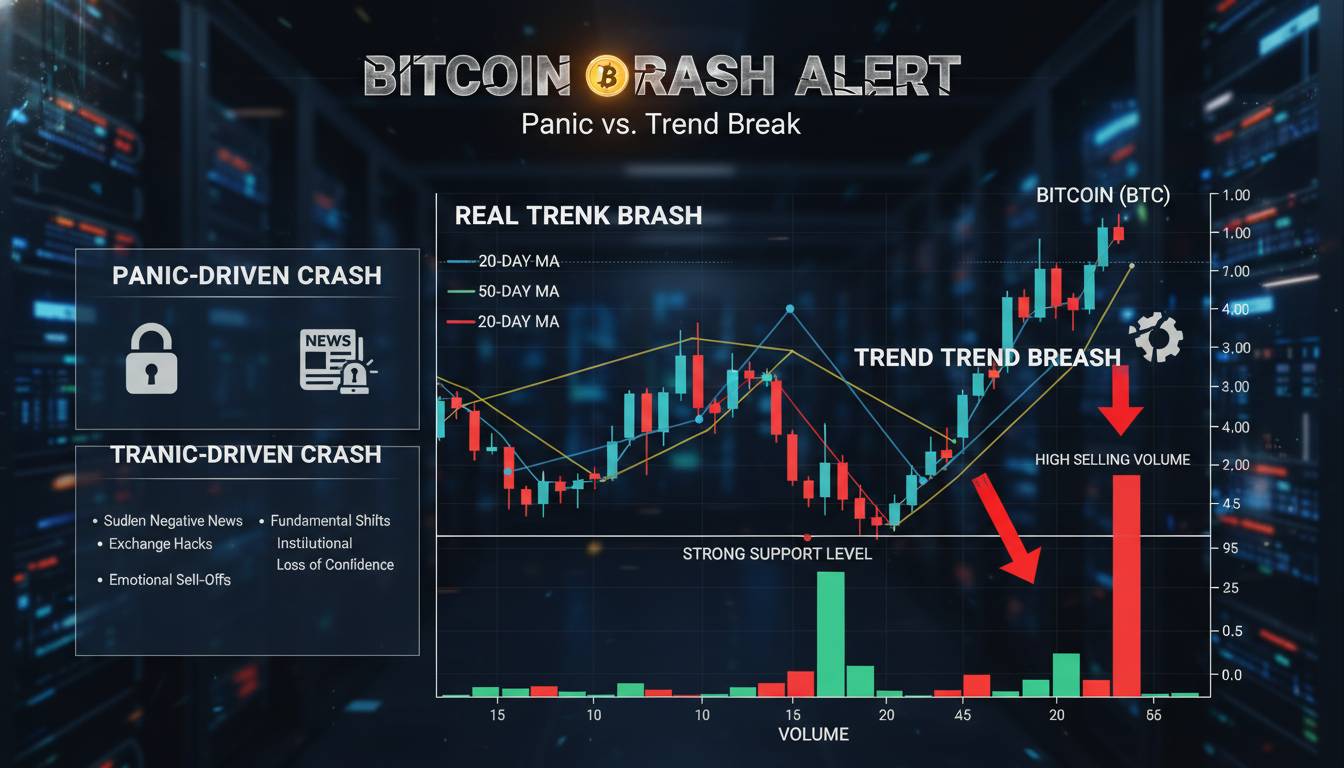
Fear, Uncertainty, and Doubt aren’t just a crypto acronym—they’re a deliberate market manipulation strategy. I’ve watched this happen repeatedly: negative news (real or exaggerated) gets amplified across coordinated channels simultaneously, creating a cascade of selling that benefits those who positioned short or accumulated during the panic.
The sophisticated version doesn’t even involve fake news. It involves taking a real regulatory announcement, a real security incident, or a real market concern and amplifying it 10x beyond its actual impact. The information itself might be true. The interpretation is manipulated.
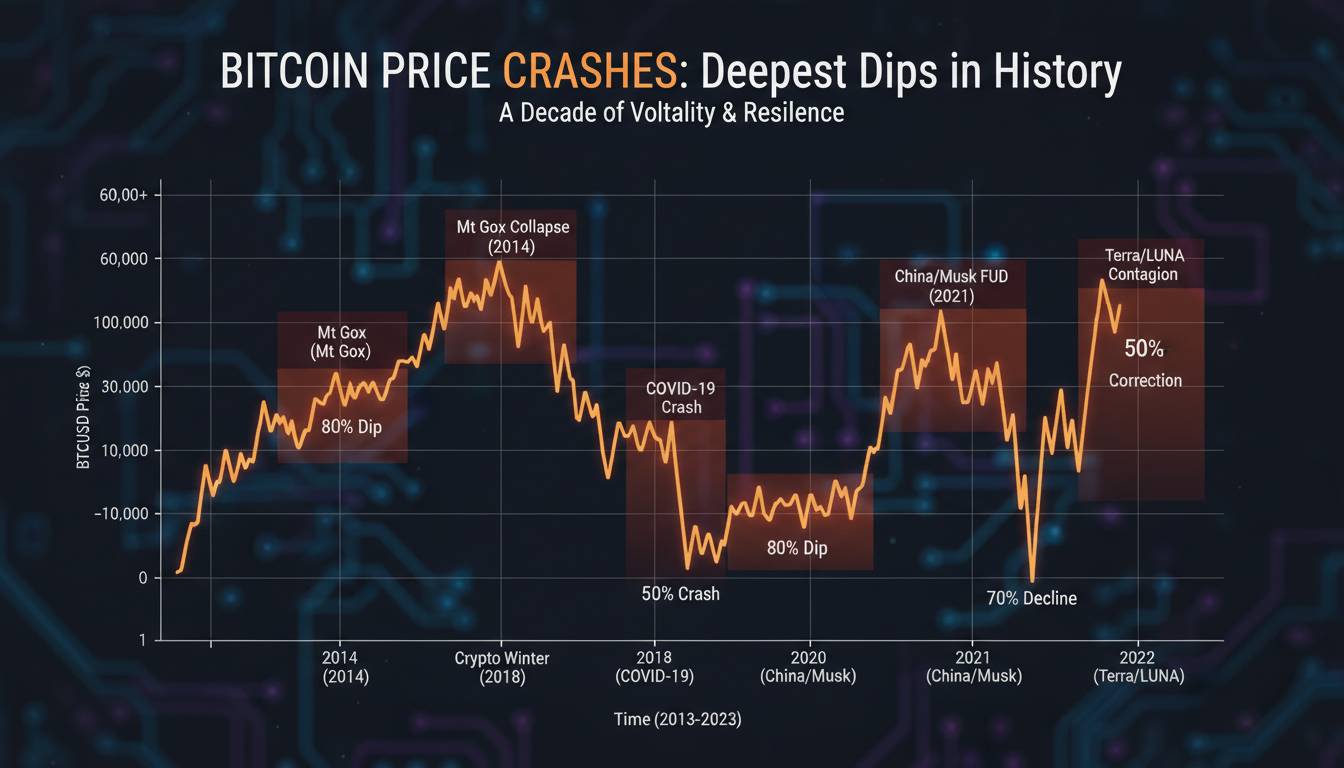
After the FTX collapse in November 2022, legitimate concerns about exchange transparency became amplified into full-blown “crypto is dead” narratives. Some of this was organic sentiment. Much of it was coordinated positioning for assets that would benefit from Bitcoin hitting new lows. The predictions that “Bitcoin will go to $10K” that circulated during that period weren’t sophisticated analysis—they were manipulated narratives designed to create the very outcome they predicted.
Futures Market Manipulation
This one is more technical but critically important. The Bitcoin futures market—particularly the CME and large crypto-native exchanges—has grown large enough that sophisticated players can influence spot prices through futures positioning.
The mechanism works like this: a large trader accumulates significant positions in Bitcoin futures contracts. They then use this position to influence expectations about future price movement. Through strategic buying or selling in spot markets (often using algorithmic trading), they can push prices in directions that liquidate leveraged positions in their favor. The prediction that “Bitcoin will break support” might not be analysis at all—it might be a self-fulfilling prophecy created by the same people making the prediction.
This is harder to prove definitively, and it operates at levels most retail traders can’t access. But the correlation between extreme futures positioning and subsequent price moves is well-documented enough that treating “big futures positions” as reliable signals is dangerous.
Oracle and Data Manipulation
Bitcoin’s price doesn’t exist in a vacuum—it’s aggregated from multiple exchange feeds into indices that everything from decentralized finance protocols to institutional products uses. Manipulation of these data feeds is a real vulnerability, and it’s been exploited.
The most common version involves “oracles” (data feeds that provide price information to smart contracts) being manipulated through flash loans or coordinated trading on low-liquidity exchanges that are included in price indices. When a DeFi protocol relies on a price feed that’s been manipulated, the consequences can be catastrophic—liquidation cascades, protocol failures, and massive losses.
For prediction purposes, this means you should be skeptical of any analysis that cites prices from obscure exchanges as significant data points. The more an analysis relies on data from exchanges with low volume and weak security, the more likely it is to be either manipulated or based on unreliable information.
Social Media Bot Amplification
The crypto Twitter/X ecosystem has more bots than any legitimate social platform. This isn’t opinion—it’s measurable. Academic research has documented that a significant percentage of engagement on cryptocurrency content comes from inauthentic accounts.
What this means for predictions: when you see a prediction gaining traction, ask yourself how much of the engagement is real. A tweet with 10,000 likes and 2,000 retweets might have 500 real human accounts behind it. The rest are bots designed to amplify the message. This artificial amplification creates the appearance of consensus or certainty that doesn’t actually exist.
The manipulation works in both directions. Bulls use it to create false momentum. Bears use it to amplify FUD. The sophistication of these operations has increased dramatically since 2020, and there’s no sign of it slowing down.
Sponsored Narrative Construction
Perhaps the most insidious manipulation tactic is the slowest: sponsored narrative construction. This involves building an analyst or outlet’s reputation over time specifically to create a platform from which future manipulations can be launched.
Here’s how it works: an account or analyst spends months or years posting reasonable, measured analysis. They build trust. They develop a following that believes in their methodology. Then, at a strategically chosen moment, they post a prediction that serves a hidden interest. Because of the accumulated trust, their audience acts on it.
This is nearly impossible to detect in real-time, which is what makes it so effective. The only defense is understanding that trust should be continuously earned, not pre-extended based on past performance. Past accuracy doesn’t guarantee future integrity.
How to Actually Verify Predictions
Now that you understand the tactics, here’s how to build a verification practice that cuts through the noise.
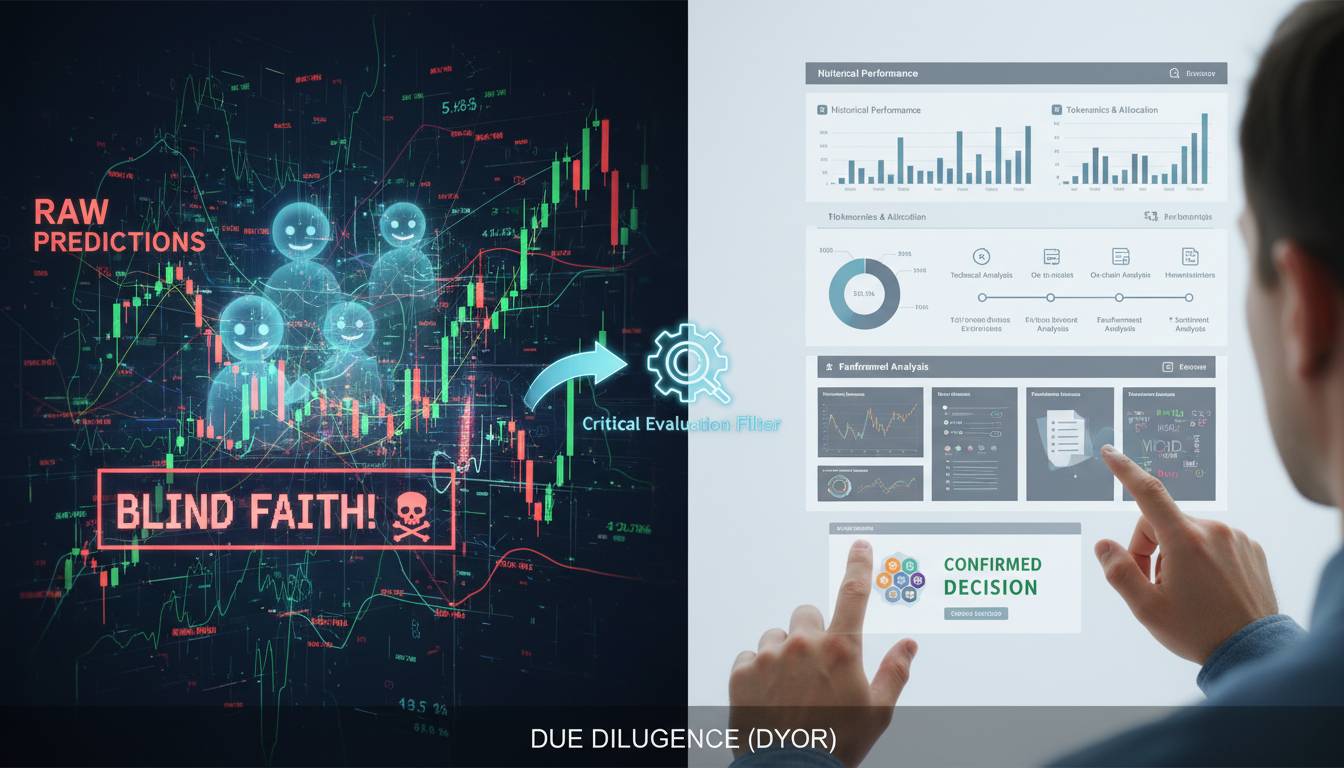
First, check the track record—but check it honestly. Don’t just look at the hits. Demand to see the misses. An analyst with 10 “successful” predictions but 50 failures they’ve deleted or hidden isn’t reliable. Look for patterns of qualification in their language. The best analysts hedge appropriately. The worst ones never admit uncertainty.
Second, examine the specificity. Vague predictions like “Bitcoin will go up significantly this year” are unfalsifiable and therefore meaningless. Real predictions have specific price targets, timeframes, and conditions. When those conditions aren’t met, the analyst should acknowledge it. If they pivot to a new prediction without addressing the failed one, that’s a red flag.
Third, look for conflicts of interest. Does the analyst hold positions in tokens they’re promoting? Do they have sponsors who benefit from the prediction? Are they running a fund that benefits from the sentiment they’re creating? These aren’t disqualifying—disclosure matters more than absence of conflict. But undisclosed conflicts should disqualify their predictions from serious consideration.
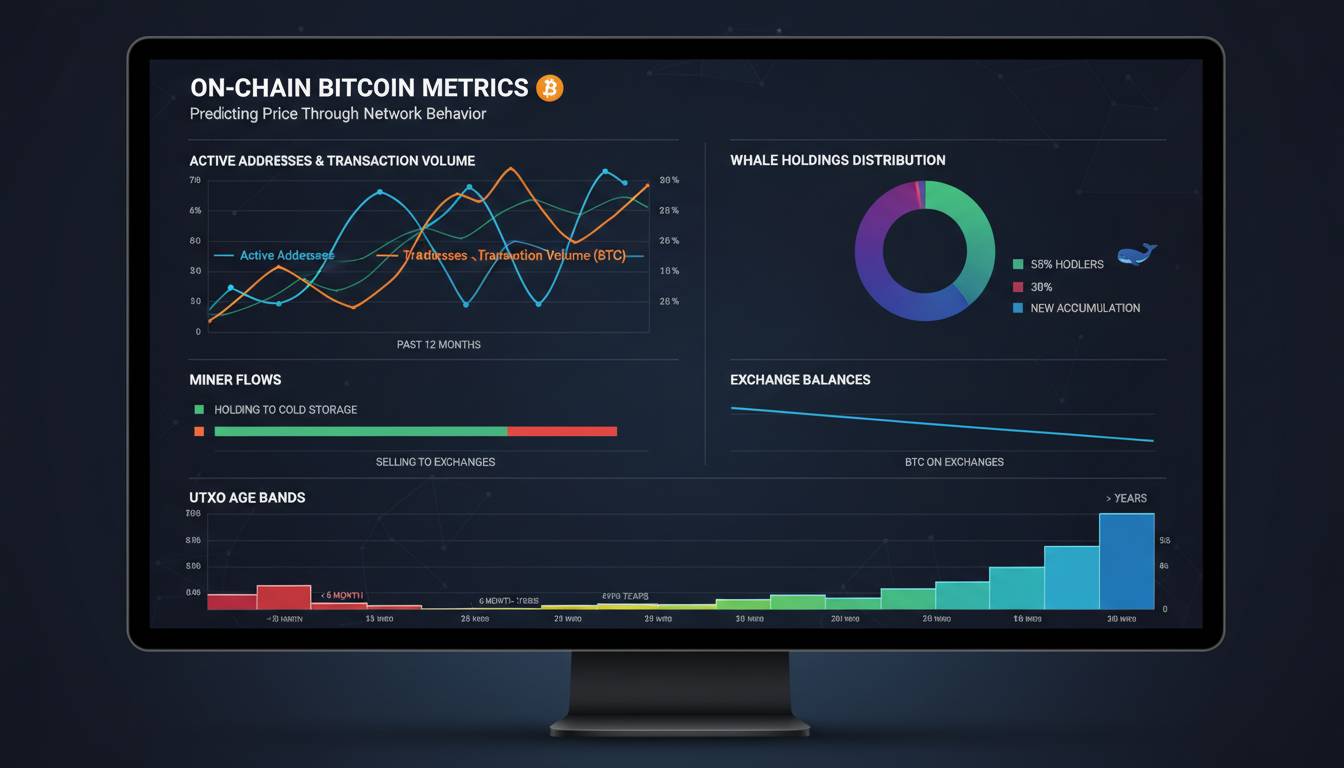
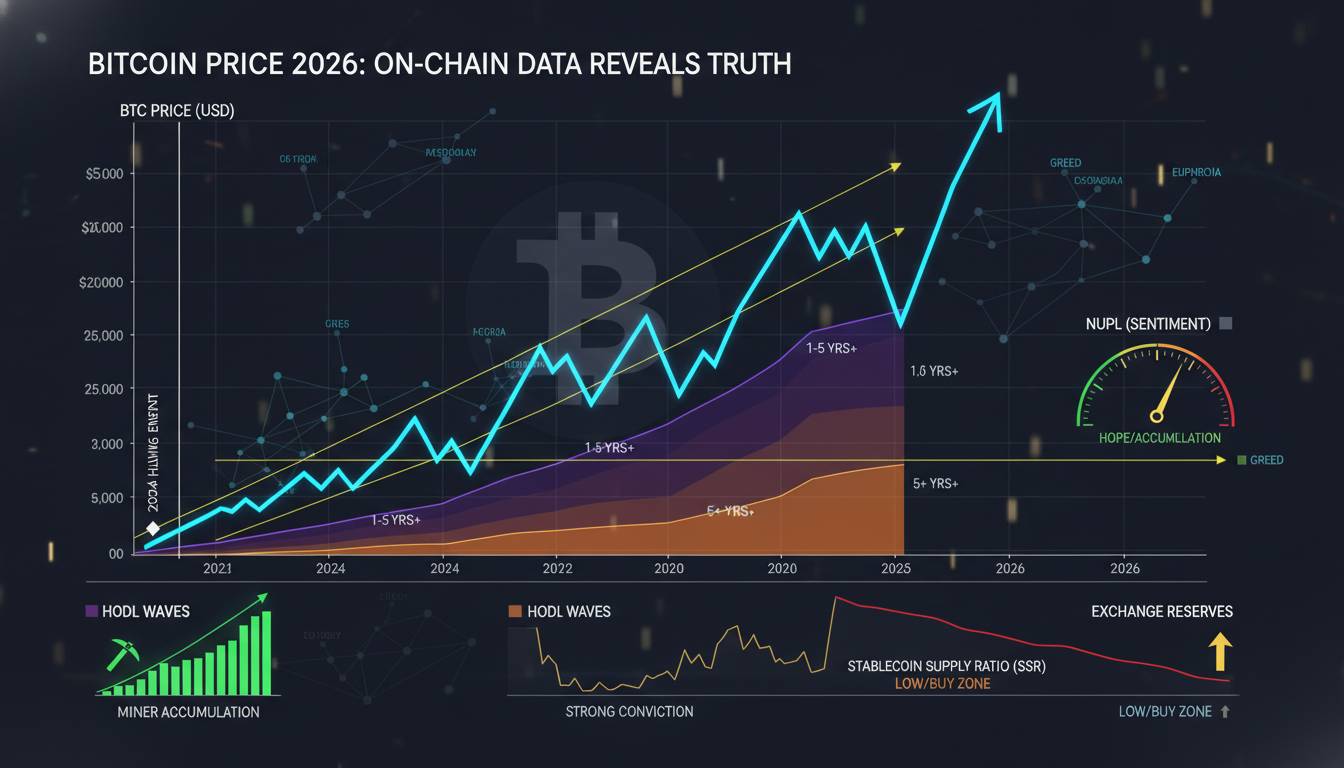
Fourth, cross-reference with on-chain data. If someone predicts price movement based on exchange volume, check the actual blockchain data. Resources like Glassnode and CryptoQuant provide more reliable data than exchange-reported volumes. When an analyst’s volume claims don’t match on-chain reality, they’ve either done poor research or they’re presenting manipulated data.
Fifth, check the timeline of when the prediction was made and when it was publicized. I’ve seen predictions made in January get “published” in April after the price moved in that direction, with the screenshot manipulated to make it look like a fresh prediction. Verify the original timestamp.
Red Flags Worth Memorizing
Some manipulation is sophisticated, but most follows predictable patterns. Here are the red flags I use as a mental checklist:
Guaranteed returns language. No legitimate analyst guarantees returns. Anyone who says “Bitcoin will definitely hit X” or “this is 100% certain” is either lying or doesn’t understand probability. The market doesn’t guarantee anything.
Pressure to act immediately. Predictions that include “you need to buy NOW before it’s too late” are designed to suppress critical thinking. Legitimate analysis doesn’t need to create urgency—it presents evidence and lets you decide.
Anonymous analysts. If you can’t verify who is making the prediction, their track record, and their motivations, their predictions have no place in your decision-making. The crypto space is full of anonymous accounts with profile pictures of animals making bold predictions. This isn’t a coincidence.
Vague methodology. If someone predicts a price but can’t explain—clearly and specifically—how they arrived at that number, they’re not making an analysis. They’re making entertainment. Demand the methodology. If it can’t be explained in a way a reasonably intelligent person can understand, it’s not worth your attention.
Moving the goalposts. Watch for analysts who continuously adjust their predictions after failures. “I said $100K by 2024, but the timeline is flexible” isn’t analysis—it’s post-hoc rationalization designed to preserve an illusion of accuracy.
Tools That Actually Help
The good news is that several tools can help you verify claims yourself rather than relying on others.
On-chain analytics platforms like Glassnode and CryptoQuant provide data directly from the blockchain. This data is harder to manipulate than exchange-reported data and gives you a more accurate picture of actual market behavior. The key is learning to interpret this data—which takes time—but the effort pays dividends in separating real signals from manufactured ones.
Exchange data verification through resources like CoinMarketCap, CoinGecko, and more specialized tools like TradingView’s exchange comparison features lets you see when an analyst is citing abnormal volume from a single suspicious exchange. If someone is citing volume from an exchange that does 0.1% of global volume as evidence of “massive” activity, that’s a manipulation flag.
Sentiment analysis tools like The TIE, Santiment, and various alternatives provide more nuanced views of social media activity than just raw engagement numbers. These tools can help you detect when engagement is artificially amplified. They’re not perfect, but they’re significantly better than eyeballing a tweet’s like count.
Order book analysis through exchange APIs or tools like Bookmap gives you direct visibility into buying and selling pressure at specific price levels. This is more technical, but it provides hard data about where actual market participants are positioning—not where they claim to be positioned.
Building Your Own Framework
Here’s what I want you to do after reading this: build a personal prediction evaluation framework and actually use it.
Start with your own criteria. What information would you need to see to believe a prediction? Write it down. Be specific. “I’d need to see on-chain data supporting accumulation below $60K” is useful. “I’d need it to seem reasonable” is useless.
Then, track predictions. Keep a record of predictions you encounter—including who made them, when, and what specific conditions they cited. Review this record monthly. How often are these predictions actually accurate? What’s the hit rate? If someone has a 10% accuracy rate over 50 predictions, their next prediction should carry zero weight in your decision-making.
Maintain a prediction journal. Write down your own reasoning when you form a view about Bitcoin’s price. Date it. Be specific about your conditions and timeline. Then review it later. This builds intellectual honesty and helps you understand your own biases—which are as dangerous as any external manipulation.
The goal isn’t to become paranoid. It’s to become systematic. Manipulation works because most people evaluate predictions emotionally and selectively. If you evaluate them systematically, with clear criteria and honest tracking, you become significantly harder to manipulate.
Where This Leaves You
I’ve given you tactics to recognize, verification methods to use, red flags to watch, and tools to employ. But here’s the honest limitation of any article on this topic: manipulation is an adaptive adversary. The moment I publish specific tactics, sophisticated manipulators adjust their methods. The patterns I’ve described are persistent because they work—but they’ll evolve.
What doesn’t evolve is the fundamental principle: anyone trying to move your money based on a prediction should face the same scrutiny you’d apply to any significant financial decision. There are no shortcuts. There are no experts you can trust without verification. There is only systematic skepticism applied consistently over time.
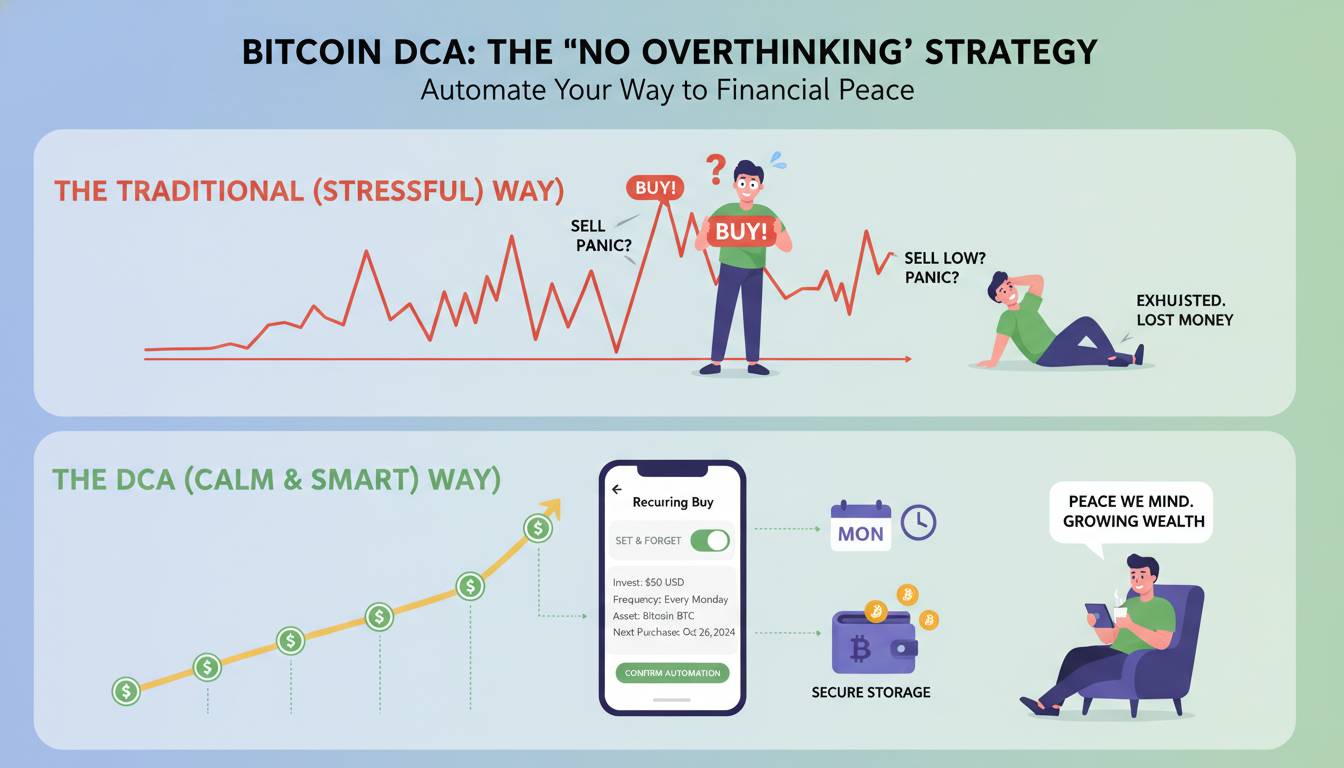
The crypto space will continue producing confident predictions. Some will be right. Many will be wrong. A select few will be deliberately constructed to separate you from your money. Your job isn’t to predict which is which—it’s to build the habits that protect you regardless of which category any specific prediction falls into.
The market will always try to manipulate you. The question is whether you’ll give it the easy victory of uncritical attention, or whether you’ll do the work required to see clearly.