If you’ve been watching Bitcoin for any length of time, you’ve probably noticed something strange: every four years, around the halving event, the price doesn’t just calmly accept its reduced new supply and march upward. Instead, it often tanks. Then, somewhere between months and a year and a half later, it explodes higher in a way that makes the pre-halving prices look quaint.
This pattern has repeated three times now with enough consistency that it’s become one of the most discussed phenomena in cryptocurrency. But here’s what most articles skip: the “why” behind the drop and the “why” behind the recovery are actually two different market mechanisms operating on different timescales. Understanding the distinction is what separates people who panic-sell at the bottom from those who position themselves for the next leg up.
This article breaks down exactly what happens to Bitcoin’s price around halving events, why the short-term drop is more predictable than most realize, and why the longer-term recovery has been remarkably consistent despite all the noise about “this time being different.”
What Is the Bitcoin Halving?
Before diving into price mechanics, let’s establish what the halving actually does at a protocol level.
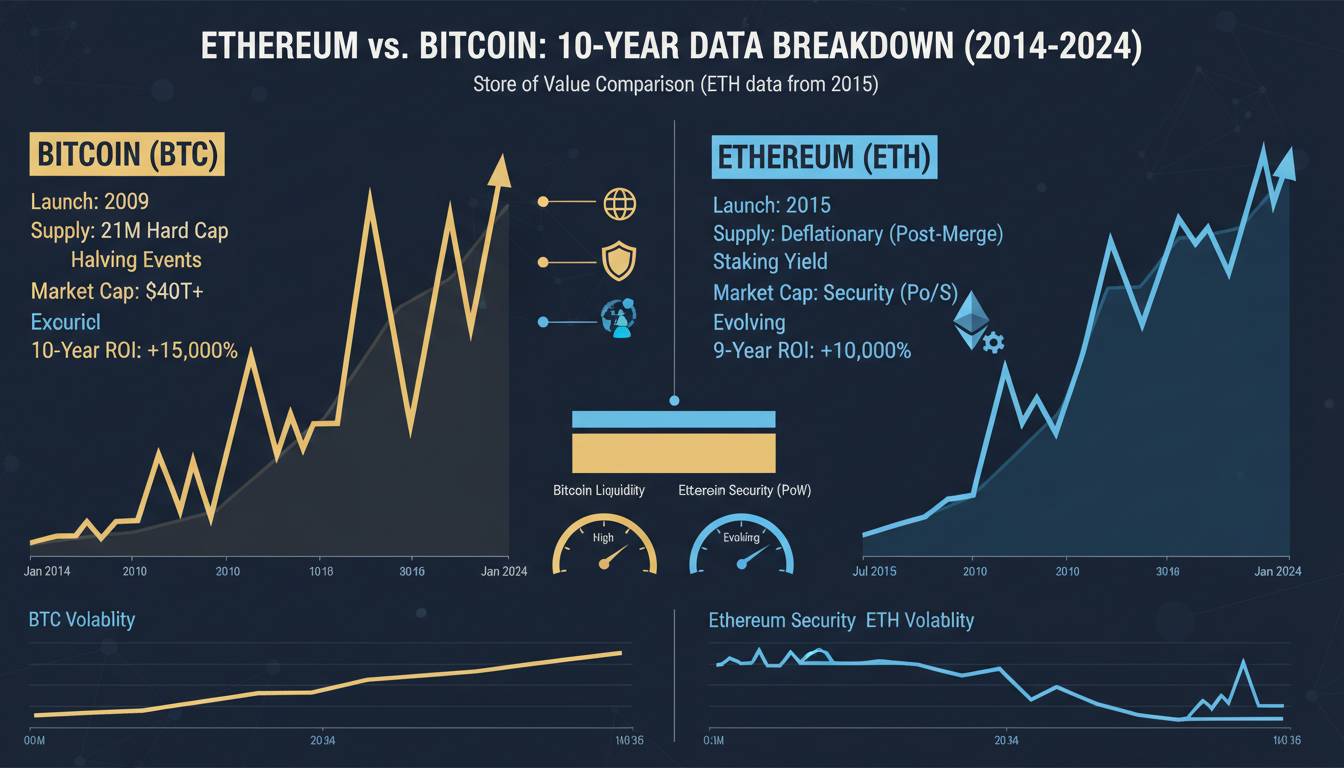
Bitcoin’s network runs on a block-by-block basis, with new blocks added to the blockchain approximately every ten minutes. Inside each block, miners include newly minted Bitcoin as a reward for their work securing the network. When Bitcoin launched in 2009, this block reward was 50 BTC per block.
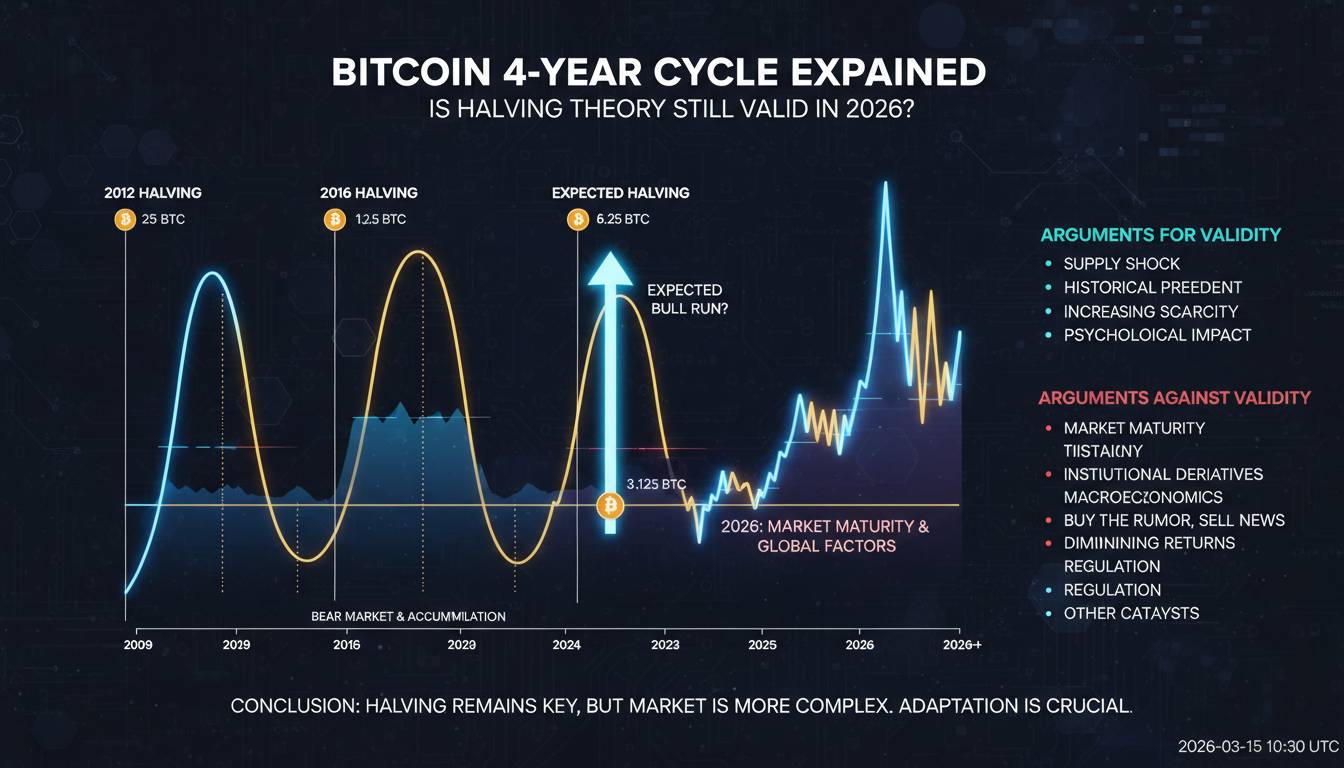
The halving event cuts that reward in half. It happens roughly every 210,000 blocks, which works out to approximately four years. The 2024 halving reduced the block reward from 6.25 BTC to 3.125 BTC. This continues until the total supply reaches 21 million—something mathematically guaranteed to happen around the year 2140.
What makes this significant is that it changes the supply dynamics. Before the halving, new Bitcoin enters the market at a certain rate. After the halving, that rate is cut by half. But market participants don’t experience this change all at once. The price adjustment happens over weeks, months, and sometimes more than a year.
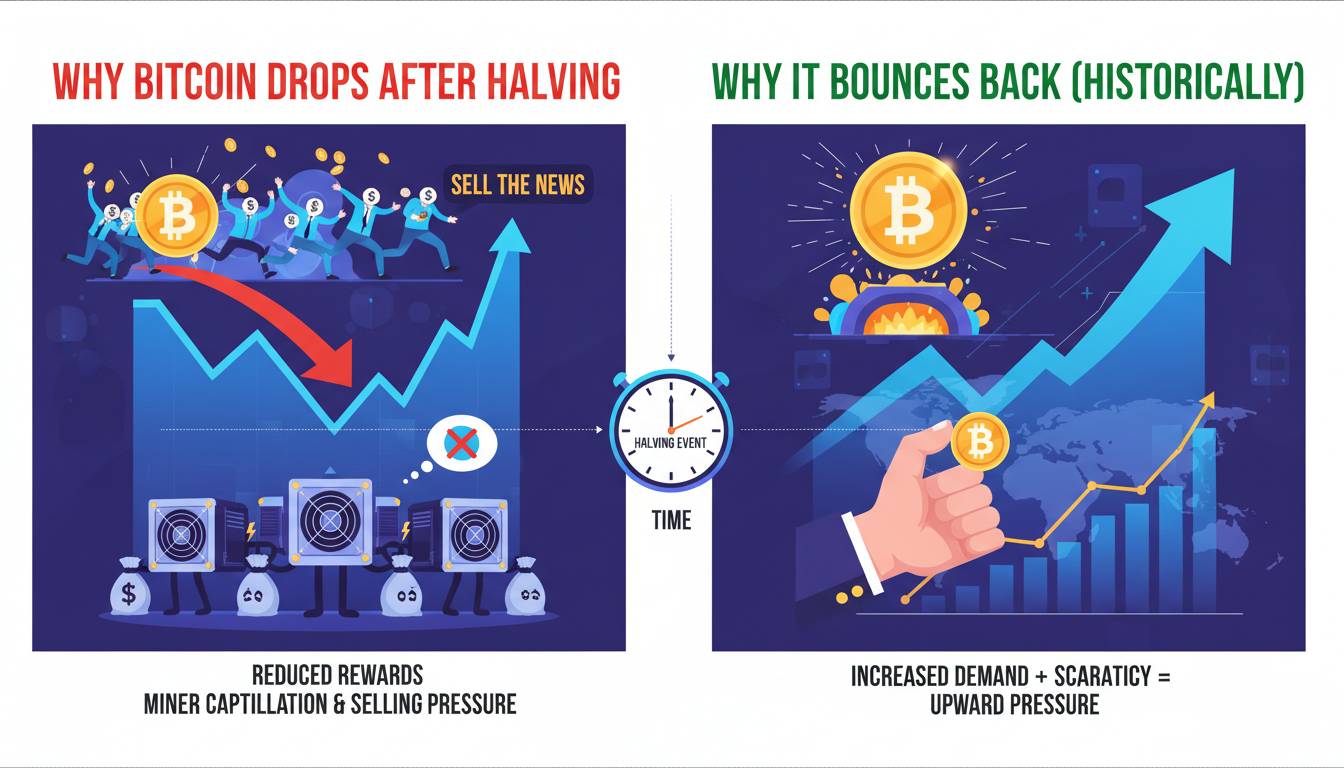
Why Bitcoin Drops After Halving
The post-halving dip isn’t a glitch or an accident. It’s actually the most predictable part of the cycle, and it stems from three interconnected forces.
The “Sell the News” Phenomenon
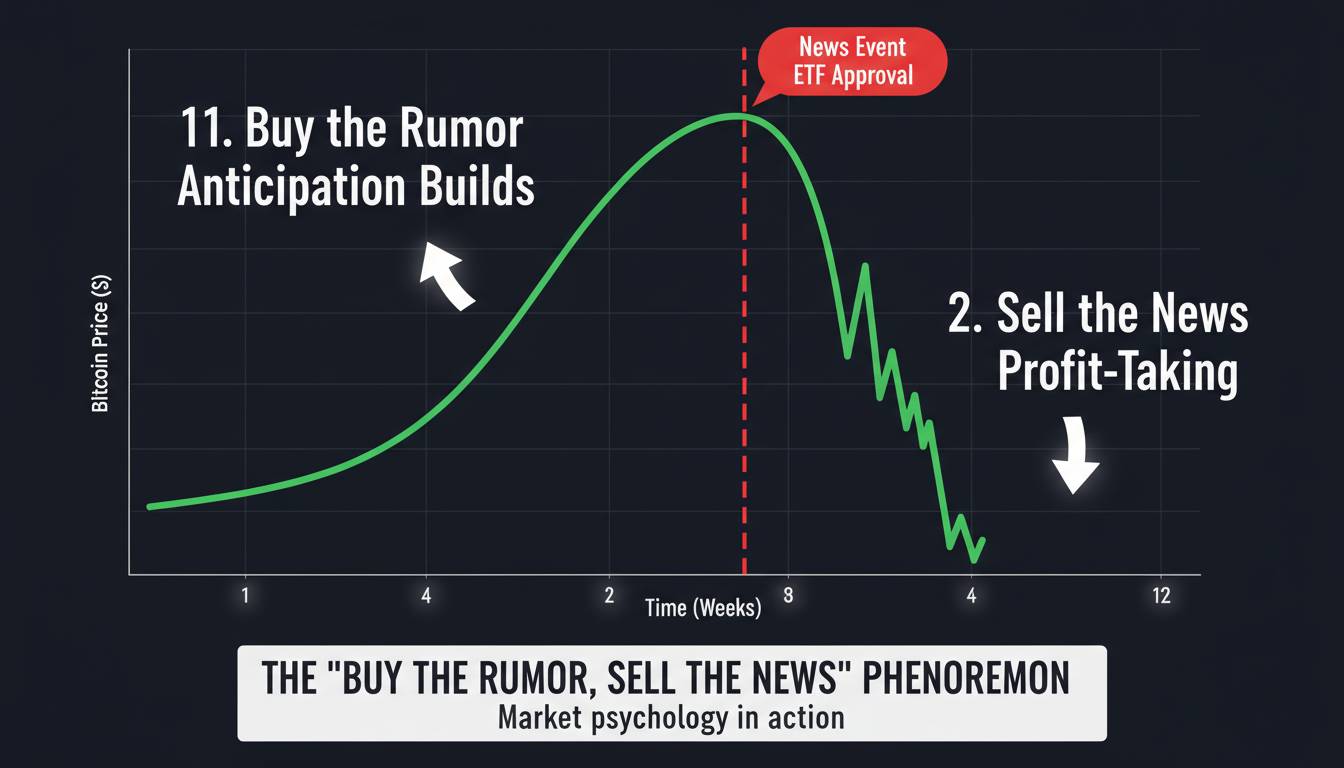
Every Bitcoin halving is one of the most publicized events in the cryptocurrency calendar. Months before it happens, articles, YouTube videos, and social media posts build enormous anticipation. “Buy the rumor, sell the news” is one of the oldest adages in trading, and Bitcoin demonstrates it perfectly.
Here’s what actually happens: traders who bought months or years before the halving have seen massive gains. They’ve held through volatility, uncertainty, and countless predictions of doom. When the halving finally arrives, it becomes a natural inflection point to take profits. The event that everyone was waiting for has arrived—there’s no more waiting for it to happen.
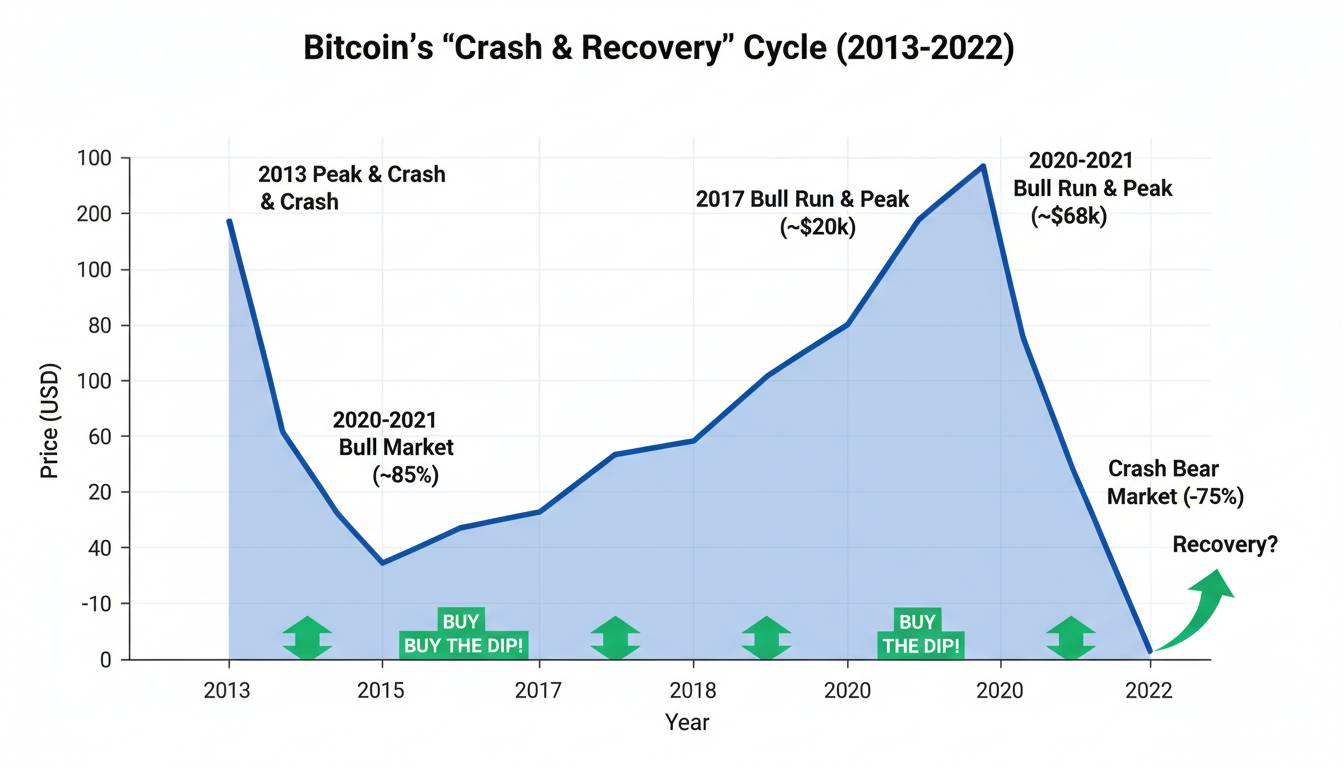
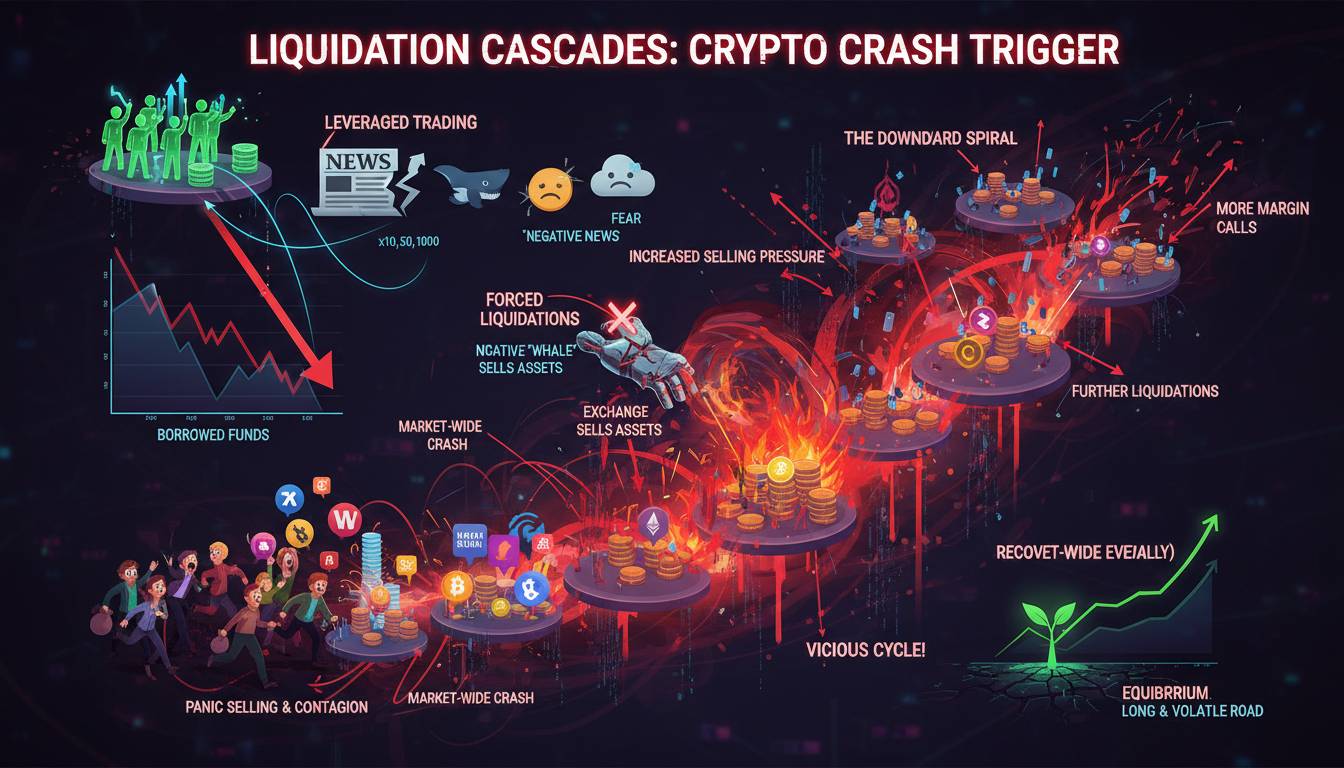
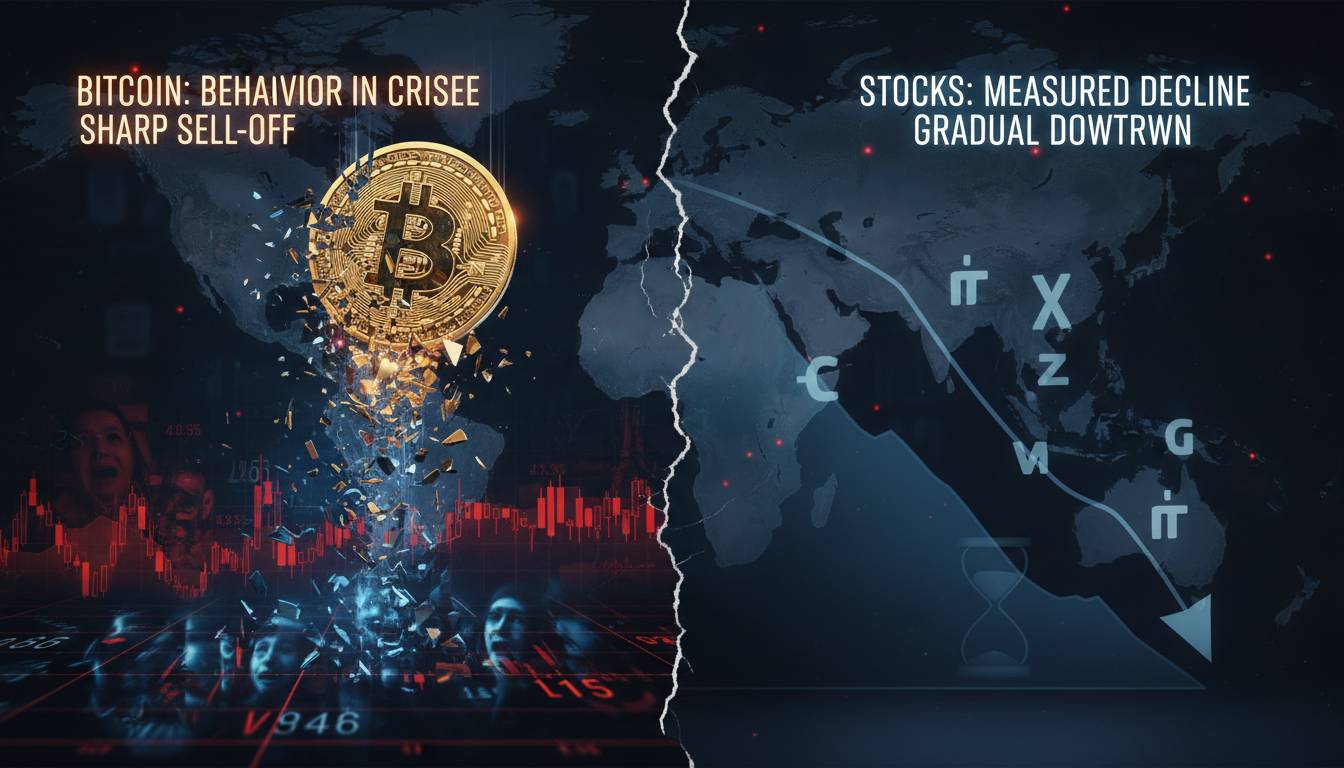
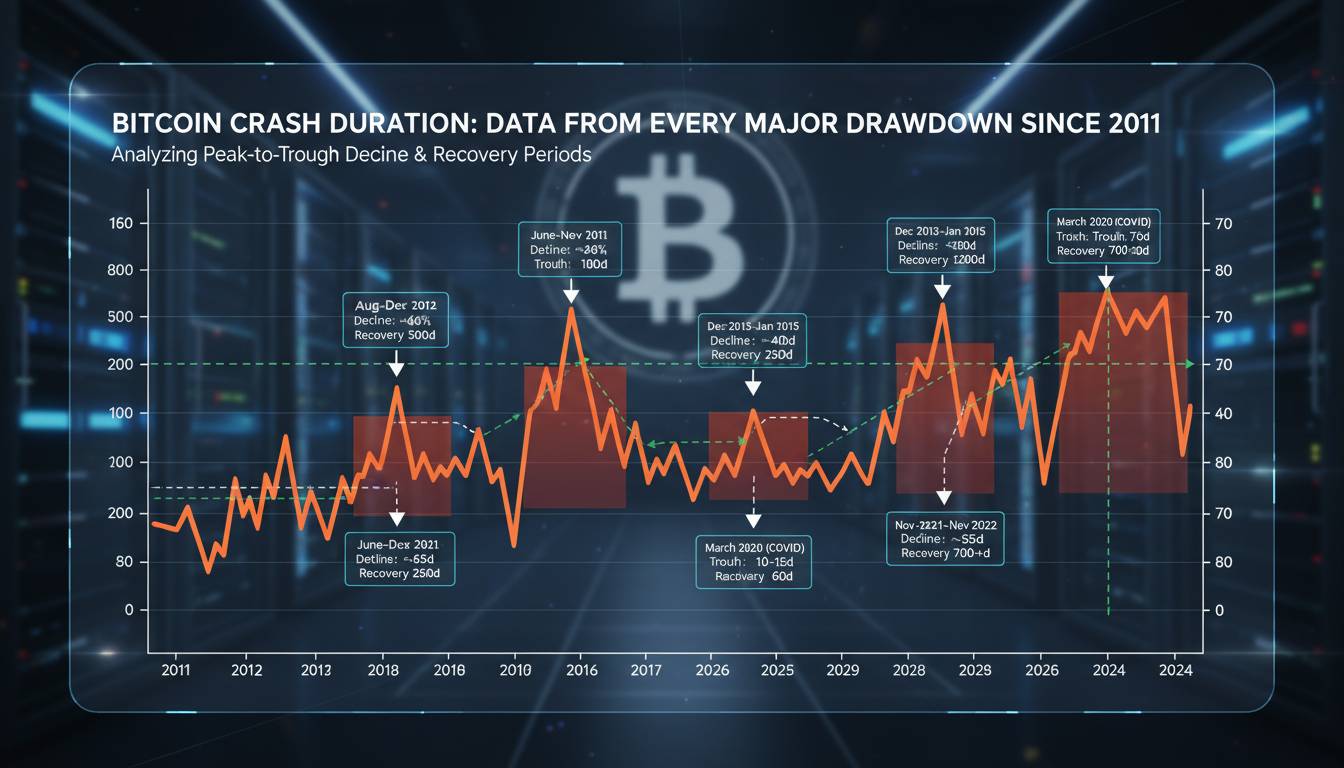
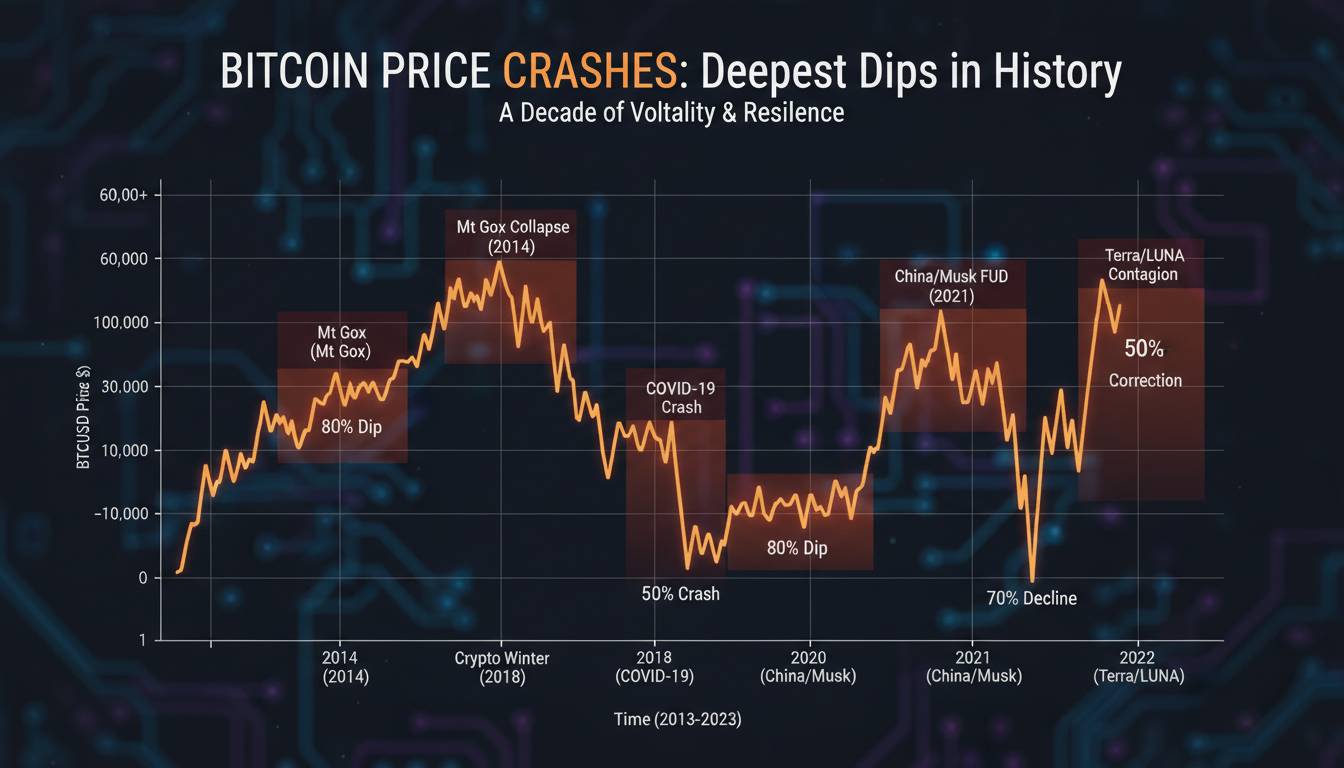
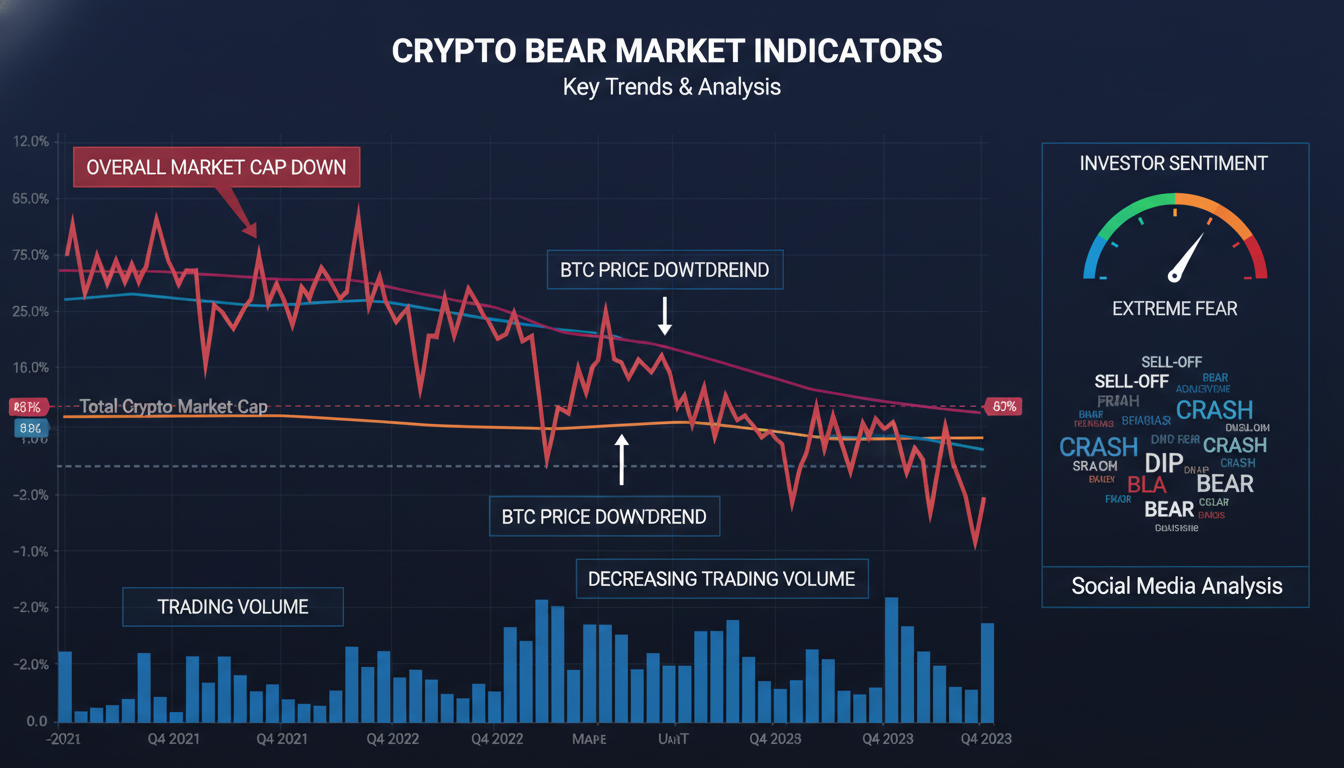
This creates immediate selling pressure. The size of this pressure depends on how long and how steep the preceding bull run was, but it’s been remarkably consistent across cycles. In 2020, Bitcoin reached nearly $14,000 before the halving in May, then dropped to around $9,000 by July—a 35% decline in roughly two months. In 2024, Bitcoin hit $73,000 before the April halving, then declined to around $56,000 by early August.
The pattern holds not because of some mysterious force but because human psychology is predictable. Large holders have an incentive to sell into the attention spike, and the market simply doesn’t have enough new buyers immediately to absorb that supply.
Miner Revenue Shock and Selling Pressure
This is the mechanism that most articles mention but few explain clearly.
Miners earn their revenue in two ways: the block reward (newly minted Bitcoin) and transaction fees. Before the halving, a miner producing a block receives 6.25 BTC. After the halving, they receive 3.125 BTC. Their operational costs—electricity, hardware, facilities, wages—don’t change. But their revenue just got cut in half.
For large, well-capitalized mining operations, this is manageable. They have cash reserves, hedging strategies, and economies of scale. But for smaller miners, the math becomes punishing. When revenue drops 50% while costs stay the same, profit margins evaporate.
What follows is called a “miner capitulation” phase. Stressed miners begin selling their Bitcoin holdings to cover operating costs. Some shut down entirely. In 2022, during the broader crypto crash, we saw this play out dramatically—publicly traded mining companies sold billions of dollars in Bitcoin just to stay afloat.
The 2024 halving was less dramatic than 2022, but the dynamic persisted. Hashrate—the total computing power on the Bitcoin network—dropped significantly in the weeks following the halving as less efficient miners exited. Those forced exits meant additional Bitcoin hitting exchanges.
This creates a supply glut in the weeks and months after halving. New supply is cut in half on paper, but the supply that’s already been mined gets dumped onto the market by miners trying to survive.
Reduced Bullish Speculation
Here’s a counterintuitive point that most articles miss: the halving actually removes one of the market’s biggest sources of speculative buying.
For months leading up to the halving, traders bet heavily that the event will be bullish. They’re buying in anticipation, pushing prices up in what becomes a self-fulfilling prophecy. But once the halving happens, that particular narrative has been “priced in.” There’s no more catalyst to fuel that specific form of speculation.
Traders who were buying “because of the halving” now have to find a new reason to buy. Some rotate into other assets. Others wait for the supply shock thesis to actually materialize, which takes time. In the interim, the buying pressure that was supporting prices simply evaporates.
This is why the post-halving period often feels like a vacuum. The bullish case has been made, the event has passed, and the market is waiting for the next chapter—which, as we’ll see, eventually arrives.
Why Bitcoin Eventually Recovers
If the post-halving drop were the whole story, Bitcoin would simply decline forever. It doesn’t. Understanding why requires looking at a different set of forces operating on a longer timescale.
The Supply Shock Thesis
This is the core argument for why Bitcoin eventually surges after halving, and it’s grounded in basic economics.
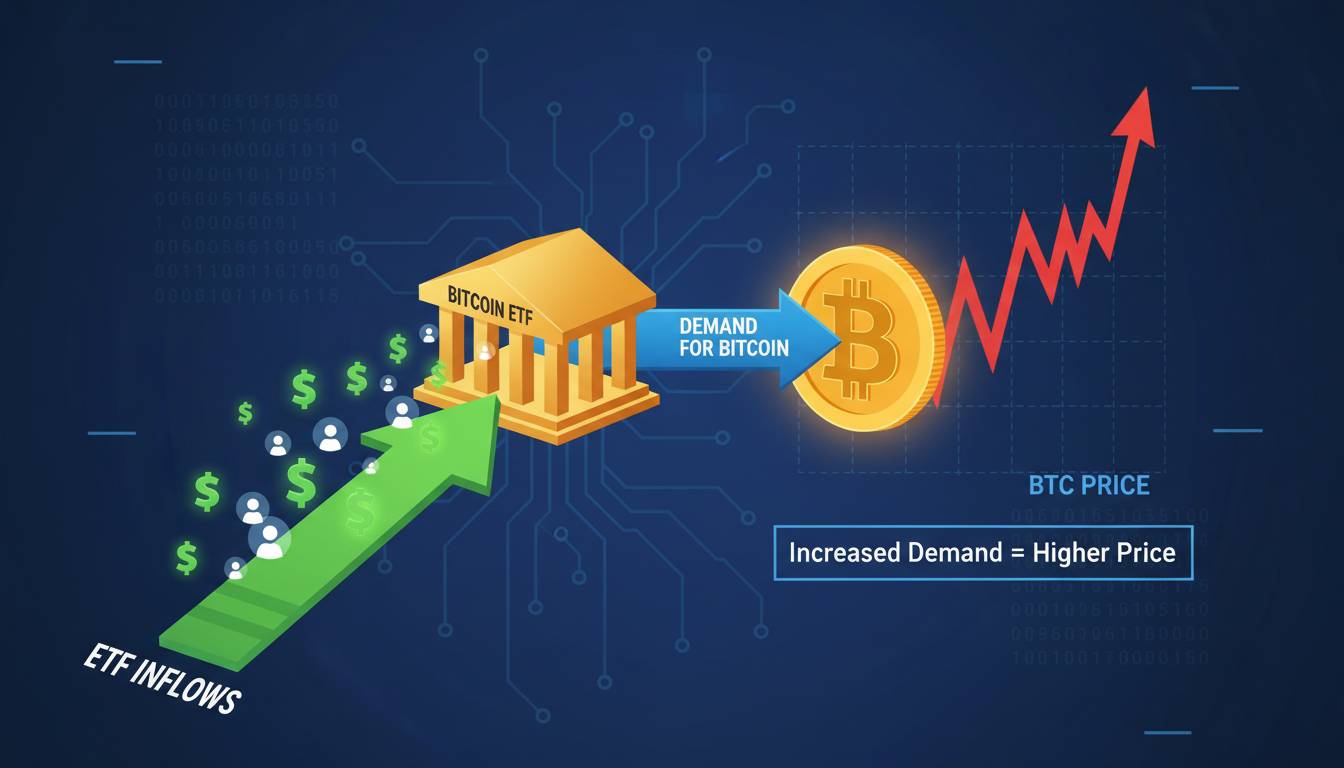
Imagine a market where demand is growing steadily—more users, more institutions, more people learning about Bitcoin. Now imagine that the supply entering that market suddenly gets cut in half. The math is straightforward: if demand stays constant or grows while supply shrinks, prices rise.
But this doesn’t happen instantly. It unfolds over months as the reduced new supply accumulates. Each day after the halving, 900 BTC enters the market instead of 1,800 BTC. Over a month, that’s 27,000 fewer BTC. Over a year, it’s over 320,000 BTC that didn’t enter circulation.
Meanwhile, demand hasn’t been eliminated—it’s just waiting for the right moment. Institutional buyers, retail investors, and corporations continue their accumulation. The difference is that now there’s less supply available to meet them.
This is what analysts mean when they talk about the “supply shock.” It’s not that Bitcoin becomes scarcer overnight. It’s that the new supply entering the market drops so dramatically that it eventually overwhelms the selling pressure from miners and early adopters.
Historical Performance: The 12-18 Month Lag
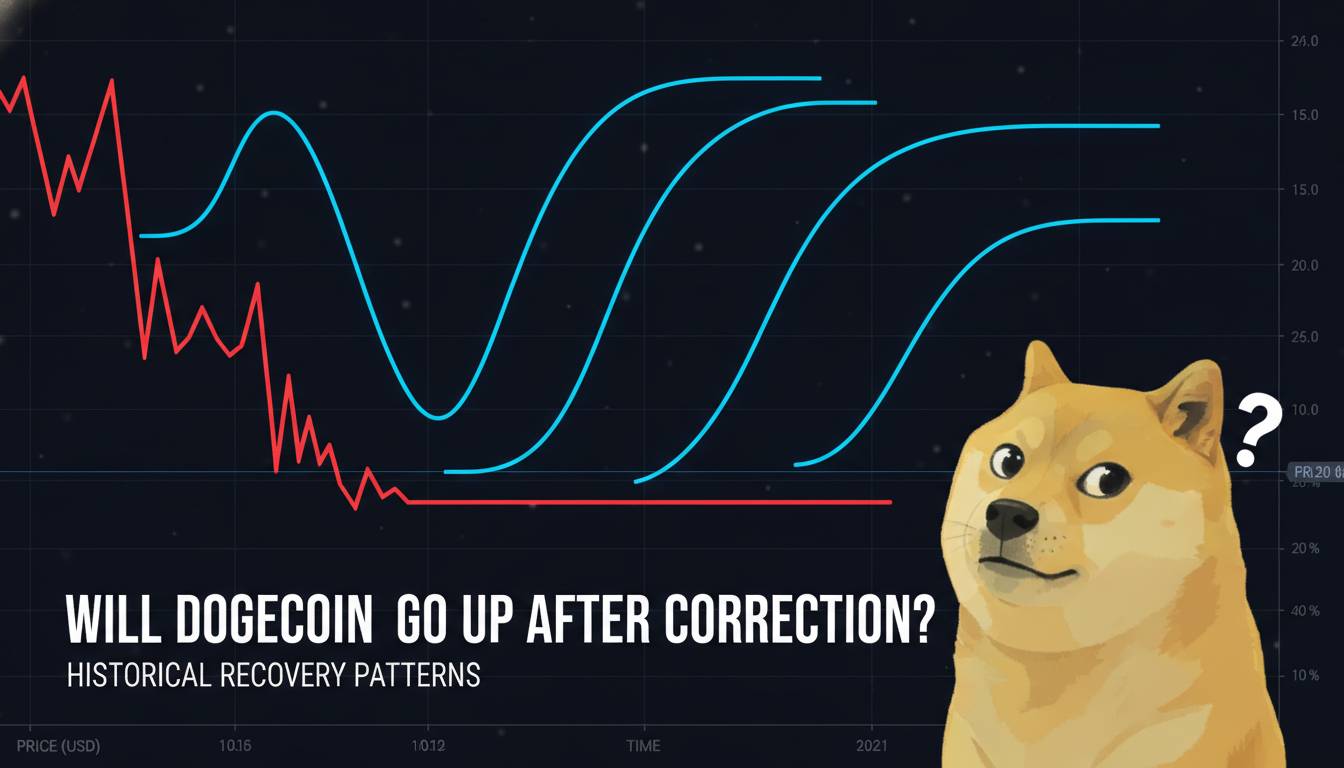
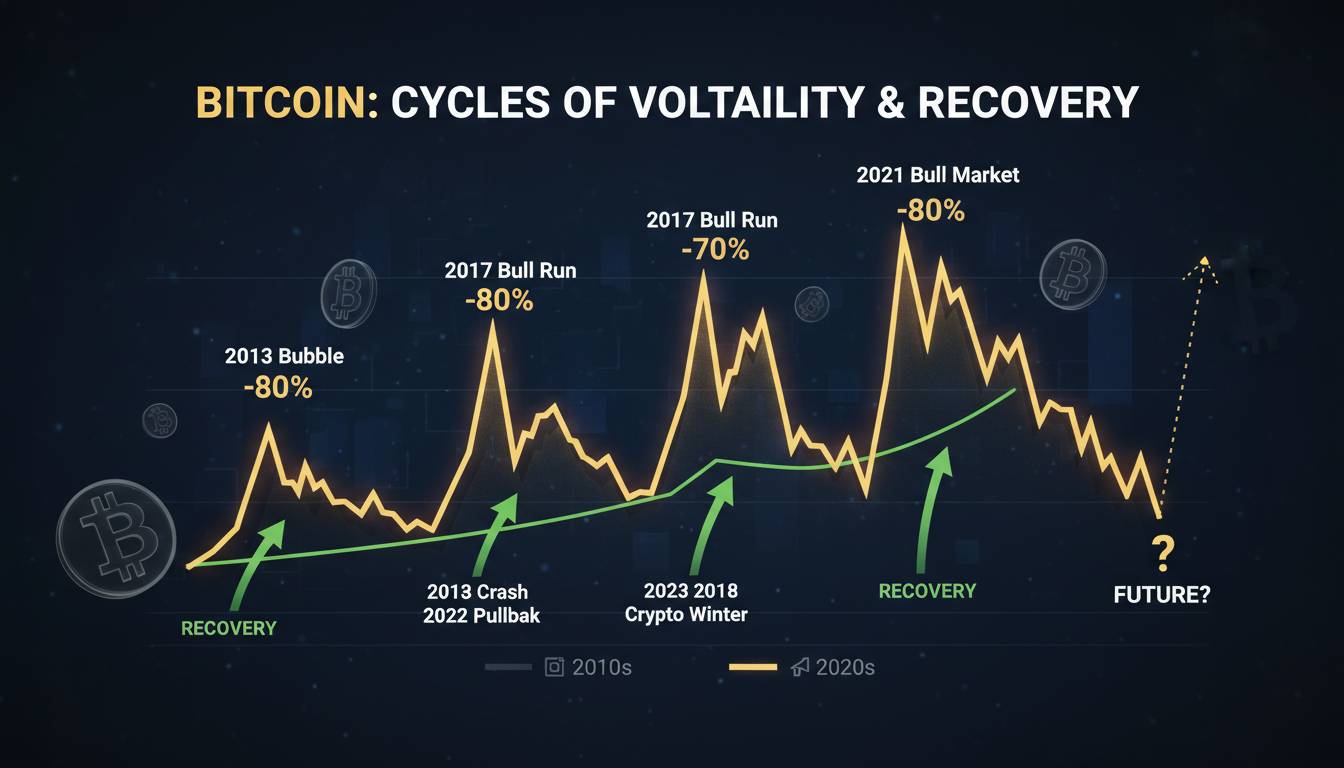
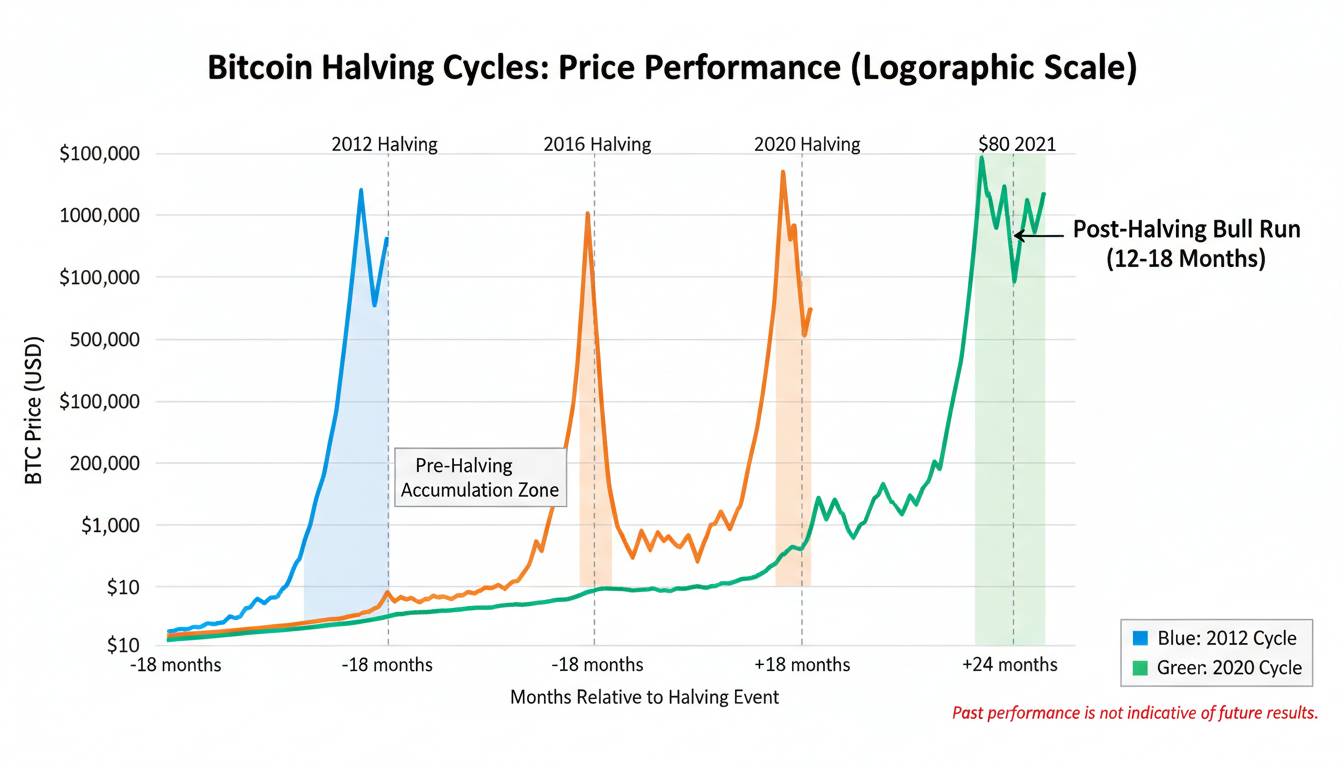
Here’s where the data gets interesting. In every major halving cycle, the significant price appreciation hasn’t started immediately after the halving—it typically begins 12 to 18 months later.
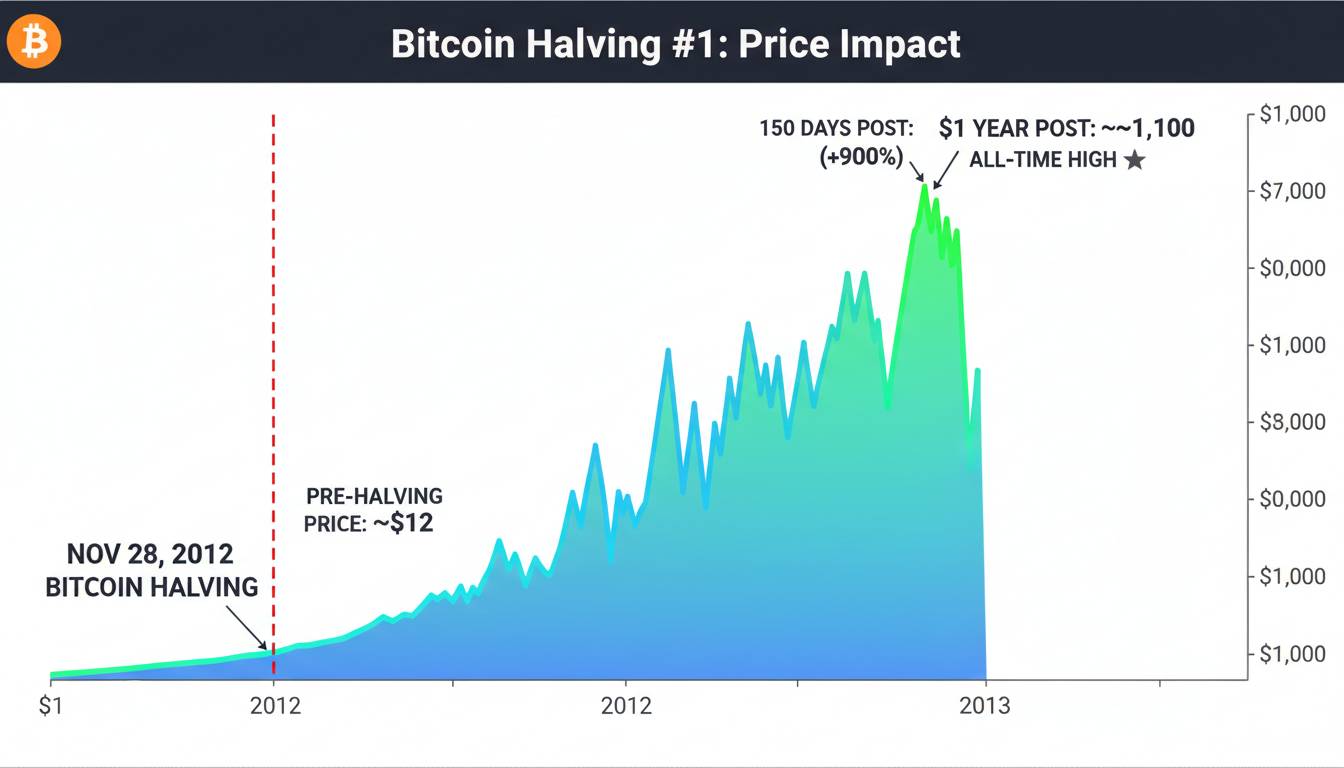
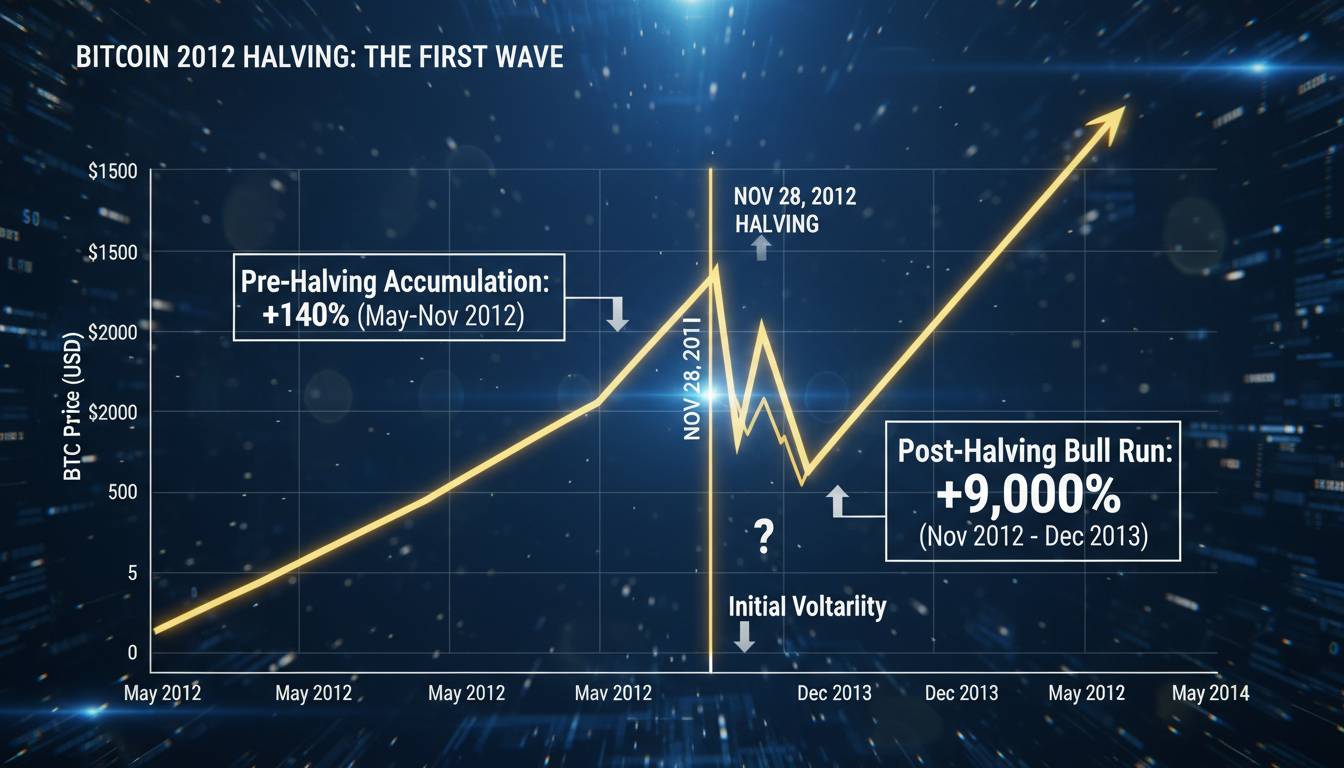
- The 2012 halving: Bitcoin traded around $12-13 in the months after the halving. Twelve months later, in 2013, it hit $1,100.
- The 2016 halving: Bitcoin was around $650 after the halving. Eighteen months later, in late 2017, it reached nearly $20,000.
- The 2020 halving: Bitcoin was around $9,000 after the halving. Eighteen months later, in November 2021, it hit $69,000.
This 12-18 month lag is crucial to understand. The supply shock thesis doesn’t produce immediate results. It works gradually as the reduced supply compounds and demand continues growing. The market doesn’t wake up one day and suddenly price in years of future scarcity—it drifts in that direction over time until a catalyst (usually a new wave of adoption or institutional interest) triggers the actual breakout.
The 2024 cycle has been somewhat different, which I’ll address shortly.
Market Psychology and Narrative Shifts
Prices don’t move on fundamentals alone. They move on narratives, and the narrative around Bitcoin shifts predictably after halving.
In the months leading up to halving, the dominant narrative is “eventually bullish but uncertain.” After the halving, when prices drop, the dominant narrative becomes “halving doesn’t matter” or “this time is different.” This is when articles proliferate about how the halving is “priced in” and how the market has “moved past” that catalyst.
Then, slowly, as prices begin to rise, the narrative shifts again. “Maybe the halving is working.” Then: “The halving is definitely working.” Then, at the peak: “Bitcoin is going to $100,000 because of the halving’s supply reduction!”
This narrative arc creates a feedback loop. As prices rise, more people buy, which pushes prices higher, which attracts more buyers. The original supply shock thesis has long since been forgotten in favor of pure momentum. This is why Bitcoin’s post-halving rallies always overshoot any rational valuation—they’re driven as much by psychology as by fundamentals.
The 2024 Cycle: Why It Looks Different
I should be straightforward: the 2024 halving cycle has challenged some of the assumptions I’ve laid out above.
In previous cycles, the post-halving dip was followed by a relatively clear recovery trajectory. In 2024, the pattern has been messier. Bitcoin reached $73,000 before the April halving, dropped to around $56,000 by August, then recovered to trade in the $60,000-70,000 range through late 2024 and early 2025.
Several factors explain this divergence:
First, the pre-halving bull run was extraordinary. Bitcoin went from $16,000 in early 2023 to $73,000 by March 2024—a 356% gain in just over a year. That’s far larger than the pre-halving runs in 2016 or 2020. The profit-taking pressure was correspondingly larger.
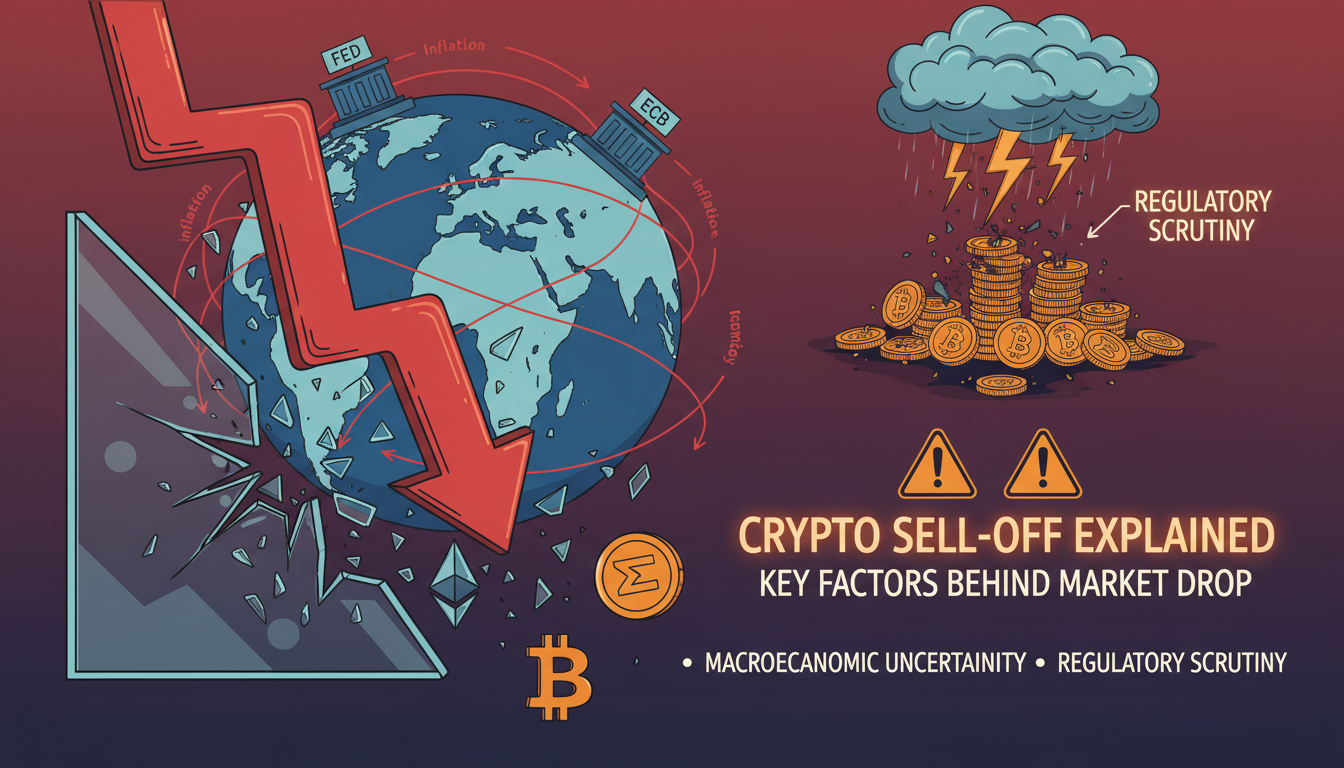
Second, the macroeconomic environment was different. In 2020 and 2021, the Federal Reserve’s massive stimulus programs created ideal conditions for speculative assets. In 2024, interest rates remained elevated, and institutional capital was more cautious.
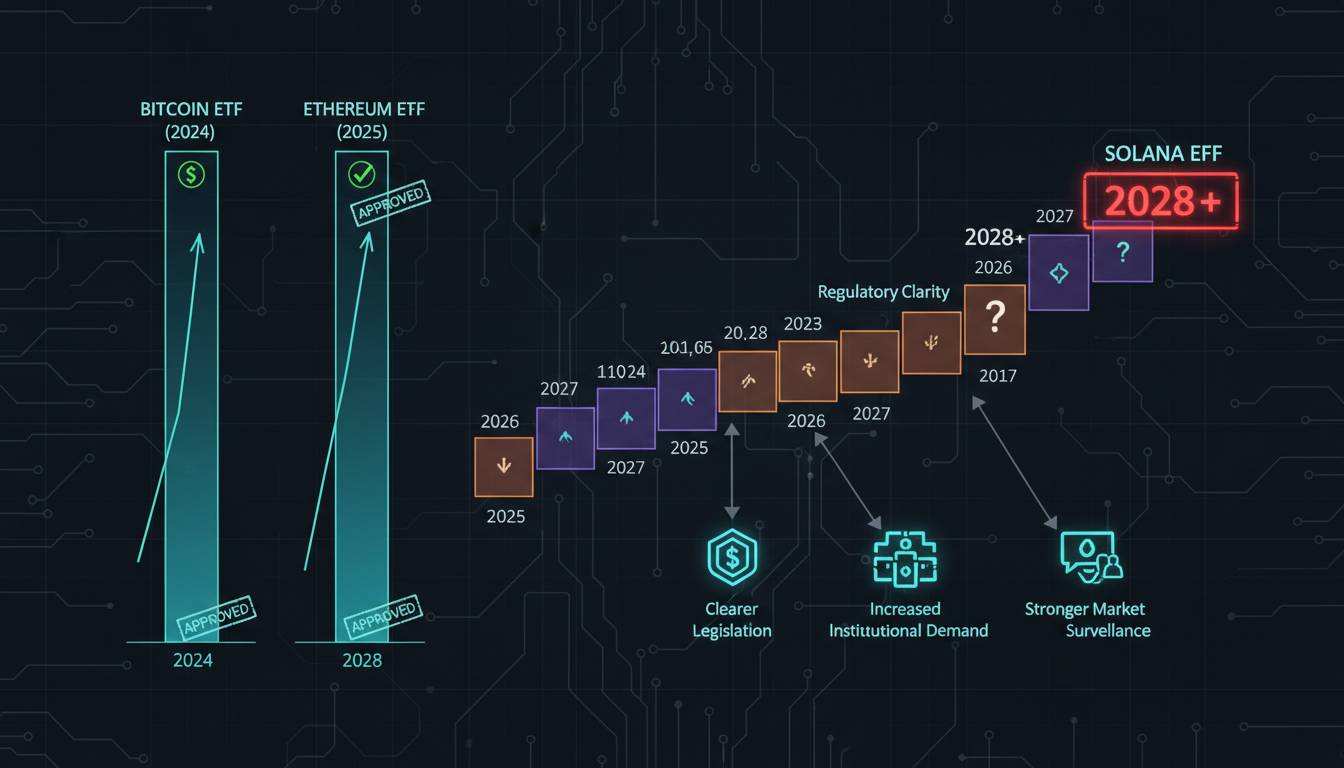
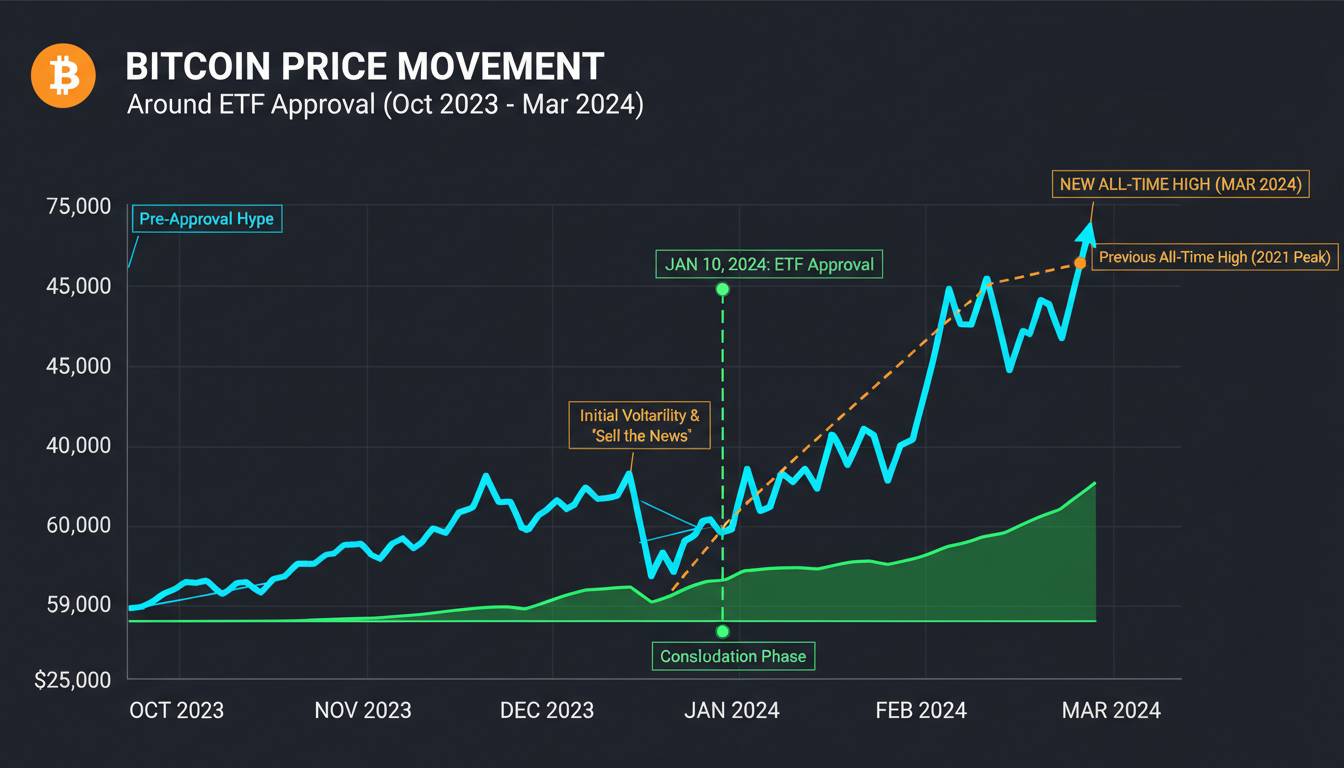
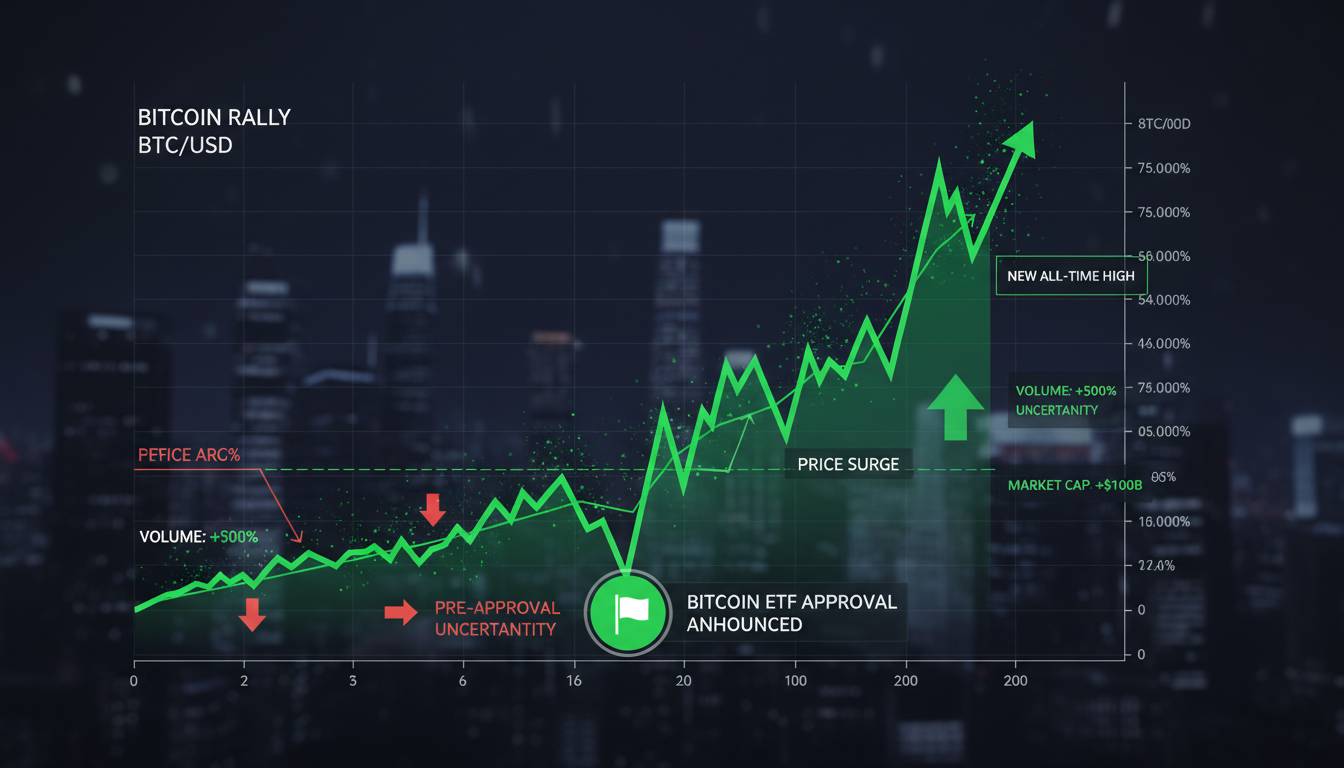
Third, Bitcoin already had significant institutional adoption entering this cycle. ETFs were approved in early 2024, bringing billions in new capital—but also creating a more mature market where sudden parabolic moves are harder to sustain.
Does this mean the supply shock thesis is dead? No. It means the timeline may be extended, and the relationship between halving and price may be less mechanical than in earlier cycles when Bitcoin was a smaller asset with less sophisticated participants.
Short-Term vs. Long-Term: What Actually Changes
To summarize the two phases:
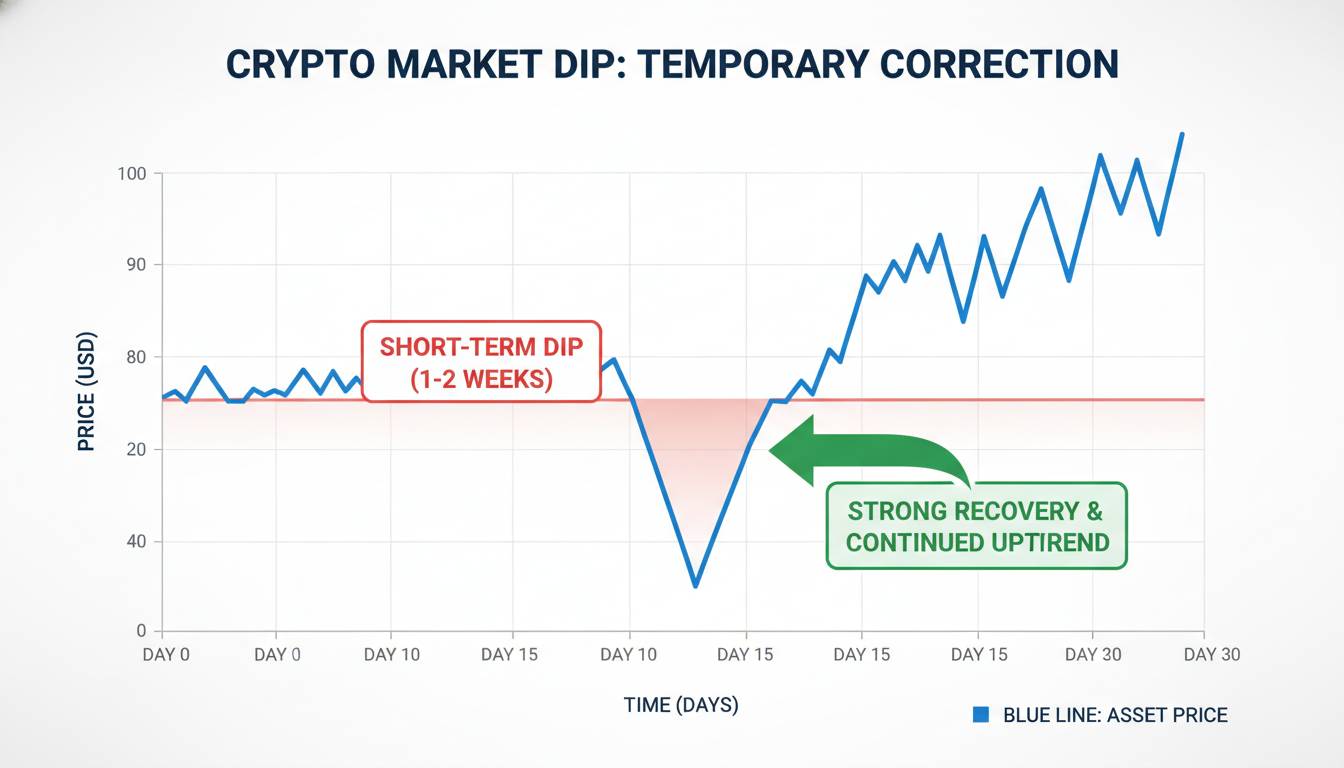
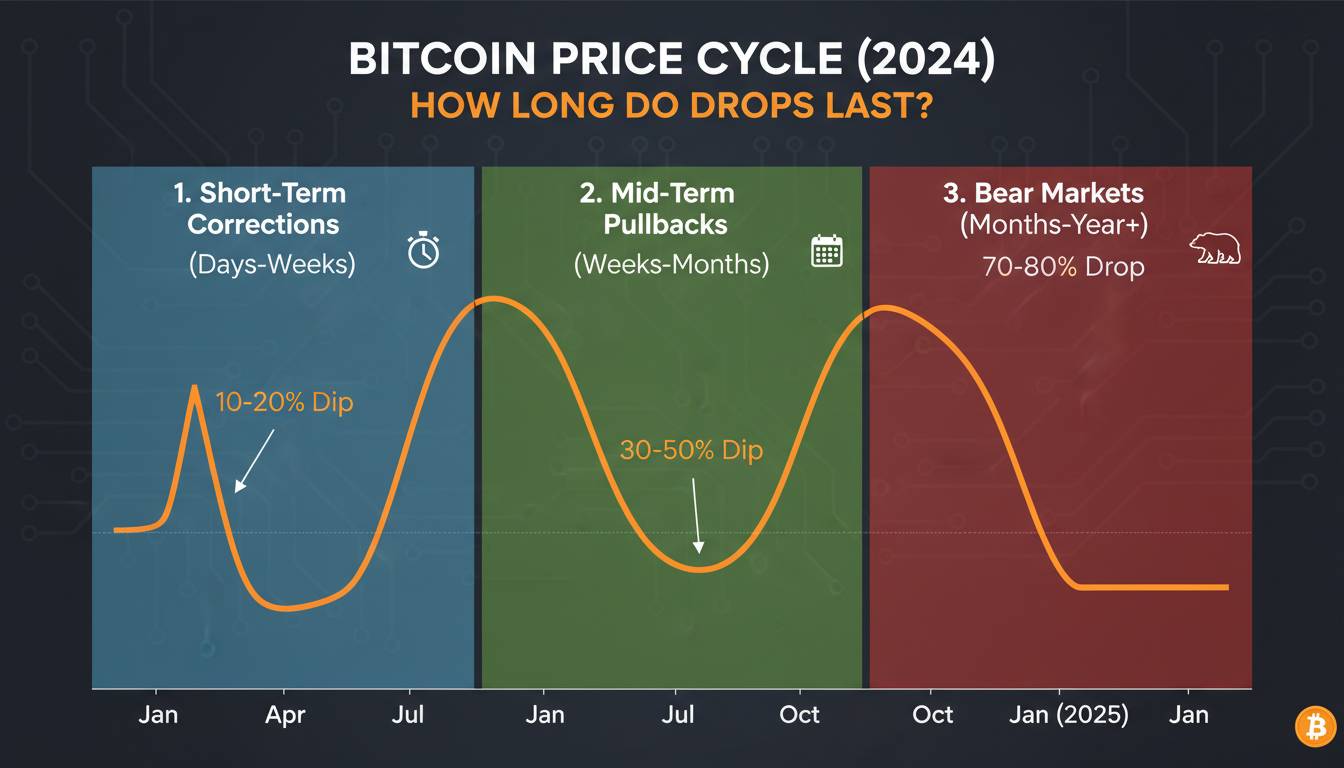
In the short term (zero to six months post-halving), new supply is cut by 50% on paper, but selling pressure from miners offsets this. Market sentiment is dominated by “sell the news” profit-taking and uncertainty. Buyer behavior shows reduced speculative buying, and the typical outcome is a price drop of 20-40% from the pre-halving peak.
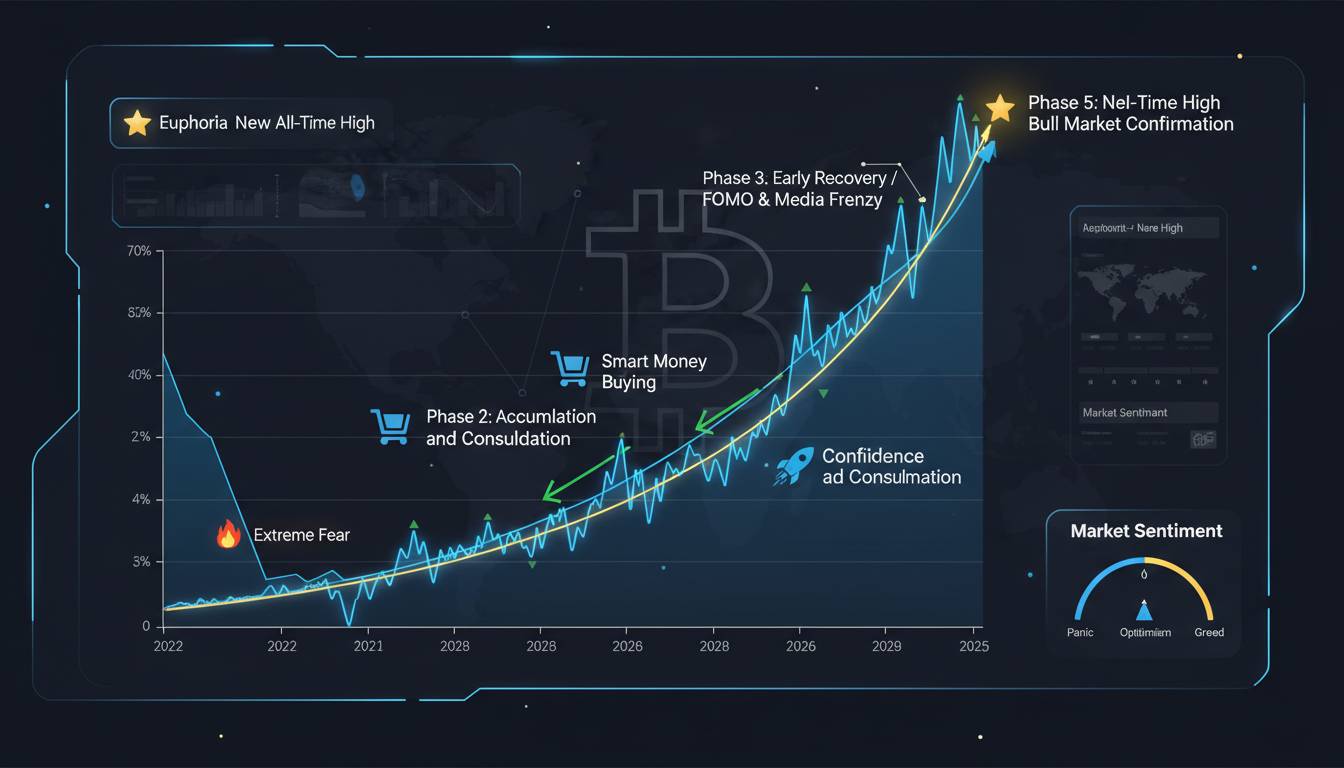
In the longer term (12-24 months post-halving), the accumulated supply reduction becomes significant. Market sentiment shifts to growing optimism as price stabilizes and rises. New buyers enter and FOMO kicks in. The typical outcome is price exceeding the pre-halving peak by a significant margin.
The key insight is that halving affects supply and demand on different timescales. The immediate market has to work through selling pressure from miners and profit-taking from early buyers. The longer-term market benefits from the compounded effect of reduced new supply meeting continued demand growth.
Looking Forward
Bitcoin’s relationship with the halving has been one of the most consistent patterns in cryptocurrency—but consistency doesn’t mean predictability in the short term.
The drop after halving is predictable because it’s driven by human psychology (profit-taking) and economics (miner capitulation). The recovery is also predictable in direction, but the timing and magnitude depend on factors that are much harder to forecast: macroeconomic conditions, regulatory developments, and the emergence of new demand sources.
What I can say with confidence is this: every cycle, someone declares that the halving “doesn’t matter anymore” or that “this time is different.” And every cycle, the pattern repeats in some form. The specifics change. The macro environment shifts. But the underlying dynamics—selling pressure from those who have been waiting to sell, followed by supply scarcity for those who keep buying—remain.
Whether you’re trading the cycle or holding for the long term, understanding these two forces is what keeps you from making the most expensive mistake: selling at the bottom because you’ve convinced yourself the recovery will never come.