
If you’ve invested in Dogecoin or are thinking about buying DOGE, you’ve probably asked yourself: “What if DOGE hits $1? What about $5? What would my investment actually be worth?” These are reasonable questions. Knowing how to calculate your potential returns at any target price helps you make decisions rather than guess.
This guide explains how Dogecoin return calculations work, the mathematical formula behind every calculator, and why understanding the mechanics matters. I’ll walk you through real examples using specific price points, point out where most people go wrong, and give you everything you need to calculate your own DOGE returns—whether you’re using a calculator tool or doing the math yourself.
How the Dogecoin Calculator Works
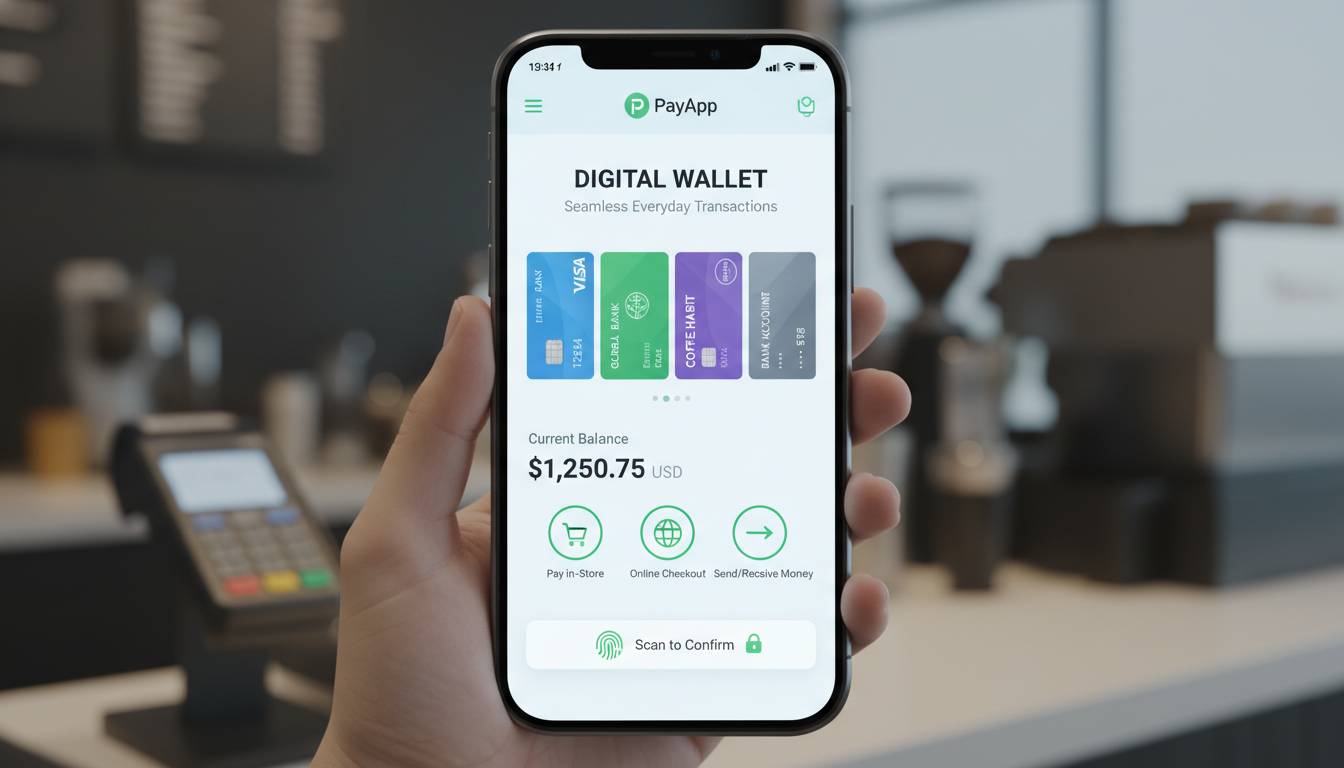
A Dogecoin return calculator answers one question: if I invest a certain amount in DOGE at today’s price (or my actual purchase price) and the value increases to a specific target price, what will my investment be worth?
The calculator takes three inputs. First, your investment amount—the total dollar value you’re putting into Dogecoin. Second, your purchase price—or if you already own DOGE, the average price you paid per coin. Third, your target price—the price at which you want to evaluate your returns.
With these three variables, the calculator shows your potential profit, your total value at the target price, and your return on investment as a percentage. Some calculators also account for dollar-cost averaging, where you’ve made multiple purchases at different price points over time.
The key distinction is calculating returns based on today’s current price versus calculating returns based on your actual purchase price. If you bought DOGE at $0.08 per coin and the current price is $0.12, your “cost basis” is $0.08. Most basic calculators assume you’re buying at the current moment, which works for hypothetical projections but not for analyzing existing positions.
The Dogecoin Return Formula
The math behind Dogecoin return calculations is simple, but it’s where most people make errors. Here’s the formula:
ROI (%) = ((Target Price – Purchase Price) / Purchase Price) × 100
This gives you your percentage return. To find your dollar profit:
Profit = Investment Amount × (ROI / 100)
Or calculate your total holdings and multiply by the target price:
Total DOGE Owned = Investment Amount / Purchase Price
Value at Target = Total DOGE Owned × Target Price
Profit = Value at Target – Investment Amount
Here’s a concrete example. Say you invested $1,000 in Dogecoin when the price was $0.10 per coin. Your target is $1.00 per coin.
First, find how many DOGE you bought: $1,000 ÷ $0.10 = 10,000 DOGE. At your target price of $1.00: 10,000 × $1.00 = $10,000. Your profit is $10,000 – $1,000 = $9,000. Your ROI is ($9,000 ÷ $1,000) × 100 = 900%.
That 900% return is staggering—and it is—but context matters. Dogecoin reaching $1.00 would represent roughly a 10x increase from $0.10, which would require massive new adoption, institutional buying, or another cultural moment like what happened in early 2021.
Here’s another example. Suppose you invested $500 at $0.30 per coin, targeting $0.50. You buy: $500 ÷ $0.30 = 1,666.67 DOGE. At target: 1,666.67 × $0.50 = $833.33. Your profit is $333.33, or 66.67% ROI.
The formula stays the same regardless of the numbers.
Step-by-Step Calculation Guide
Whether you’re using a calculator or working through this manually, here’s exactly what to do.
Step 1: Determine your investment amount. This is however much money you’re putting into DOGE. If you’re calculating returns on an existing position, it’s the total dollar value of DOGE you currently hold.
Step 2: Establish your purchase price or average cost. If you made a single purchase, your purchase price is what you paid per coin. If you bought multiple times at different prices, calculate your weighted average cost: total dollars spent divided by total DOGE acquired.
For example, if you bought 1,000 DOGE at $0.08 and another 1,000 DOGE at $0.12, you spent $80 + $120 = $200 for 2,000 DOGE. Your average cost is $200 ÷ 2,000 = $0.10 per coin.
Step 3: Choose your target price. Pick a specific price—$1, $5, $10, $100. The target should be grounded in some reasoning, whether it’s historical highs, analyst predictions, or technical analysis levels.
Step 4: Calculate your potential returns. Apply the formula from the previous section. Double-check your arithmetic—one decimal place error can change the outcome.
Step 5: Evaluate the reasonableness of your target. A calculator will tell you that $1,000 at $0.10 becomes $1 million if DOGE hits $100—but that’s not helpful if there’s no realistic path to $100.
Understanding Your Results
Once you’ve calculated your potential returns, the next question is: what does this number actually mean?
A 500% return sounds incredible until you consider the timeline. A 500% return over five years is roughly 43% annually, which is exceptional. The same 500% return over one year is extraordinary. Over ten years, it’s merely decent. Context transforms a seemingly obvious “great investment” into something requiring more analysis.
Position size matters too. If you’re calculating returns on $100, a 500% gain gives you $600. That’s nice, but not life-changing. The same 500% on a $10,000 position becomes $60,000—a meaningful amount for most people.
Consider the downside. Every return calculation should come with an equal analysis of loss. If you invest $1,000 and DOGE goes to zero, you lose $1,000. Most calculators don’t show this, but you need to ask yourself: can I afford to lose this money? If the answer is no, the potential upside doesn’t matter.
Dogecoin Price History and Context
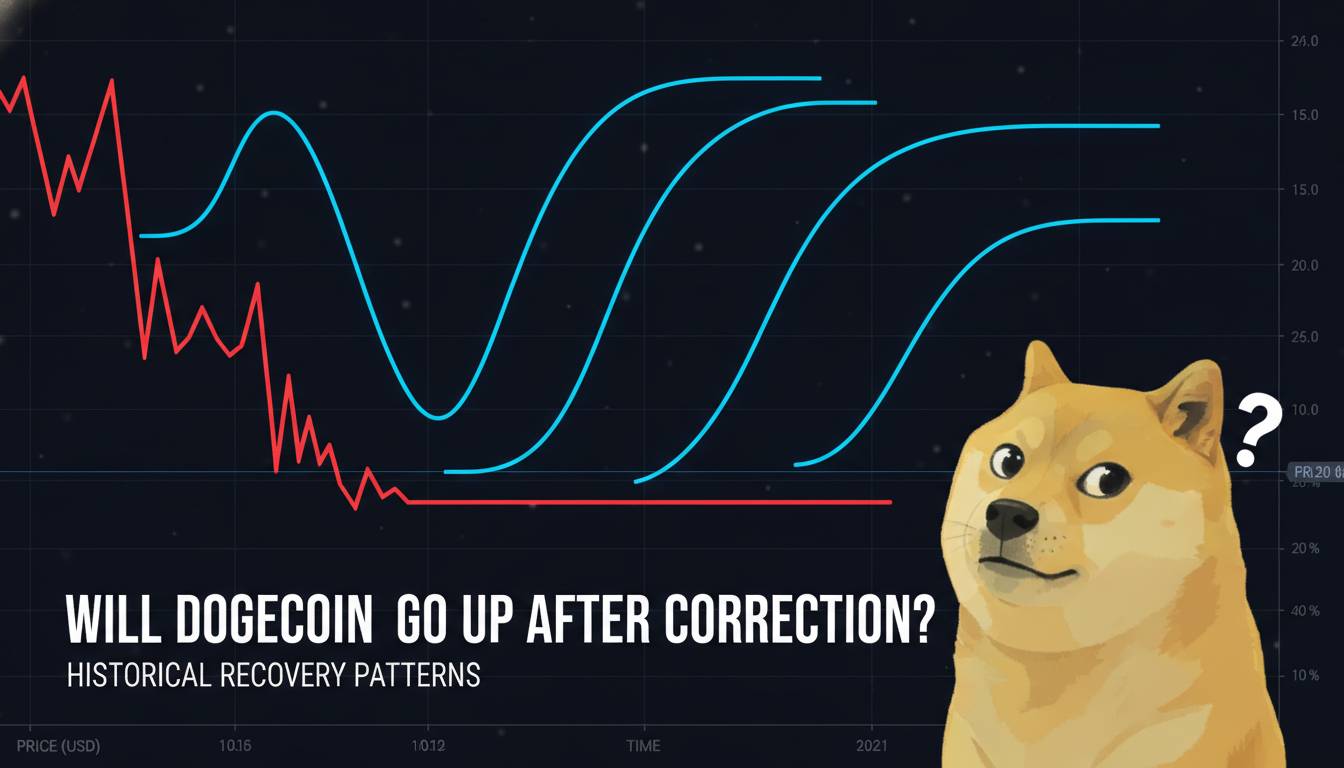
To make realistic target price projections, you need to understand where Dogecoin has been. DOGE was created in December 2013 as a meme cryptocurrency, originally trading for fractions of a cent. For most of its first seven years, it remained a curiosity—useful mainly for tipping and small transactions.
The narrative shifted dramatically in 2021. Between January and May 2021, DOGE rose from around $0.007 to an all-time high of approximately $0.73—a gain of over 10,000%. This surge was driven by social media enthusiasm, celebrity endorsements (particularly from Elon Musk), and the broader retail trading boom following GameStop’s short squeeze.
After reaching that peak, DOGE declined significantly throughout 2022 and 2023, like most cryptocurrencies. As of early 2025, DOGE trades at a fraction of its 2021 highs, though it remains one of the most-held cryptocurrencies by retail investors and maintains an active community.
What does this history tell us about future projections? Dogecoin has produced extraordinary gains, but those gains came under specific conditions that may or may not repeat. The cryptocurrency market is still relatively young, and meme coins in particular are subject to sentiment-driven volatility that makes long-term prediction extremely difficult.
Real Examples at Different Target Price Points
Let’s run through scenarios assuming a $1,000 investment at a purchase price of $0.12 (roughly where DOGE traded in late 2024).
Target: $0.25 (roughly 2x current price)
Your ROI would be approximately 108%. At target, your $1,000 becomes $2,083. Doubling your money is never guaranteed in crypto, but this is arguably the most “reasonable” target among these examples.
Target: $0.50 (roughly 4x current price)
Your ROI would be approximately 317%. At target, your $1,000 becomes $4,167. For context, DOGE achieved this level of growth multiple times during 2021, but sustaining it proved impossible.
Target: $1.00 (roughly 8x current price)
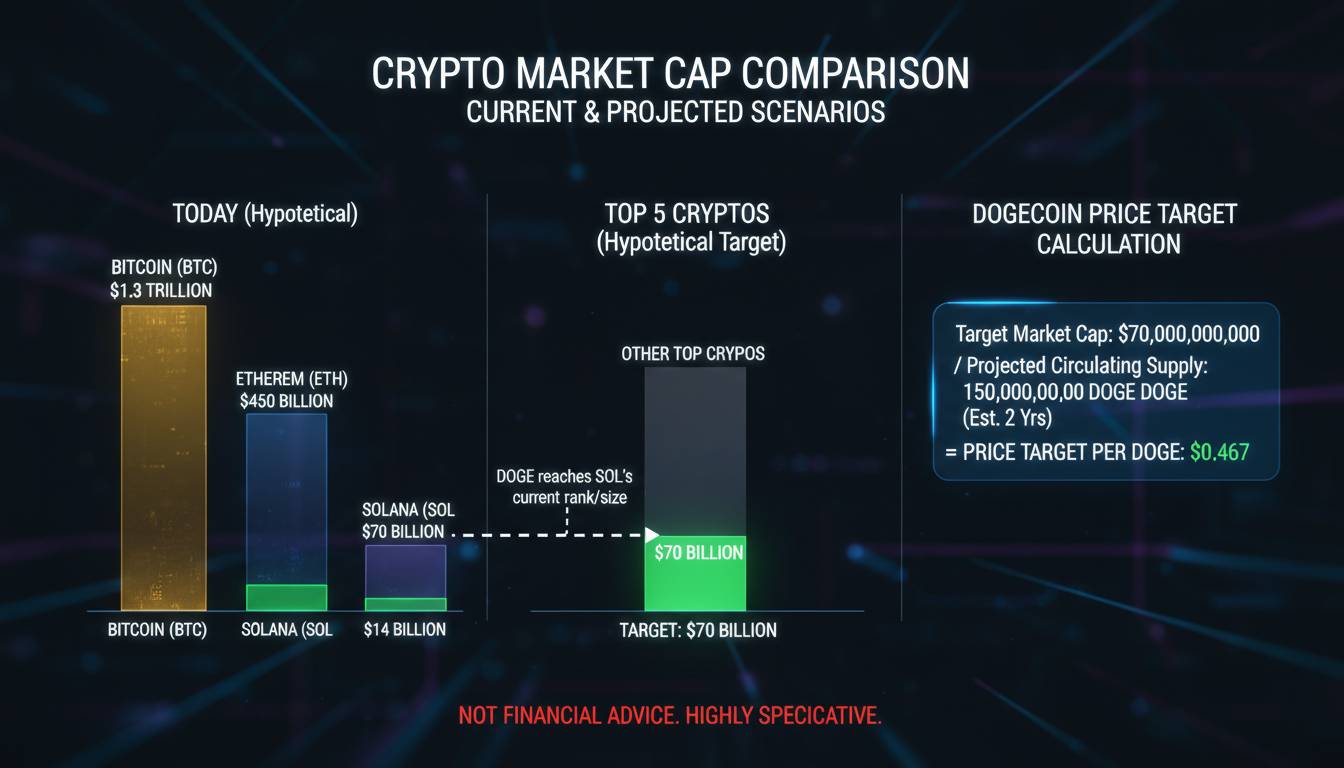
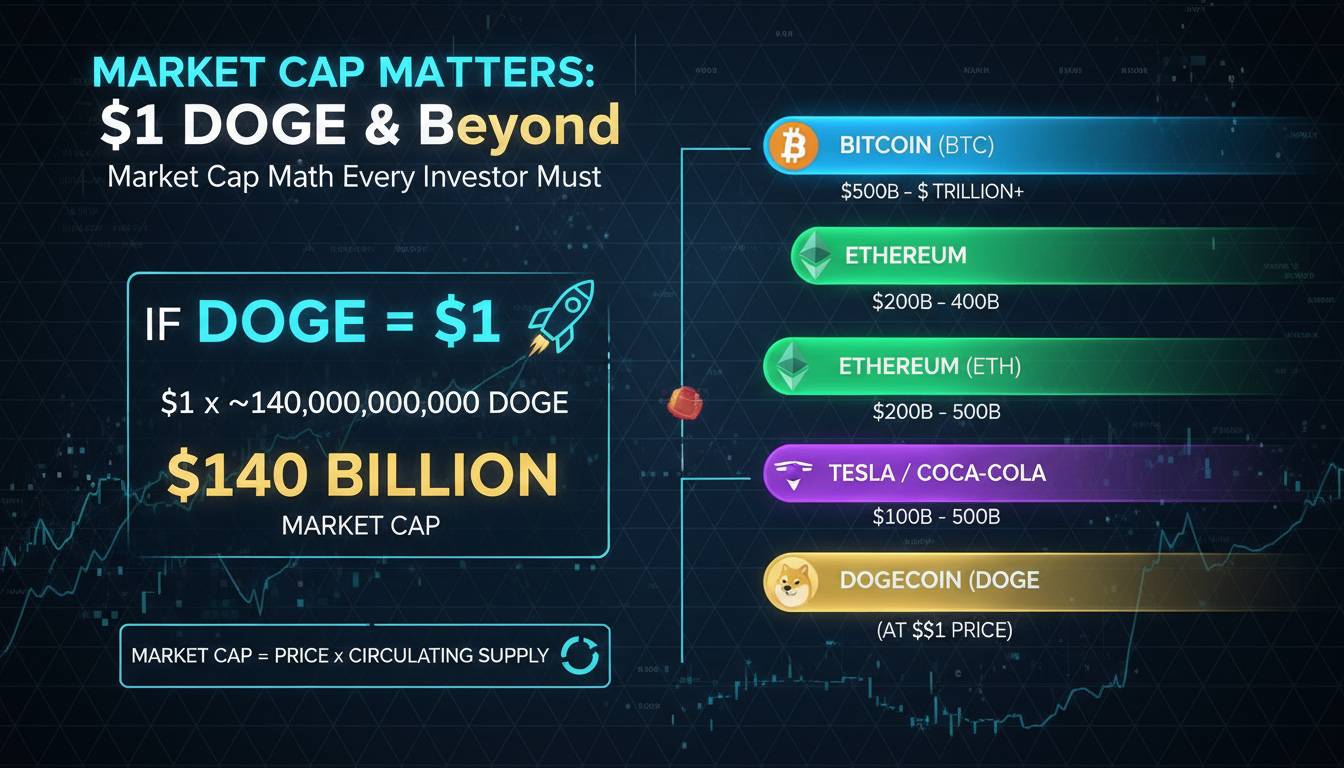
Your ROI would be approximately 733%. At target, your $1,000 becomes $8,333. Reaching $1.00 would put Dogecoin’s market cap in the range of $140-150 billion, making it one of the most valuable cryptocurrencies in existence.
Target: $5.00 (roughly 40x current price)
Your ROI would be approximately 4,067%. At target, your $1,000 becomes $41,667. For DOGE to reach $5.00, its market cap would exceed $700 billion—larger than most national currencies and approaching the total crypto market cap from 2021.
Target: $10.00 (roughly 80x current price)
Your ROI would be approximately 8,233%. At target, your $1,000 becomes $83,333. The market cap would exceed $1.4 trillion—larger than the entire crypto market during most of 2021.
These calculations aren’t meant to discourage you from investing in Dogecoin. They’re meant to help you understand what various price targets actually imply about market cap and growth.
Common Mistakes to Avoid
I’ve seen the same errors repeat over and over. Here’s where most people go wrong.
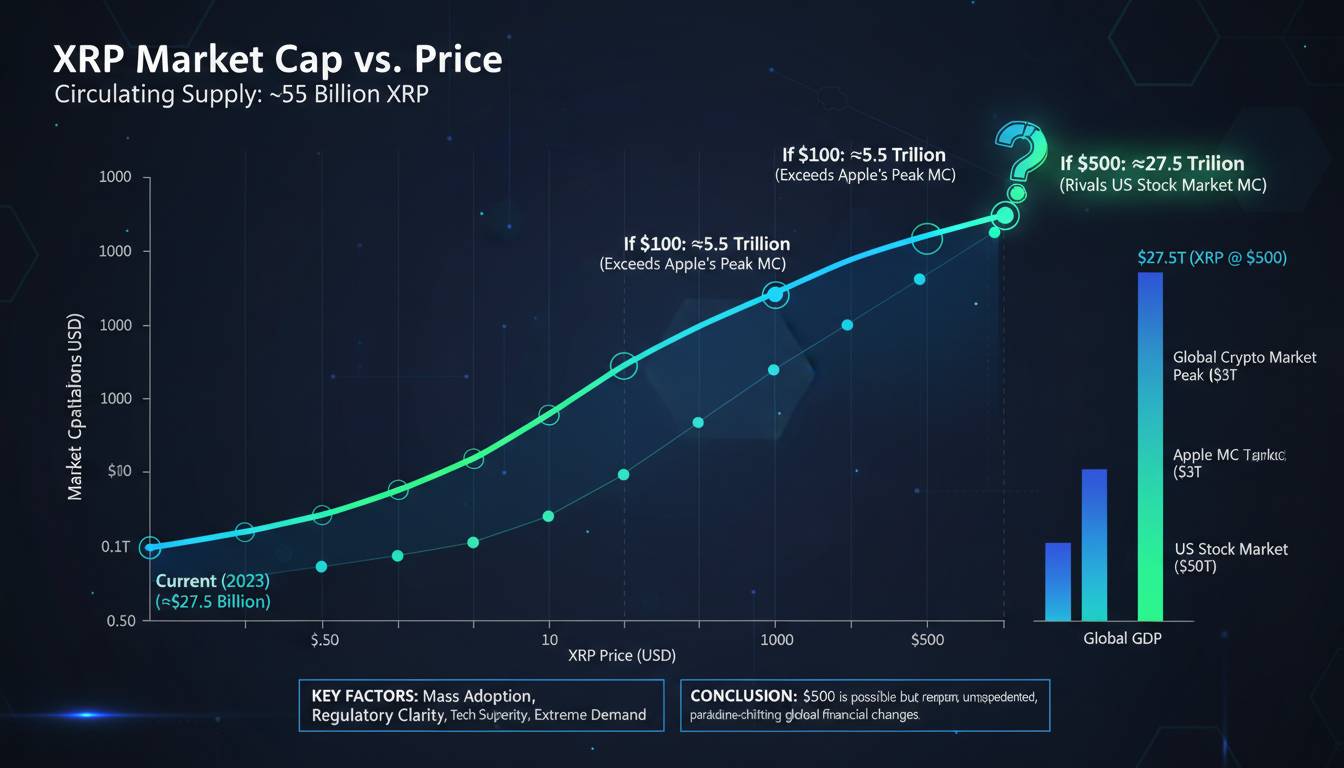
Mistake #1: Ignoring market cap. This is the biggest problem. People see “$10 target” and think it sounds reasonable without checking what that price would mean for market cap. A coin with 140 billion tokens in circulation reaching $10 would be worth more than Apple, Google, and Amazon combined. That doesn’t make it impossible, but it does make it worth questioning.
Mistake #2: Treating targets as guarantees. A calculator shows you what your returns would be at a certain price—but it doesn’t tell you the probability of reaching that price. A target of $1.00 looks the same mathematically whether there’s a 50% chance or a 0.001% chance. Your investment decision should account for probability, not just potential return.
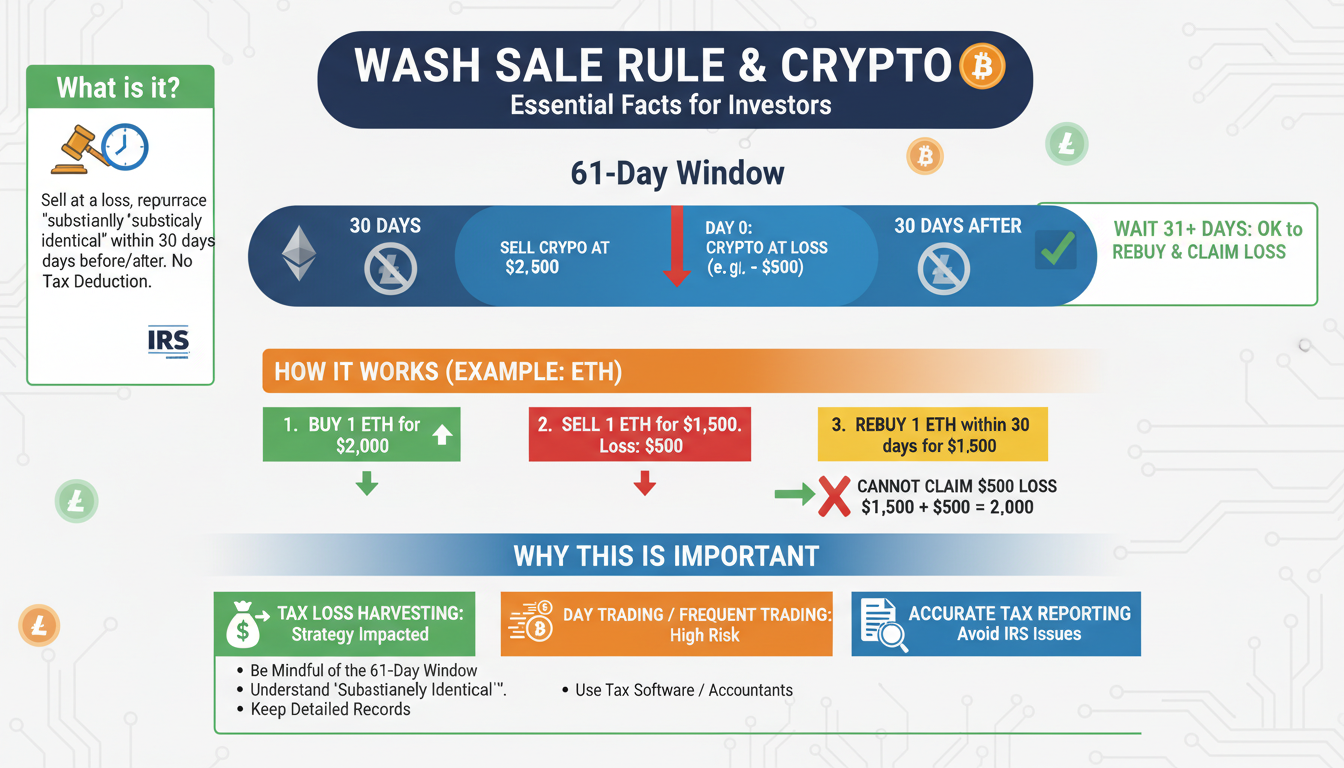
Mistake #3: Forgetting about fees and taxes. If you’re trading on an exchange, you’re paying transaction fees. If you profit significantly, you’re potentially liable for capital gains taxes. Both reduce your actual returns. Many calculators show gross returns without accounting for these costs.
Mistake #4: Not calculating downside scenarios. Most people only calculate the upside. What happens if DOGE drops 50%? What if it drops 90%? These aren’t unthinkable scenarios in crypto. Understanding your potential loss is just as important as understanding your potential gain.
Mistake #5: Using outdated purchase prices. If you bought DOGE at various times, using only your most recent purchase price distorts your calculations. Always calculate your average cost basis across all your positions.
Advanced Calculation: Dollar-Cost Averaging
If you’ve been accumulating Dogecoin over time rather than buying all at once, your calculation needs to account for that. Dollar-cost averaging (DCA) means you’ve bought at multiple price points, so your average cost is different from any single purchase price.
The formula for DCA returns requires calculating your weighted average cost:
Total Investment = Sum of all individual purchases
Total DOGE = Sum of all DOGE purchased
Average Cost = Total Investment / Total DOGE
Then use your average cost in the return formula instead of any single purchase price.
For example, suppose you made three purchases over six months: $500 at $0.10 (5,000 DOGE), $500 at $0.15 (3,333 DOGE), and $500 at $0.08 (6,250 DOGE). Your total investment is $1,500. Your total DOGE is 14,583. Your average cost is $1,500 ÷ 14,583 = approximately $0.103 per coin.
Now if your target is $0.50, your ROI calculation uses $0.103 as the purchase price rather than any individual purchase price. This gives you an accurate picture of your actual return across your entire position.
Risk Factors Every Investor Should Consider
Here’s something most calculator articles won’t tell you: Dogecoin faces significant challenges that affect whether any target price is achievable.
First, there’s no technical innovation driving Dogecoin. Unlike Ethereum, which supports smart contracts, or Solana, which offers high-speed transactions, Dogecoin is primarily a payment token with no major upgrades in development. Its value is almost entirely sentiment-driven, which makes it more vulnerable to sudden sentiment shifts.
Second, the supply structure is problematic for price appreciation. With roughly 140 billion DOGE in circulation (and no hard cap like Bitcoin’s 21 million), massive price increases require proportionally massive new capital inflows. For DOGE to reach $1.00, someone would need to invest over $140 billion new dollars into the system.
Third, regulatory risk is real. The SEC and other regulators have increasingly scrutinized cryptocurrency markets. Any adverse regulatory action could significantly impact Dogecoin’s trading price and accessibility.
Fourth, the “meme coin” narrative cuts both ways. The same social media enthusiasm that drove DOGE’s 2021 rally can reverse just as quickly. There’s no fundamental utility backing the price—just community belief and cultural momentum.
I’m not saying don’t invest in Dogecoin. I’m saying the calculator should be one input into a broader decision-making process, not the entire basis for it.
Frequently Asked Questions
How do I calculate my Dogecoin profit?
Subtract your purchase price from your selling price (or current price), divide by your purchase price, and multiply by 100 to get your ROI percentage. Multiply your initial investment by the ROI percentage to find your dollar profit.
How much will I make if Dogecoin reaches $1?
If you invested $1,000 at $0.12 per coin, you would own approximately 8,333 DOGE. At $1.00, your position would be worth $8,333—a profit of $7,333 or 733% ROI. However, this requires DOGE’s market cap to reach approximately $140 billion.
What is the formula for crypto returns?
The general formula is: ((Current Value – Investment Amount) / Investment Amount) × 100 = ROI percentage. For projecting future returns at a target price, use: ((Target Price – Purchase Price) / Purchase Price) × 100.
Is a Dogecoin calculator accurate?
Calculators are mathematically accurate but projections are speculative. The calculator will give you exact numbers based on your inputs, but those numbers assume your target price is reached. The more important question is whether the target price is realistic.
Should I invest in Dogecoin based on return calculations?
No single calculation should drive your investment decision. Consider your risk tolerance, investment timeline, position size, and understanding of Dogecoin’s fundamental value proposition before investing.
Conclusion
The math of Dogecoin return calculations is straightforward—input your investment, purchase price, and target price, and the formula delivers your potential profit and ROI. Every calculator works the same way, and the math never lies.
What the math can’t tell you is whether your target price is realistic, whether Dogecoin’s community will sustain its relevance, or whether regulatory changes will reshape the entire cryptocurrency landscape. Those questions require judgment, research, and honest self-assessment of your risk tolerance.
Use calculators to understand the mechanics and the scale of potential returns, but never mistake mathematical possibility for investment advice. A $1 million return on paper means nothing if the probability of reaching your target price is essentially zero.
The best use of a Dogecoin calculator isn’t to dream about life-changing gains—it’s to understand exactly what you’re getting into, what price targets would actually require in terms of market growth, and whether you’re comfortable with the risk-reward tradeoff those numbers represent.