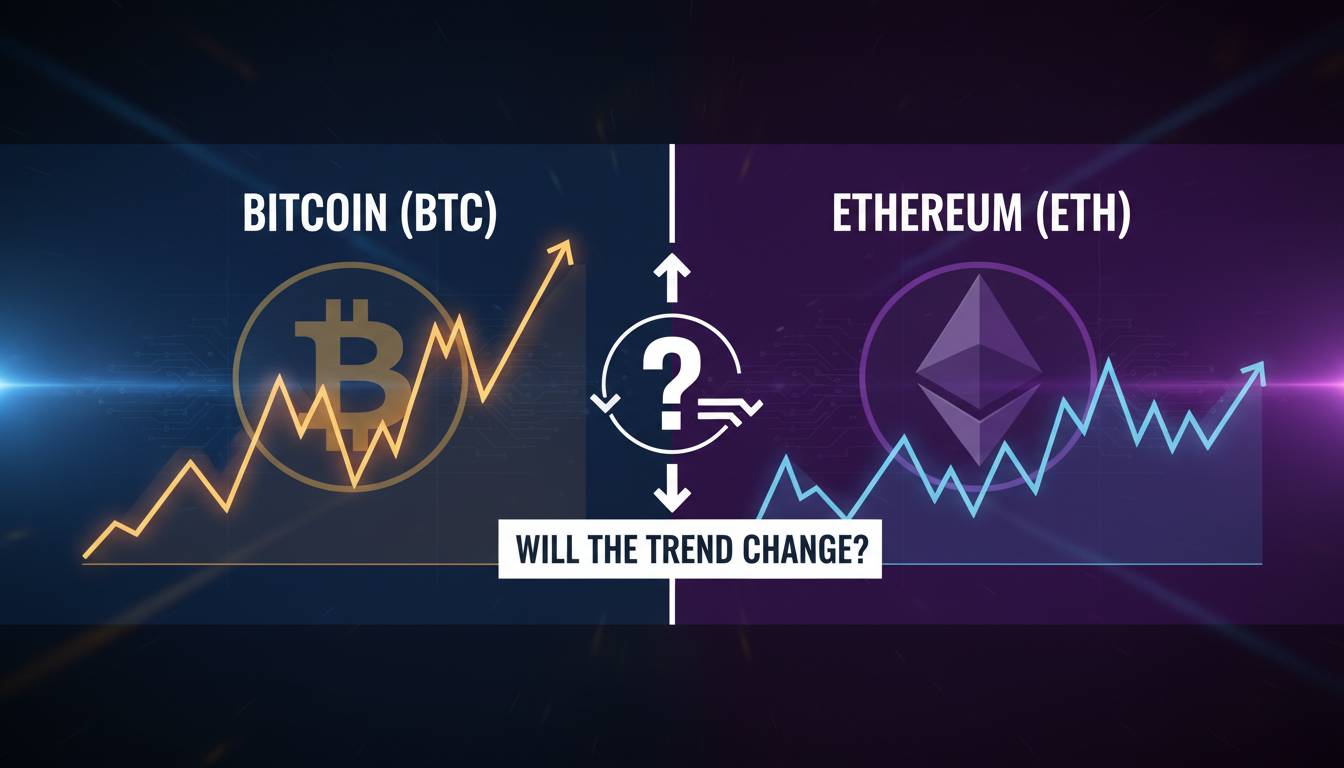

Understanding why Ethereum Classic trades differently from Ethereum requires more than surface-level price charts. The two cryptocurrencies share a common origin but have diverged in their technical foundations, community philosophies, and market positioning. This divergence creates distinct price dynamics that aren’t just simple correlation. Whether you’re researching investment opportunities or want to understand cryptocurrency market mechanics, grasping why ETC moves independently from ETH reveals fundamental truths about how blockchain communities shape value.
This analysis examines the structural differences between these two chains, traces their historical price relationships, identifies the specific factors driving ETC’s independent movements, and provides context for evaluating ETC’s investment profile without offering specific price forecasts.
What is Ethereum Classic and Why Did It Split From Ethereum?
Ethereum Classic originated from one of the most dramatic events in cryptocurrency history: the 2016 DAO hack. The Decentralized Autonomous Organization was a venture capital fund built on Ethereum that attracted about 3.6 million ETH in crowdfunding. In June 2016, a vulnerability in the DAO’s smart contract allowed an attacker to drain roughly 3.6 million ETH—worth about $50 million at the time—into a child DAO.
The Ethereum community faced a decision. The majority voted to implement a hard fork, effectively reversing the hack and returning funds to original investors. This split the blockchain into two separate networks: Ethereum, which implemented the fork, and Ethereum Classic, which maintained the original unmodified chain.
This historical fork established ETC’s core identity. ETC proponents argued that code is law and that immutability should never be compromised—not even to correct injustices. This stance attracted users who prioritized blockchain immutability above all else, creating a distinct community with different values than Ethereum proper.
The market initially valued both chains similarly, but over time, ETH attracted the vast majority of development activity, institutional investment, and mainstream adoption. As of early 2025, Ethereum’s market capitalization is about ten times larger than Ethereum Classic’s, though both remain actively traded cryptocurrencies with dedicated communities.
Key Technical Differences Between ETH and ETC
The technical divergence between Ethereum and Ethereum Classic extends beyond their 2016 split, creating different blockchain environments that affect everything from transaction processing to miner incentives.
Proof of Work Versus Proof of Stake
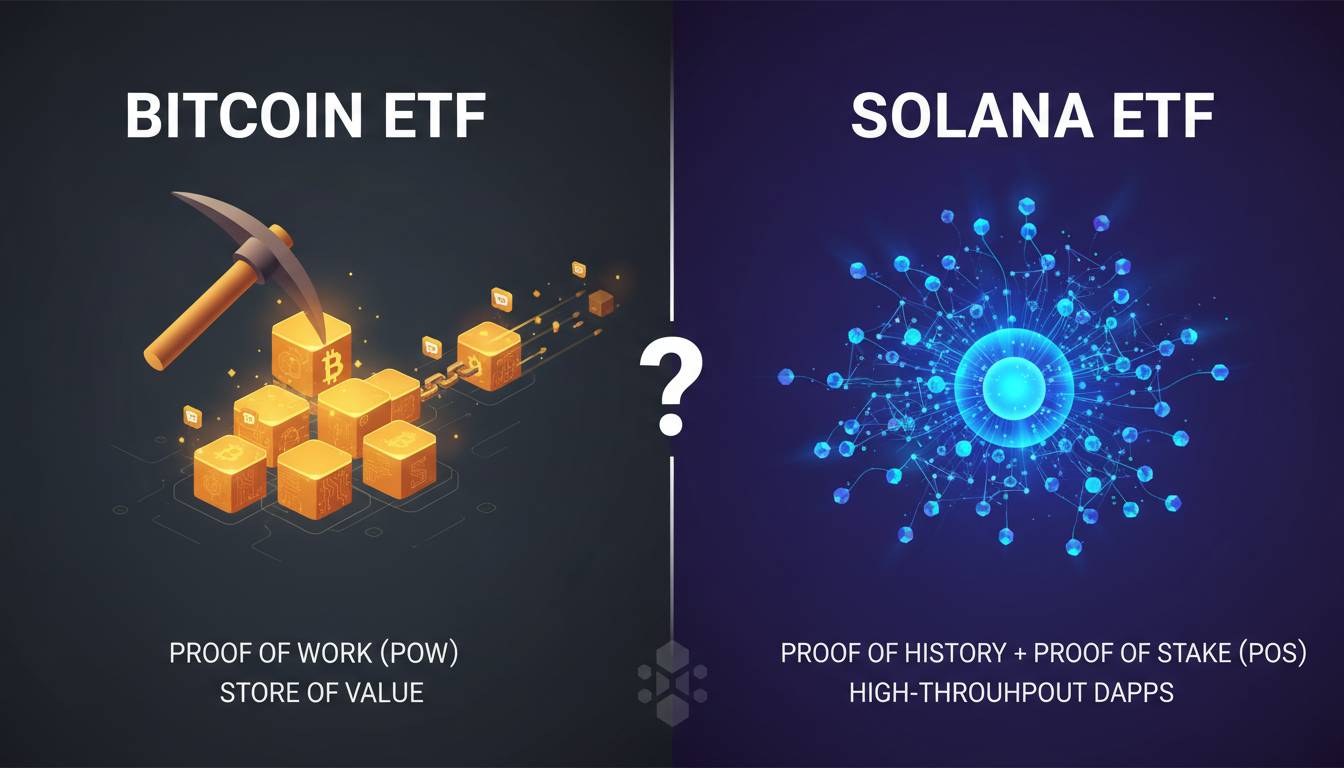
The biggest difference emerged in September 2022 when Ethereum completed its transition to Proof of Stake through an event called “The Merge.” This upgrade replaced energy-intensive mining with a system where validators stake ETH to secure the network. ETH holders can become validators or delegate their holdings to existing validators, earning yields while the network uses far less energy than its Proof of Work predecessor.
Ethereum Classic remains committed to Proof of Work consensus, maintaining the original mining-based security model. This decision has significant implications. ETC continues relying on GPU and ASIC miners to validate transactions and create new blocks, consuming substantial electricity but preserving the competitive mining ecosystem that characterized early cryptocurrency security.
This affects price dynamics in several ways. Miner selling pressure creates consistent supply streams that influence ETC pricing differently from ETH, where validator economics work under entirely different mechanics.
Chain Architecture and Upgrades
Ethereum has undergone continuous major upgrades since its inception—Constantinople, Berlin, London, and numerous others—each introducing technical improvements. The network now processes significantly more transactions per second than ETC and supports a vast ecosystem of Layer 2 solutions that further enhance scalability.
Ethereum Classic has adopted some Ethereum upgrades through backward compatibility but operates with more limited development resources. The ETC development community focuses primarily on maintaining chain security rather than pursuing aggressive technical advancement. This conservative approach appeals to users who value stability over rapid innovation but limits ETC’s ability to support modern decentralized applications.
Network Hash Rate and Security
Hash rate—the total computational power securing a Proof of Work blockchain—differs substantially between the two networks. Ethereum’s hash rate before The Merge peaked at about 1.1 petahashes per second. ETC’s hash rate hovers around 50-100 terahashes per second as of early 2025, representing a much smaller security budget.
This matters for chain security and community dynamics. Lower hash rate makes ETC theoretically more vulnerable to 51% attacks—situations where a single entity controls most mining power and could manipulate the blockchain. Several 51% attacks have occurred on ETC, including notable incidents in 2019 and 2020, where attackers double-spent coins by controlling the network’s hash rate temporarily. These incidents have affected ETC’s market perception and price stability.
Historical Price Performance: How ETC Has Moved Independently
Examining price history shows that while ETH and ETC sometimes move together, significant divergences have characterized their relationship, particularly during major market events.
Early Years: Parallel Movements (2016-2019)
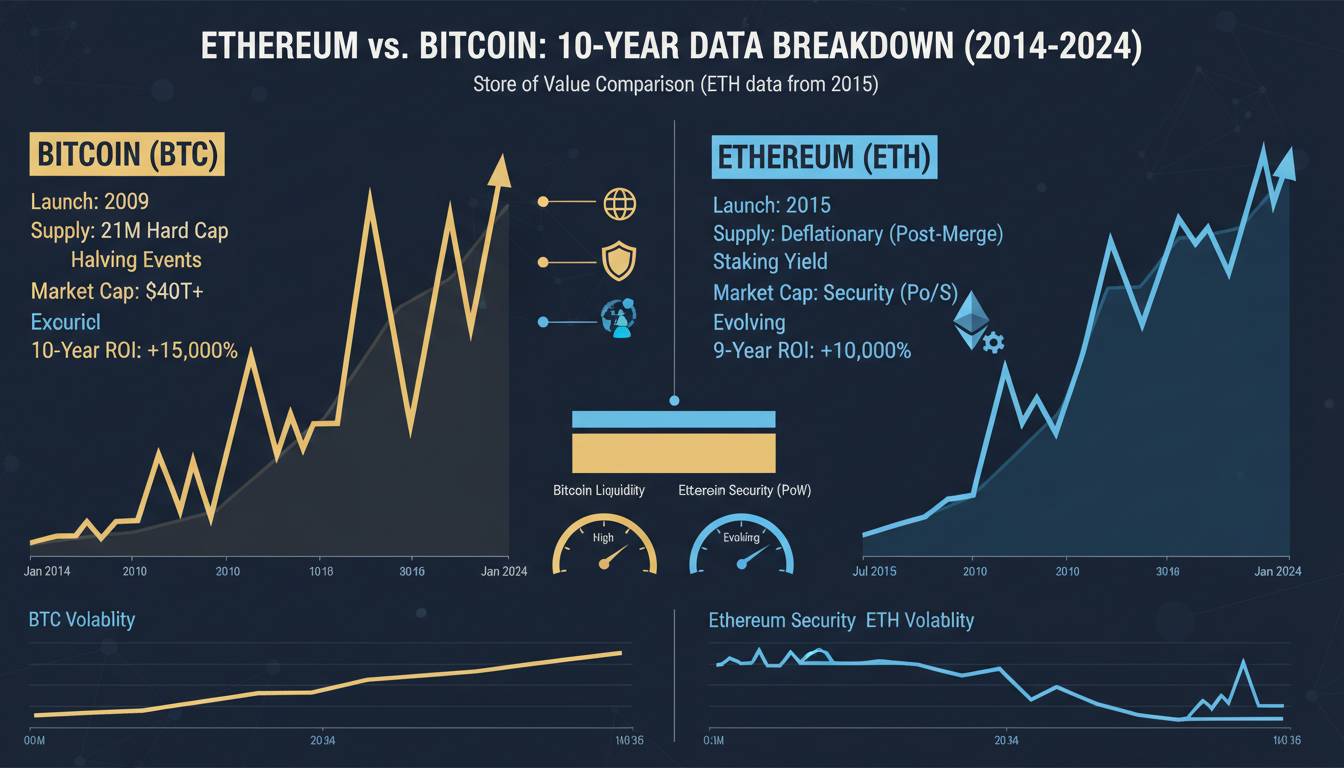
Right after the fork, both chains traded at similar valuations, reflecting their shared history and user base. However, as Ethereum attracted more development activity and mainstream attention, price trajectories began diverging. ETH benefited from the ICO boom of 2017, DeFi summer of 2020, and NFT mania of 2021, reaching prices above $4,800 at its 2021 peak. ETC peaked at about $168 in the same cycle—a fraction of ETH’s gains.
This reflects differences in adoption, utility, and perceived value. While both experienced bull and bear cycles, ETH’s percentage gains consistently outpaced ETC’s throughout this period.
The Merge and Its Aftermath
The 2022 Merge created another significant divergence point. ETH’s transition to Proof of Stake eliminated mining rewards, changing the tokenomics substantially. Some miners redirected their operations to ETC, briefly increasing its hash rate. However, ETC’s price didn’t benefit from this in any sustained way.
Since the Merge, ETC has faced continued downward pressure relative to ETH. The market has priced in Ethereum’s dominance, treating ETC as a legacy chain with limited growth prospects compared to ETH’s evolving ecosystem.
The relationship between these two assets shows that while correlation exists—cryptocurrency markets often move together during broad bull or bear phases—underlying fundamentals drive long-term price differentiation. ETC’s smaller market cap and more limited use cases create higher volatility but lower overall returns compared to ETH during most market cycles.
Why ETC Moves Differently From ETH: The Key Factors
Multiple factors cause Ethereum Classic to exhibit price behavior distinct from Ethereum, beyond simple market correlation. Understanding these drivers helps explain why ETC deserves analysis as a separate asset rather than simply a smaller Ethereum derivative.
Miner Economics and Selling Pressure
Proof of Work mining creates ongoing selling pressure that works differently from ETH’s post-Merge dynamics. ETC miners must sell a portion of their rewards to cover electricity and hardware costs, creating consistent supply that must be absorbed by buyers. This influences ETC’s price floor differently than ETH, where validator rewards are more variable and often held rather than sold immediately.
When cryptocurrency markets decline, miner capitulation becomes particularly pronounced in Proof of Work chains. As mining becomes unprofitable, miners disconnect machines or exit entirely, reducing network security while potentially creating panic about the chain’s future viability. ETC has experienced multiple episodes where miner exit correlated with significant price drops.
Smaller Market Cap and Lower Liquidity
Ethereum Classic’s smaller market capitalization means less trading volume and wider bid-ask spreads. This liquidity difference amplifies price movements in both directions. A relatively small trade can move ETC’s price more significantly than ETH, where deeper order books absorb large orders with minimal price impact.
This also affects how ETC responds to news. Positive announcements might trigger sharper rallies in ETC than equivalent news would generate in ETH, simply because fewer shares need to change hands to move prices significantly.
Different Investor Perceptions
The cryptocurrency market has priced ETH as Ethereum’s primary chain—the one with institutional adoption, DeFi dominance, and continuous development. ETC occupies a different mental space for investors: either a niche for immutability purists or a speculative asset with limited fundamental backing.
This affects how capital flows during different market conditions. During risk-on periods, some investors may allocate to ETC seeking higher volatility and potential gains. During risk-off periods, ETC often experiences sharper drawdowns as investors retreat to perceived safer cryptocurrency assets.
Chain Stability Events and Security Concerns
The 51% attacks ETC has experienced—most notably in 2019 and 2020—created negative news cycles that affected price differently than equivalent events would affect ETH. These attacks demonstrated real security vulnerabilities, shaking confidence in the chain’s reliability as a store of value or transaction settlement layer.
When such attacks occur, ETC typically experiences sharper price drops than ETH would from equivalent negative news, reflecting its smaller security budget and the market’s assessment of higher tail risk. This creates price behavior that can diverge significantly from ETH during periods of chain instability.
Network Effect and Ecosystem Differences
Ethereum’s network effects—the increasing value derived from its growing ecosystem of applications, users, and developers—have compounded over time. This creates self-reinforcing growth that ETC simply cannot match without significant changes to its development trajectory.
The vast majority of decentralized applications, stablecoins, and blockchain infrastructure builds on Ethereum. ETC’s ecosystem remains limited, with fewer applications and developers building on its chain. This difference in utility affects long-term demand for each token and contributes to their divergent price trajectories.
Understanding Ethereum Classic Price Predictions
Price prediction for any cryptocurrency involves substantial uncertainty, and ETC’s smaller market cap introduces additional volatility that makes precise forecasting particularly challenging. Rather than offering specific price targets, understanding the variables that would influence ETC’s price provides more practical analytical value.
Variables That Could Influence ETC Price Positively
Sustained higher cryptocurrency prices across the broader market would likely lift ETC alongside other assets. If ETH experiences significant price appreciation, some market participants might seek higher-beta alternatives in the broader Ethereum ecosystem, potentially benefiting ETC.
Increased adoption of Proof of Work chains for specific use cases—particularly applications prioritizing censorship resistance and immutability—could create demand that benefits ETC specifically. Some users and developers prefer Proof of Work chains for ideological reasons, and this preference could translate into increased ETC usage if more applications build on the chain.
Institutional interest, while currently minimal for ETC, would represent a significant catalyst. Any move by major financial institutions to allocate to ETC would require substantial purchasing that could move prices substantially given the asset’s lower liquidity.
Variables That Could Pressure ETC Price
Continued Ethereum dominance in smart contract platforms suggests ETC may struggle to capture meaningful market share. As ETH develops and expands its Layer 2 ecosystem, the competitive gap between the chains likely widens rather than narrows.
Regulatory pressure on Proof of Work cryptocurrencies could disproportionately affect ETC. Several jurisdictions have considered restrictions on Proof of Work mining due to energy concerns, and such policies would directly impact ETC’s operational environment.
Competition from other Proof of Work chains creates additional pressure. Chains like Ravencoin, Kaspa, and others compete for the same mining community and may offer superior technical features or community dynamics that draw attention and resources away from ETC.
Is Ethereum Classic a Worthwhile Investment?
Evaluating ETC as an investment requires honest acknowledgment of its position within the broader cryptocurrency landscape. The asset carries characteristics that appeal to specific investor profiles while presenting challenges that others may find prohibitive.
The Case For ETC
For investors who prioritize immutability and Proof of Work principles, ETC represents a direct expression of those values. Unlike many cryptocurrencies that have modified their protocols significantly, ETC has maintained its commitment to the original Ethereum vision of code-is-law immutability.
The higher volatility relative to ETH creates opportunities for traders seeking amplified moves. During certain market conditions, ETC’s percentage movements exceed ETH’s, providing higher potential returns and losses for those positioned correctly.
Some investors believe ETC is undervalued relative to its historical role in Ethereum’s development. From this perspective, the market has unfairly discounted ETC despite its continued operation and dedicated community.
The Case Against ETC
The fundamental challenges facing ETC are substantial. Limited development activity, smaller ecosystem, and continued ETH dominance suggest structural disadvantages that may prove difficult to overcome. Investors in ETH benefit from network effects and continuous protocol improvements that ETC cannot match with its current resources.
Security concerns represent a genuine risk. The 51% attacks experienced by ETC demonstrated real vulnerabilities that could recur. Any assessment of ETC must acknowledge that its security budget is lower than alternatives, creating legitimate tail risk that does not exist to the same degree on larger chains.
The honest assessment acknowledges that ETC has lost market relevance over time. While it remains a traded cryptocurrency with a community, its role in the broader blockchain ecosystem has diminished rather than grown since the 2016 fork.
Frequently Asked Questions
What is the main difference between Ethereum Classic and Ethereum?
The primary difference is that Ethereum Classic maintains Proof of Work consensus while Ethereum transitioned to Proof of Stake in 2022. Additionally, ETC emerged from the 2016 DAO hack as the chain that refused to reverse the exploit, maintaining the original unaltered blockchain. ETH implemented the hard fork to return funds to DAO investors.
Why is Ethereum Classic price lower than Ethereum?
Multiple factors contribute to the price difference: Ethereum has captured the vast majority of development activity, institutional adoption, and user base. ETH’s market cap is about ten times larger than ETC’s, and the network effects from Ethereum’s DeFi, NFT, and Layer 2 ecosystems create compounding advantages that ETC has not matched.
Does Ethereum Classic have a future?
Ethereum Classic continues operating with a dedicated community, but its future growth faces significant challenges from Ethereum’s dominance and limited development resources. The chain serves users who prioritize Proof of Work and immutability, but whether this niche expands remains uncertain.
Should I buy Ethereum Classic?
Investment decisions depend on individual risk tolerance and investment thesis. ETC carries higher volatility and different risk characteristics than ETH, including security vulnerabilities and smaller liquidity. Prospective investors should conduct independent research and consider how ETC fits their overall portfolio strategy.
What affects Ethereum Classic price?
ETC price responds to broader cryptocurrency market conditions, miner economics, network security events, and relative sentiment toward Proof of Work chains. The smaller market cap amplifies price movements from any given trading volume compared to larger cryptocurrencies.
Conclusion
Ethereum Classic represents a fascinating case study in how blockchain communities diverge following fundamental disagreements about protocol values. What began as a dispute over immutability has evolved into two distinct cryptocurrencies with very different market trajectories.
Understanding why ETC moves differently from ETH requires examining technical foundations—Proof of Work versus Proof of Stake—alongside market dynamics including liquidity differences, miner economics, and investor perception. The smaller market cap creates higher volatility but also higher risk, while the chain’s security history includes incidents that continue affecting market confidence.
The honest assessment acknowledges that ETC has struggled to maintain relevance against Ethereum’s overwhelming dominance in smart contract platforms. Network effects and continuous development have widened the gap rather than narrowing it. However, for investors who align with ETC’s core principles or seek higher-volatility exposure to the broader Ethereum ecosystem, the asset presents opportunities that do not exist in more established cryptocurrencies.
What remains unresolved is whether any catalyst could meaningfully alter ETC’s trajectory. The structural advantages ETH holds are substantial, yet cryptocurrency markets have repeatedly demonstrated capacity for unexpected shifts. Whether ETC maintains its current niche, experiences renewed interest, or gradually fades further from mainstream attention will depend on factors that remain difficult to predict—including broader market evolution, regulatory developments, and whether any compelling use cases emerge that specifically favor ETC’s technical approach.