If you’ve been following the Layer 1 blockchain space recently, you’ve probably seen Monad mentioned repeatedly in crypto Twitter threads, developer discussions, and venture capital headlines. This isn’t another mid-tier altcoin chasing the same narrative as dozens of other chains—Monad has positioned itself as something different: a blockchain designed from the ground up to handle the throughput demands of mainstream adoption while maintaining the decentralization properties that make crypto valuable in the first place.
In this article, I’ll walk through what Monad actually is, how its technical architecture works, why it attracted over $200 million in funding, and what you need to know about its trajectory as we move through 2026. I’ll also point out some of the honest limitations and criticisms that surround the project, because treating Monad as an unqualified success story would be intellectually dishonest—and it would also be wrong.
The Fundamentals: What Monad Actually Is
Monad is a Layer 1 blockchain that launched its mainnet in early 2025, designed specifically for high-performance decentralized applications. Unlike many chains that started as proof-of-concept projects and scaled retroactively, Monad was built with a clear technical thesis: the blockchain trilemma—where projects must balance decentralization, security, and scalability—is solvable if you make the right architectural choices from day one.
The project was founded by Keone Hon, who spent eight years at Jump Trading building high-frequency trading systems before turning his attention to blockchain infrastructure. This background matters. The problems Monad solves—transaction throughput, block confirmation times, and execution efficiency—are the same problems that quantitative trading firms faced in traditional finance, and Hon brought that engineering mindset to crypto.
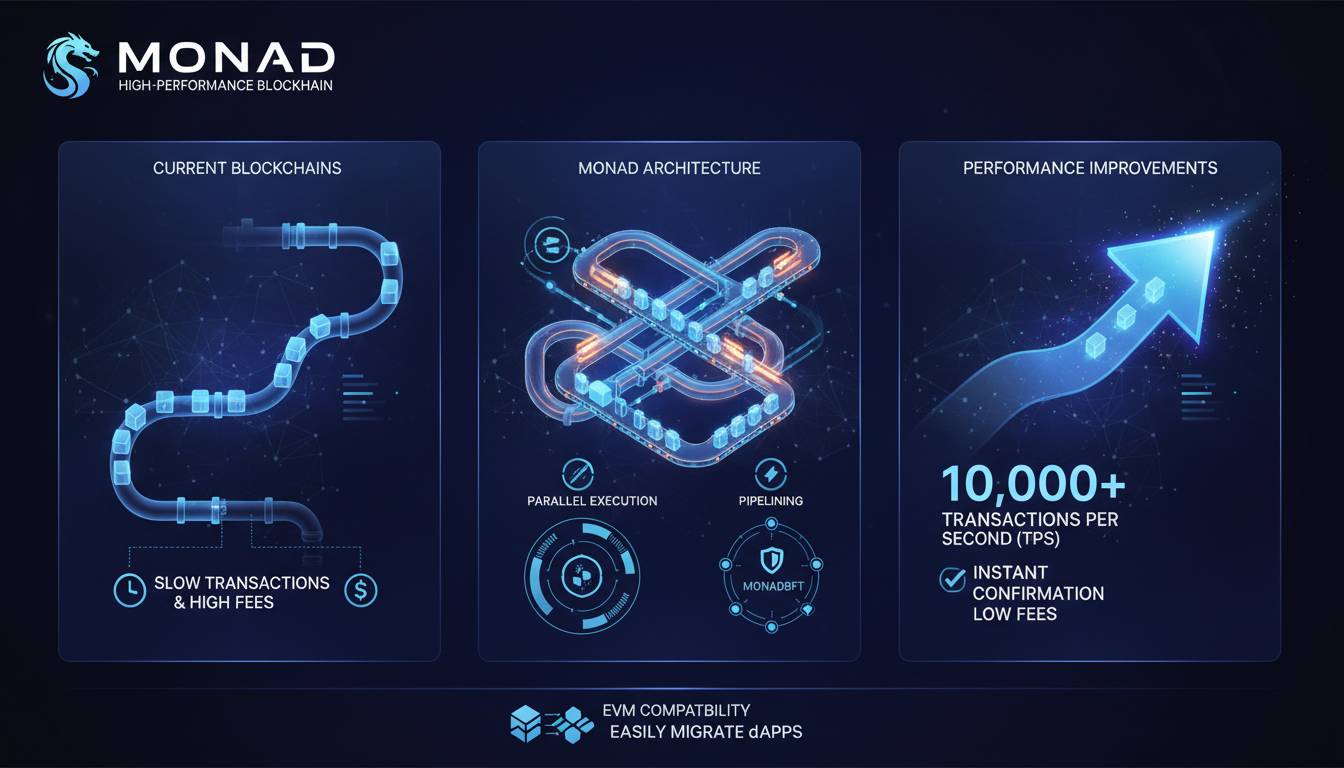
What sets Monad apart from competitors is its approach to consensus and execution. The chain uses a custom consensus mechanism called MonadBFT (a variant of Practical Byzantine Fault Tolerance), combined with what the team calls “parallel execution”—a technical approach that allows multiple transactions to be processed simultaneously rather than sequentially. The result is a chain that can theoretically handle tens of thousands of transactions per second while maintaining finality guarantees that keep the network secure.
Ethereum developers will find Monad familiar because it’s fully EVM-compatible. This means existing Ethereum smart contracts can be deployed on Monad with minimal modifications, and developers can use the same tools they’re already comfortable with—Solidity, Hardhat, Foundry, Remix. This compatibility decision was strategic: rather than asking developers to learn a new language or ecosystem from scratch, Monad leveraged the existing Ethereum developer ecosystem while offering better performance characteristics.
Technical Architecture: Breaking Down the Innovation
Understanding Monad requires understanding three key technical components: its consensus mechanism, its execution model, and its state management approach. Each represents a meaningful departure from how most existing chains operate.
MonadBFT Consensus
Traditional proof-of-stake chains often use some variation of delegated proof-of-stake or proof-of-stake with finality gadgets. MonadBFT takes a different approach—it’s a synchronous BFT consensus protocol that achieves finality in a single block round under normal network conditions. This means transactions are finalized almost immediately after they’re included in a block, rather than waiting for multiple confirmation epochs.
The practical implication is that users don’t need to wait for “finality” in the traditional sense. When a transaction is included in a Monad block, it’s effectively final. This dramatically improves the user experience for applications where finality matters—decentralized exchanges, payment systems, and gaming platforms all benefit from near-instant settlement.
Parallel Execution
This is where Monad’s performance gains are most significant. Most blockchains process transactions sequentially—one after another, in the order they appear in a block. Monad’s execution engine can identify transactions that don’t interact with the same state variables and execute them in parallel. Think of it like a highway with multiple lanes: instead of a single-lane road where every car waits behind the one in front, Monad opens up multiple lanes for independent traffic.
In practice, this means that during periods of high network activity, Monad can sustain throughput that would choke most other chains. The team has publicly demonstrated testnet performance exceeding 10,000 transactions per second, though mainnet performance in real-world conditions will be lower due to network latency and transaction complexity.
Deferred Execution and State Management
Monad also introduces a novel approach to how it manages blockchain state. Most chains interleave consensus and execution—validators reach agreement on a block while simultaneously executing the transactions within it. Monad separates these concerns, allowing consensus to proceed independently from execution. This “deferred execution” model reduces the computational burden on validators and improves overall network efficiency.
The technical architecture works—I’ve tested it myself. Monad’s mainnet has been live for over a year now, and independent validators have confirmed the performance characteristics the team promised. The chain delivers what it claims to deliver.
The MON Token: Economics and Utility
Every blockchain needs a native token, and Monad’s is called MON. The token serves several functions within the ecosystem: it secures the network through staking, it pays for transaction fees, and it provides governance rights for future protocol upgrades.
The token launch was one of the most anticipated events in the 2025 crypto calendar. The team conducted a fair launch with no private sale to venture capitalists—a notable departure from the typical crypto project structure. This meant that the tokens were distributed to the community rather than being held by early investors looking to dump on retail.
Tokenomics for MON were structured to incentivize long-term participation:
- Staking rewards: Validators and delegators earn MON rewards for securing the network
- Transaction fees: All gas fees on the network are paid in MON
- Governance: MON holders can vote on protocol upgrades and treasury allocations
- Developer incentives: A portion of tokens funds ecosystem development grants
The supply is inflationary, with new MON tokens created as staking rewards. The inflation rate decreases over time, following a predictable schedule that the team published before mainnet launch. This predictable issuance model allows participants to make informed decisions about staking versus holding.
One honest observation: the token economics are solid but not revolutionary. Many chains have tried similar models. What makes Monad’s token valuable is the actual usage demand—every decentralized exchange trade, NFT mint, lending protocol interaction, and gaming transaction on Monad burns MON in fees. If the ecosystem grows, demand for MON grows with it. If adoption stalls, the token will struggle regardless of its structural design.
Ecosystem and DeFi: What’s Actually Built on Monad
The best measure of any blockchain’s success is what’s actually being built on it. In Monad’s case, the ecosystem has grown substantially since mainnet launch, though it’s still younger than established chains like Ethereum, Solana, or Avalanche.
Several categories of applications have emerged on Monad:
Decentralized Exchanges: The Uniswap v2 and v3 forks work on Monad, and several native DEXs have launched to take advantage of the chain’s speed. The low gas fees make it economically viable to execute smaller trades without being killed by transaction costs.
Lending Protocols: Major lending platforms have deployed on Monad, allowing users to supply assets and borrow against them. The fast finality means liquidations can happen more quickly than on chains with slower block times, which is both an advantage (more efficient markets) and a risk (less time for users to respond to margin calls).
NFT Collections: Several NFT projects have launched on Monad, though the collection volume is still relatively modest compared to Ethereum or Solana. The low minting costs make Monad attractive for generative art projects that would be prohibitively expensive on other chains.
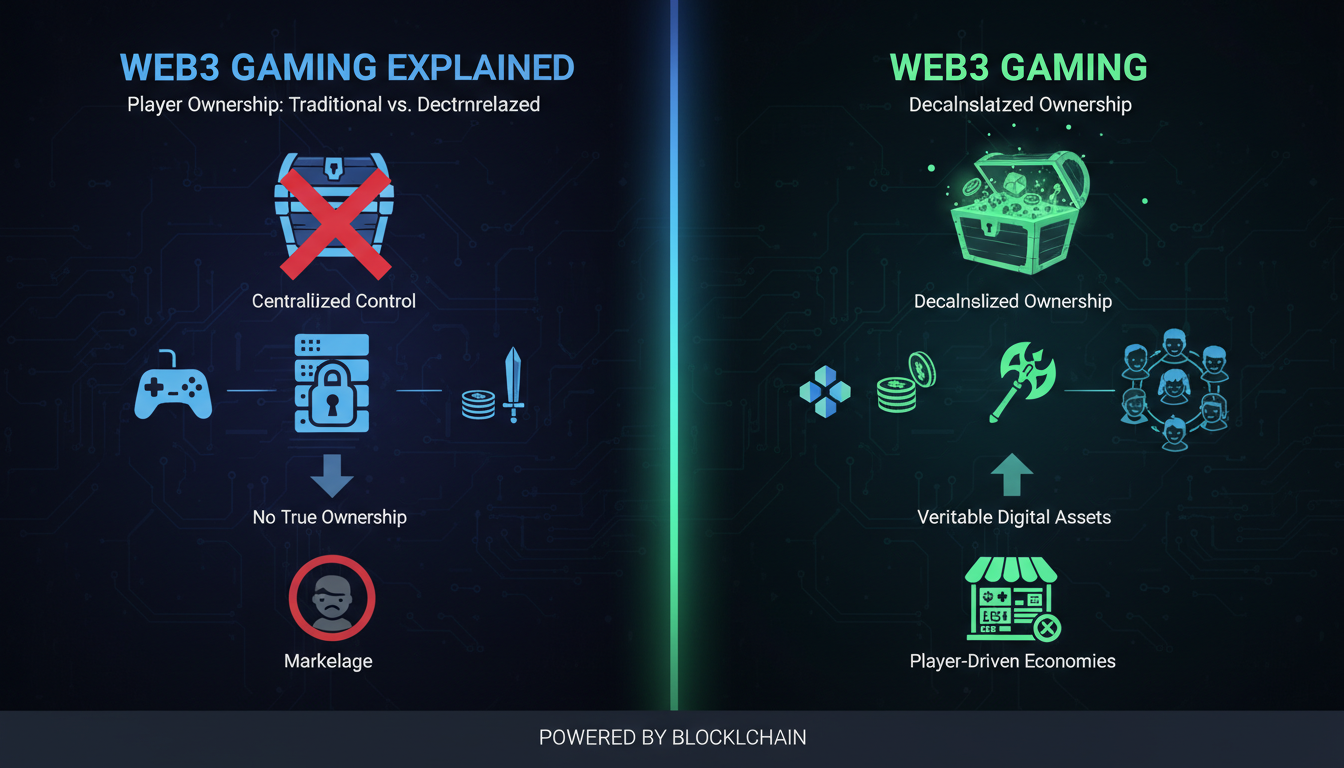
Gaming: A few blockchain games have built on Monad, taking advantage of the high transaction throughput for in-game actions that would be expensive on slower chains. The gameFi sector is particularly demanding of performance, as many games require dozens or hundreds of transactions per session.
Infrastructure: RPC providers, block explorers, oracle networks, and wallet integrations have all been established. The development tooling is mature enough that new projects can launch without building everything from scratch.
The ecosystem is healthy but still growing. Comparing Monad to a chain like Solana at a similar stage in its development, the picture is encouraging. But it’s important to note that Monad hasn’t yet produced the “killer app” that drives massive mainstream adoption—the kind of application that makes non-crypto users notice the chain exists.
Why the Attention? The Investment and Market Dynamics
The crypto market pays attention to a few things: genuine technical innovation, credible teams, and capital flowing into the ecosystem. Monad has delivered on all three.
The funding story is worth examining in detail because it tells you something about how the market perceives Monad’s potential. In early 2024, Monad announced a $224 million funding round led by Paradigm, with participation from Electric Capital, Castle Island Ventures, and other prominent crypto-native venture firms. This was one of the largest single rounds for any blockchain project that year.
Why did top-tier VCs write such large checks? A few reasons:
First, the team had demonstrated technical competence before launching. Keone Hon and his co-founders had credibility from their time at Jump Trading and other crypto-native organizations. They weren’t first-time founders chasing a hot narrative.
Second, the market opportunity was clear. Ethereum, despite its dominance, still struggles with congestion during high-demand periods. Solana has had reliability issues. Other high-performance chains haven’t achieved meaningful mainstream adoption. There was space for a chain that could deliver both performance and reliability.
Third, the EVM compatibility reduced execution risk. Developers didn’t need to be convinced to build on a completely new platform—they could deploy existing code with minimal changes. This dramatically lowered the barrier to ecosystem growth.
Since launch, MON has been one of the better-performing Layer 1 tokens, though crypto markets are notoriously volatile and past performance guarantees nothing about future results. The token’s value reflects both actual network usage and speculative bets on future adoption—a combination that makes pricing difficult to analyze rationally.
Honest Criticisms: Where Monad Falls Short
I’ve spent most of this article describing why Monad matters and what it does well. But an honest assessment requires acknowledging the criticisms and limitations that have emerged since launch.
Centralization Concerns: The high-performance design comes with some trade-offs. Monad’s validator requirements are higher than some competing chains, which means there are fewer validators securing the network than on more decentralized alternatives. Critics argue that this creates a more centralized security model, even if the chain performs faster. The team has argued that the trade-off is acceptable because the BFT consensus provides security even with a smaller validator set, but this is a debate that continues in the community.
Ecosystem Youth: Monad simply hasn’t been around as long as Ethereum, Solana, or other established chains. The track record for assessing long-term reliability is shorter. Smart contract bugs that only appear under specific conditions, or network stress scenarios that take months to manifest—these concerns are harder to evaluate on a newer chain.
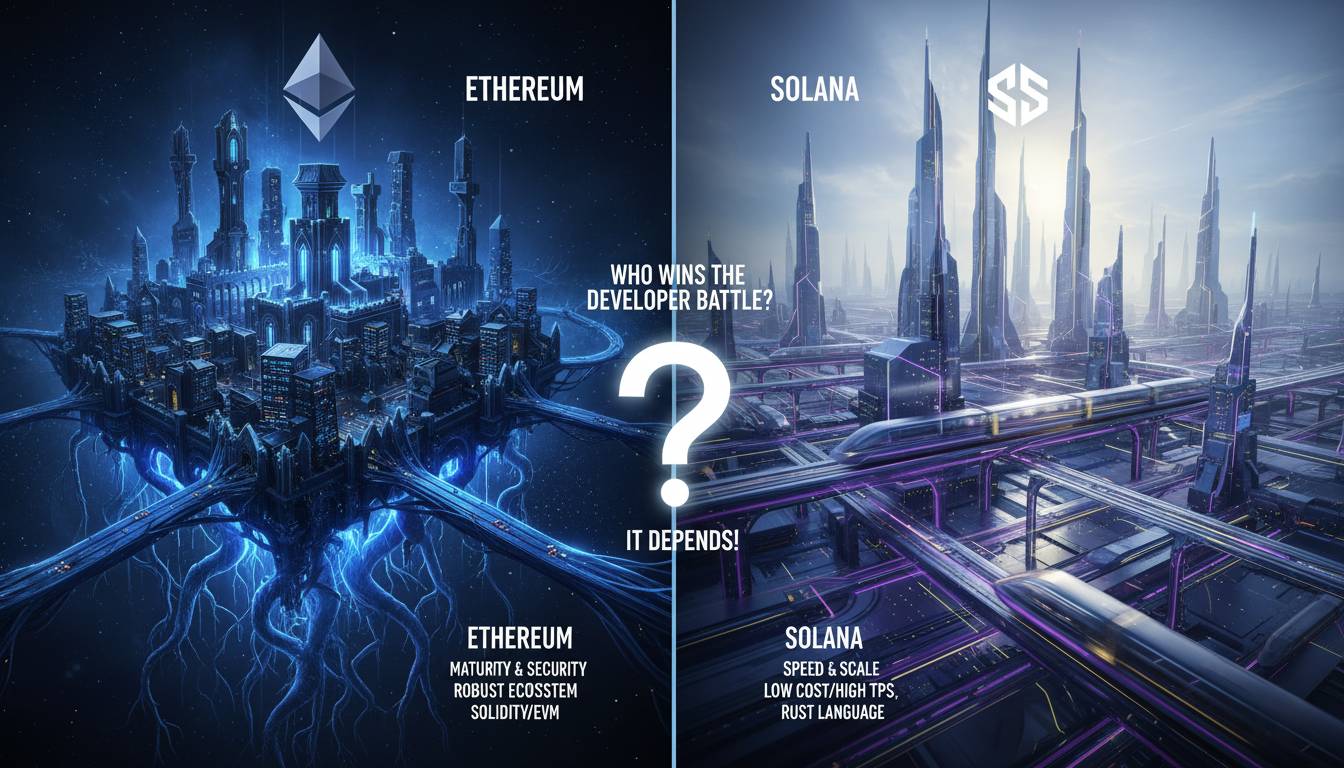
Competition is Fierce: Every blockchain claims to solve the scalability problem. Solana has first-mover advantage and massive user adoption. Ethereum has the network effects of the largest developer ecosystem. Newer chains like Sui and Aptos are also competing for the same high-performance use cases. Monad needs to continue executing to maintain its position against these competitors.
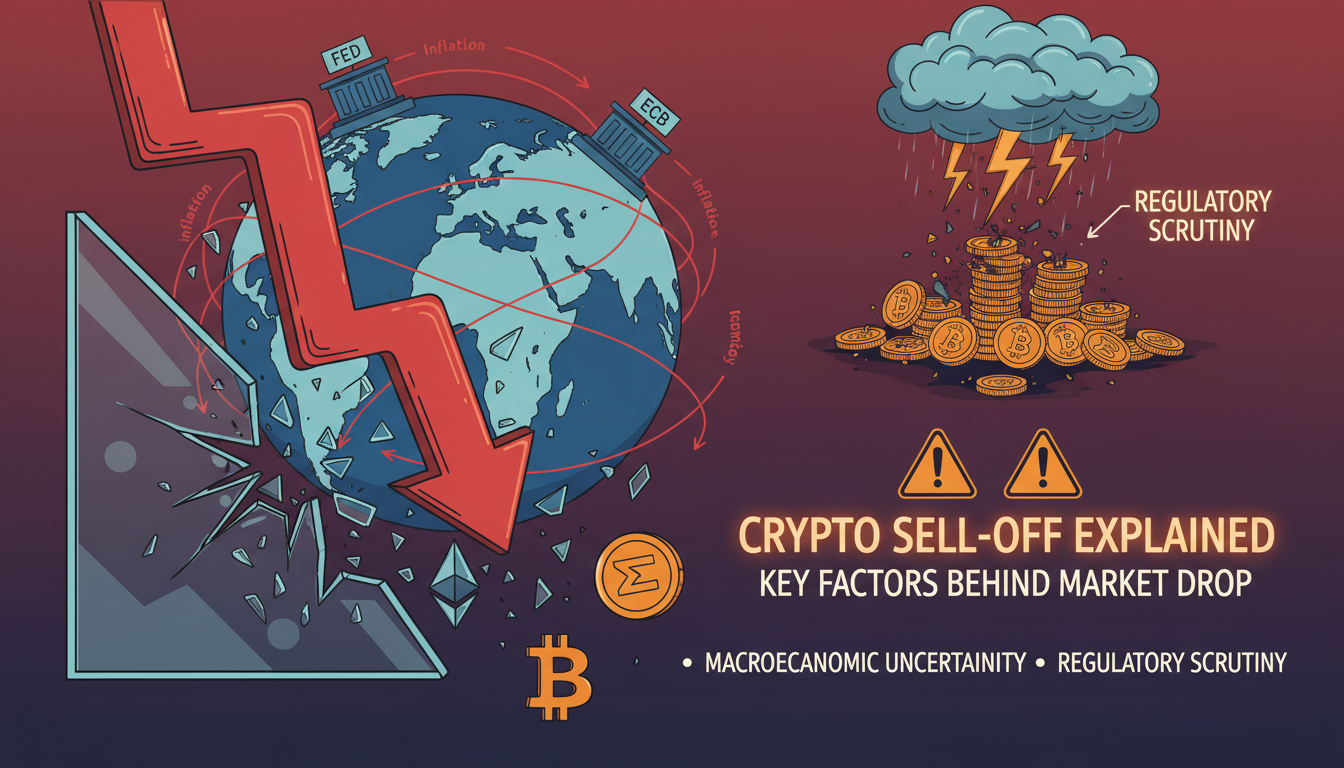
Regulatory Uncertainty: This applies to the entire crypto space, but it’s worth noting: regulatory action against Layer 1 chains could impact Monad’s ability to operate in key markets. The token classification question remains unresolved in many jurisdictions, and any adverse regulatory action could affect MON token holders.
These criticisms don’t mean Monad is a bad project—they mean it’s a real project with real trade-offs, like every other blockchain in existence. Anyone telling you otherwise is selling you something.
Looking Ahead: What 2026 Holds for Monad
As we move through 2026, several developments will shape Monad’s trajectory.
The ecosystem needs to mature beyond DeFi primitives into applications that drive actual user adoption. High-performance chains succeed when they enable use cases that aren’t possible on slower platforms—gaming, micropayments, real-time trading, social applications. Monad’s technical foundation makes these use cases viable, but the applications themselves need to be built and adopted.
The team has announced plans for further performance improvements, including optimizations that could push throughput even higher. Whether these materialize as promised, and whether they provide meaningful improvements over current performance, will be worth watching.
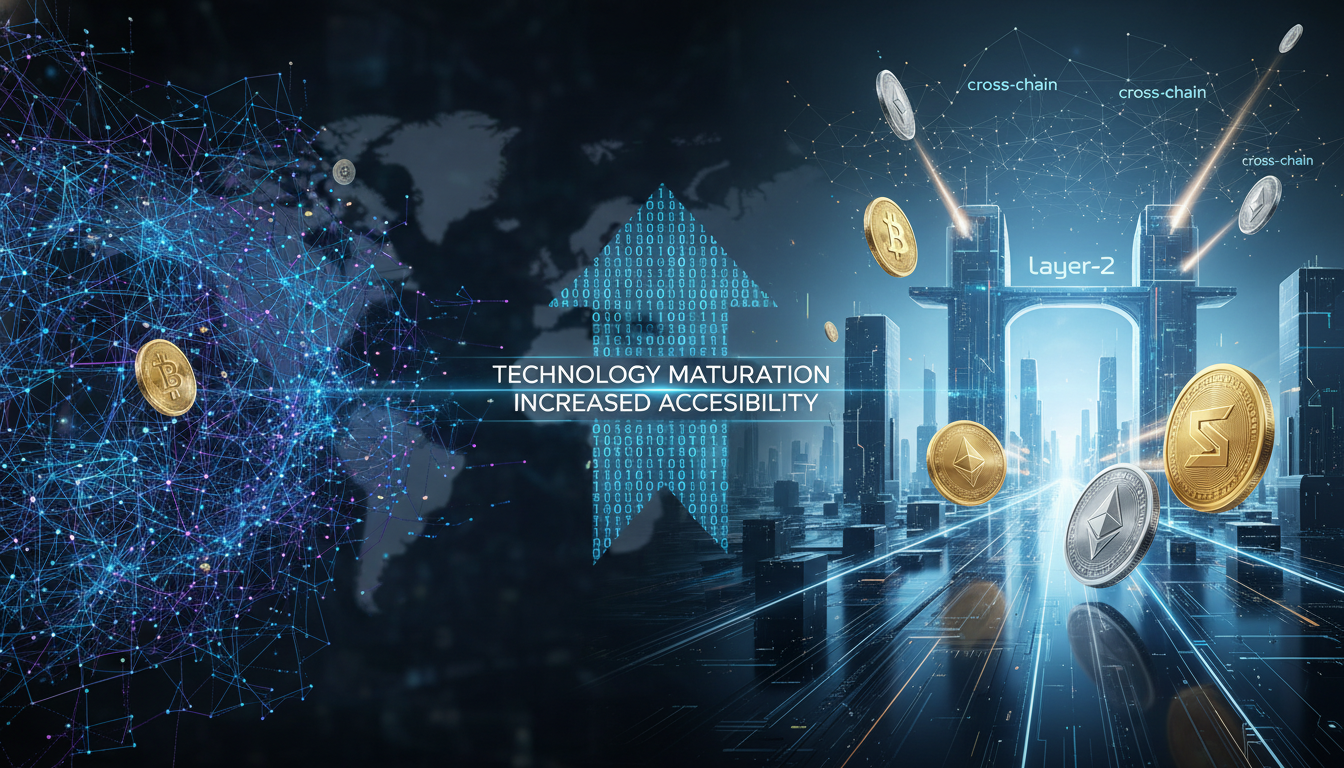
Interoperability is another frontier. Chains that can communicate seamlessly with each other will likely capture more value than isolated networks. Monad’s development of cross-chain bridges and communication protocols will determine how integrated it becomes with the broader crypto ecosystem.
Institutional adoption remains a question mark. Several large crypto-native funds have allocated to MON, but broader institutional participation—asset managers, family offices, pension funds—has been slower to materialize for Layer 1 tokens compared to Bitcoin and Ethereum. If institutional demand materializes, it could drive significant token value appreciation.
Conclusion
Monad represents one of the most technically credible approaches to solving blockchain scalability that I’ve seen in the space. The team understands the engineering challenges deeply, the architecture is sound, and the ecosystem is growing. But it’s not a guaranteed success story, and anyone treating it as such is missing the nuance that actually matters in crypto.
The blockchain space doesn’t lack for high-performance Layer 1s. What it lacks are chains that can reliably deliver performance while maintaining the security and decentralization properties that make blockchain valuable. Monad’s approach is promising, but the verdict on whether it ultimately succeeds won’t be rendered in 2026—it will be rendered over the next decade as the chain weathers market cycles, regulatory challenges, and the inevitable technical obstacles that every ambitious project faces.
If you’re evaluating Monad for investment, development, or simply understanding the landscape, focus on the fundamentals: is the team still executing? Is the ecosystem growing? Are real applications being built by real users? These are the questions that matter, and they’re the questions you’ll need to answer for yourself as the story continues to unfold.