
The IRS treats your Bitcoin, Ethereum, and altcoin trades as property, not currency. That single fact shapes everything about how your day trading profits will be taxed, and if you’re jumping into crypto markets without understanding this, you’re setting yourself up for a painful surprise when tax season arrives. Most day traders focus entirely on strategy and ignore the tax implications until April looms, but by then, the damage is done: missed deductions, incorrect reporting, and potential penalties.
This guide assumes you’re actually planning to trade crypto actively, making multiple transactions per day or week, not simply buying and holding. The tax treatment for active traders is fundamentally different from long-term investors, and understanding that difference before you place your first trade could save you thousands.
How Crypto Day Trading Profits Are Taxed
When you sell crypto for more than you paid, that’s a taxable event. The profit gets added to your ordinary income and taxed at your regular income tax rate. This applies whether you’re trading Bitcoin against USD, swapping Ethereum for Solana, or converting altcoins directly into each other. Every sale triggers potential tax liability.
The critical distinction for day traders is that most of your trades will qualify as short-term capital gains. The IRS defines short-term as assets held for one year or less. Since day traders typically hold positions for minutes, hours, or days, nearly every trade falls into this category. Short-term capital gains are taxed at your ordinary income tax bracket, the same rates you pay on your salary or freelance income. For 2024 and 2025, those brackets range from 10% to 37% depending on your total income.
This matters because if you made $50,000 in net profits from crypto day trading in 2024, you don’t pay the long-term capital gains rate of 0%, 15%, or 20%. You pay your full income tax rate on that $50,000. For many traders in the 24% or 32% bracket, this effectively doubles their tax burden compared to long-term investors who hold positions for more than a year.
There’s also the Net Investment Income Tax to consider. If your modified adjusted gross income exceeds $200,000 (single) or $250,000 (married filing jointly), the IRS adds an additional 3.8% tax on your net investment income. Your crypto day trading profits count toward this threshold, so high-frequency traders with substantial income need to factor this into their planning.
Short-Term vs Long-Term Capital Gains: Why Day Traders Lose the Comparison
Here’s what every day trader needs to internalize: you will almost never benefit from long-term capital gains rates. The tax advantage that makes buy-and-hold strategies so powerful, where assets held longer than a year are taxed at 0%, 15%, or 20%, simply doesn’t apply to your trading style. This isn’t a judgment; it’s math.
Long-term capital gains rates exist to encourage investment in productive assets. The theory goes that holding an investment for years provides capital that companies and the economy can use productively. Day trading, in the IRS’s view, is closer to a job or business activity than passive investment. Your quick in-and-out trades are speculative, and the tax code treats them accordingly.
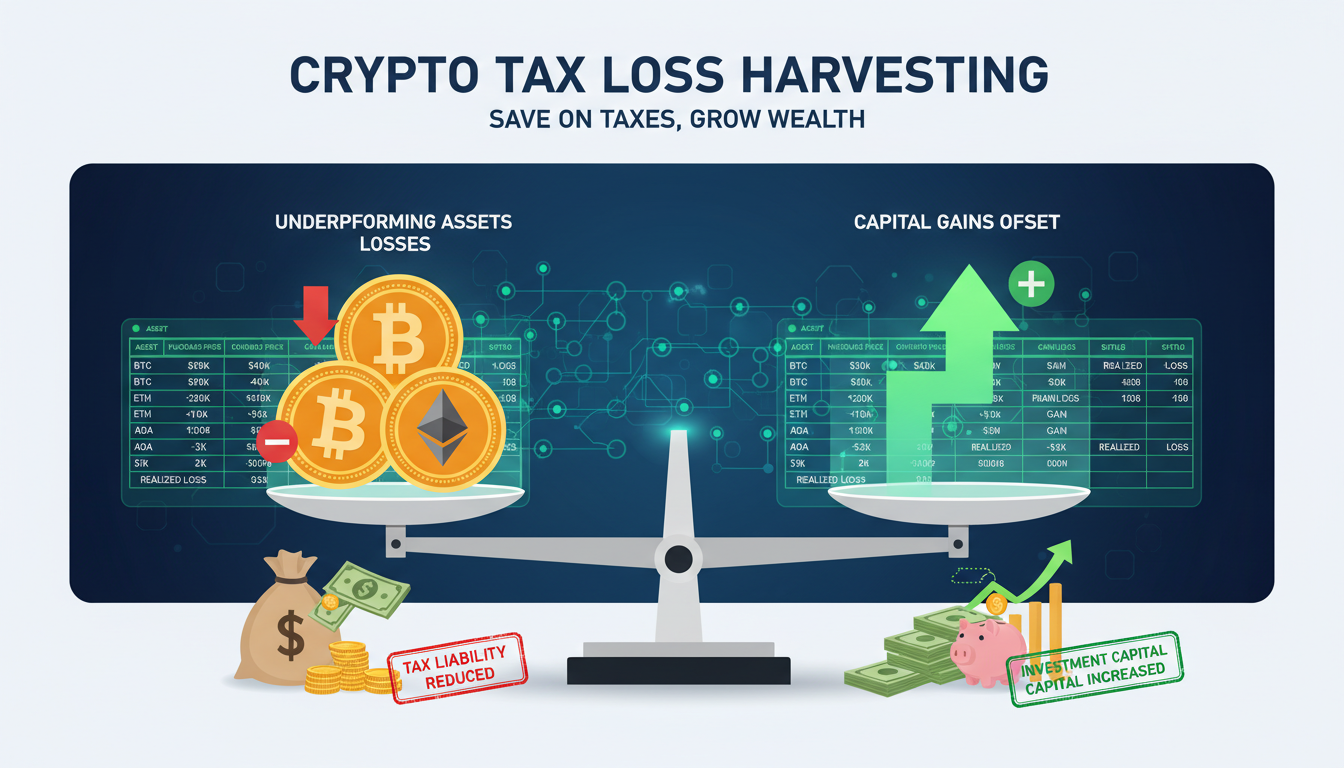
That said, there’s a strategic edge most day traders completely overlook. If you’re closing positions at a loss, the holding period technically matters less for tax purposes. You can use those losses to offset other capital gains regardless of whether they were short-term or long-term. But if you have a mix of winning and losing trades throughout the year, the timing of when you realize those losses can affect your tax outcome. Short-term losses first offset short-term gains, which are taxed at higher rates, giving you more tax benefit per dollar lost. This is one of the few areas where day traders have an actual advantage, and most don’t even know it exists.
One more nuance worth understanding: the IRS requires you to match specific lots when calculating gains and losses. If you bought Bitcoin at three different prices and sold a portion of your holdings, you can choose which specific purchase lot the sale comes from. This is called specific identification, and it lets you minimize taxable gains by selling the highest-cost lots first. Many trading platforms don’t do this automatically; they default to first-in-first-out (FIFO). So you need to explicitly track your cost basis and instruct your accountant accordingly.
The Wash Sale Rule: Where Crypto Tax Gets Murky
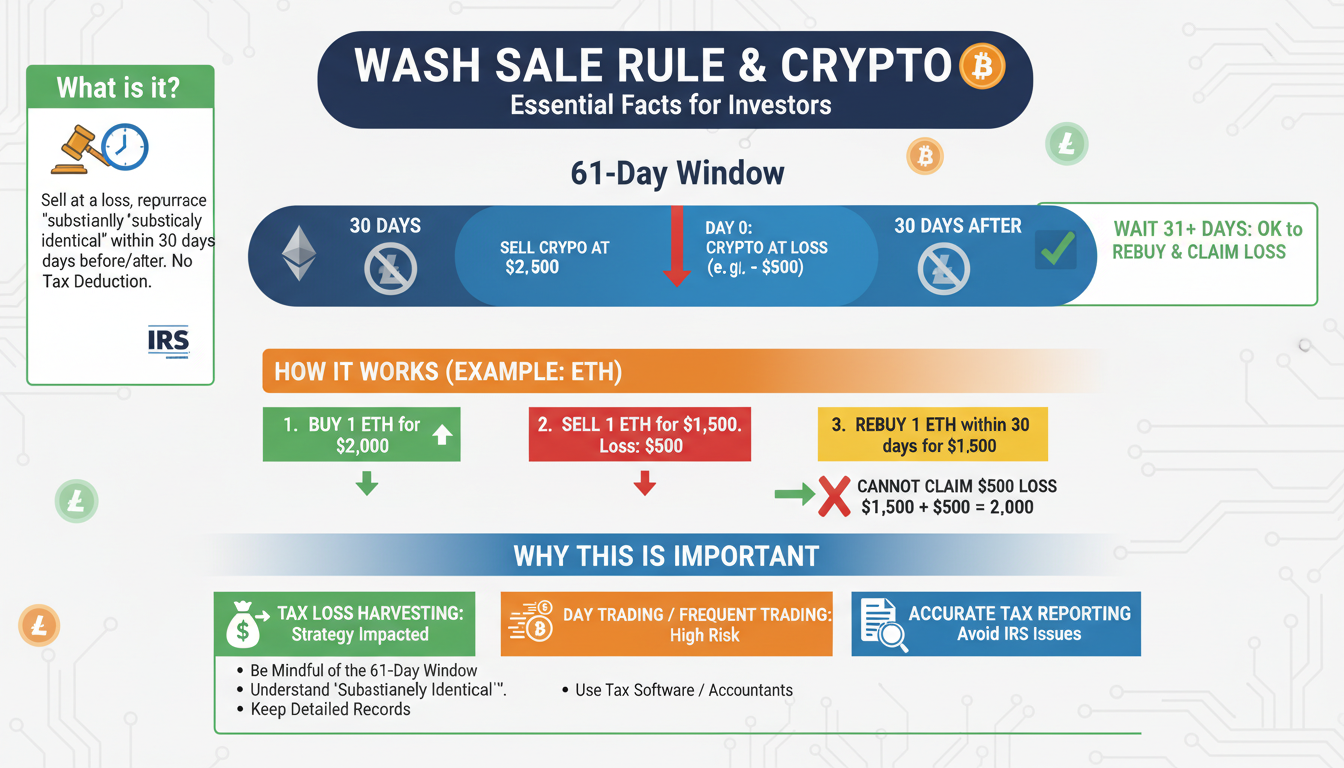
Here’s where I need to tell you something that most articles on this topic gloss over: the wash sale rule technically applies to crypto, but the IRS has never definitively confirmed it. This creates genuine uncertainty, and any tax advice that treats the wash sale rule as fully settled for crypto is misleading you.
The wash sale rule, found in Section 1091 of the Internal Revenue Code, prevents you from claiming a loss on the sale of a security if you buy a substantially identical security within 30 days before or after that sale. The idea is to stop taxpayers from artificially generating losses while maintaining their market position.
For stocks and bonds, the rule is clear. For crypto, it’s murky. The IRS issued Notice 2014-21 in 2014 stating that crypto is property, not a security, which theoretically should exclude it from wash sale rules that apply specifically to securities. However, the IRS has issued no further guidance specifically addressing wash sales and crypto. Several proposals in Congress have attempted to clarify this, including provisions in the Infrastructure Investment and Jobs Act of 2021, but none have definitively settled the question.
What should you do? Conservative tax planning suggests treating wash sale rules as if they apply. That means if you sell crypto at a loss, don’t repurchase the same or a substantially identical cryptocurrency within 30 days. This is particularly important for day traders who might sell a losing position and immediately buy back in expecting a bounce. In the stock market, that maneuver would disallow the loss. In crypto, there’s a reasonable argument it won’t, but reasonable argument doesn’t mean audit-proof.
The safer approach: wait 31 days if you want to claim that loss, or buy a genuinely different cryptocurrency that doesn’t meet the substantially identical test. For Bitcoin and Ethereum, the case for them being substantially identical to each other is weak, so swapping between major coins might be a workaround. But I’m not a lawyer, and neither is your tax software. Get professional advice if you’re planning significant tax-loss harvesting strategies.
Reporting Crypto Day Trading on Your Taxes
The paperwork for crypto day trading can be overwhelming, especially if you’re making dozens or hundreds of trades per month. Understanding the forms and how they connect will save you hours of frustration and potentially money in penalties.
It starts with Form 1040. Since 2019, there’s a specific question at the top of page one asking if you received, sold, sent, exchanged, or otherwise acquired any financial interest in virtual currency. Answering yes doesn’t automatically trigger an audit; it just means you have reporting requirements. Answering no when you actually traded crypto is a red flag.
Your capital gains and losses flow to Schedule D (Capital Gains and Losses) and Form 8949 (Sales and Other Dispositions of Capital Assets). Form 8949 is where you list each individual transaction: description, date acquired, date sold, proceeds, cost basis, and gain or loss. For day traders with hundreds of trades, this means hundreds of line items on Form 8949.
Most day traders find this impractical to complete manually. Crypto tax software like Koinly, TaxBit, or CryptoTrader.Tax connects to your exchanges via API, imports all transactions, calculates cost basis using your chosen method (FIFO, LIFO, specific identification), and generates the completed forms. These platforms typically cost $50 to $200 annually depending on transaction volume, which is a fraction of what you’d pay a CPA to manually reconcile everything.
Here’s what trips up many traders: wash sales and wash loan losses. If you’re using margin or futures, the rules become even more complex. Mark-to-market accounting, where you calculate gains and losses based on the value at year-end rather than actual sales, is theoretically available to traders who can demonstrate they meet the IRS definition of a trader in securities. But claiming trader status has implications for your business expense deductions, so weigh this carefully with a tax professional.
One more critical point: don’t forget about estimated tax payments. If you’re making substantial income from day trading and don’t have withholding from an employer, the IRS expects quarterly estimated payments. The penalty for underpayment of estimated tax can be several percentage points of what you owe, easily hundreds or thousands of dollars for active traders. Set aside 25% to 35% of your net profits in a separate account and make those quarterly payments.
Common Tax Mistakes Crypto Day Traders Make
After reviewing how day traders handle their crypto taxes, certain errors appear over and over. These aren’t minor technical mistakes; they can trigger audits, penalties, and years of correspondence with the IRS.
The biggest mistake: not tracking every single transaction from day one. This seems obvious, but many traders start casually, then realize six months or a year later that they can’t reconstruct their cost basis for early trades. Exchange transaction histories get deleted after certain periods. Wallets can fail. Data can corrupt. If you’re serious about day trading, you need a system for recording every trade (date, time, amount, price, fees) from the moment you begin. This is non-negotiable.
Ignoring transaction fees is another common error. Every fee you pay on a trade is part of your cost basis when you buy and part of your proceeds when you sell. If you’re trading on multiple platforms and paying fees in the traded asset (common on decentralized exchanges), calculating the fee’s USD value at the time of trade becomes complicated but necessary. Most tax software handles this, but only if you provide complete data.
Failing to report crypto-to-crypto trades is perhaps the most frequent oversight. Many traders think swapping one cryptocurrency for another isn’t a taxable event because no USD is involved. This is wrong. The IRS treats every sale of property, including crypto, as a taxable event, even if you receive another cryptocurrency rather than cash. You must calculate the gain or loss based on the USD value of the crypto you received at the time of the swap.
Finally, confusing trading income with capital gains is a conceptual error that causes problems. If you’re classified as a trader in securities (which requires meeting specific criteria around frequency and holding period), your gains might be treated as ordinary business income rather than capital gains. This sounds worse because it is taxed at higher rates, but it also opens the door to business deductions: home office, computer equipment, software subscriptions, even a portion of your internet bill. The trade-off is real, and the classification decision shouldn’t be made casually.
What About State Taxes?
Federal taxes get most of the attention, but state taxes can add another 0% to over 13% to your crypto trading bill depending on where you live. This is an area where the differences are dramatic.
Nine states don’t impose an income tax at all: Alaska, Florida, Nevada, New Hampshire, South Dakota, Tennessee, Texas, Washington, and Wyoming. If you live in one of these states and do all your trading from there, you’re only dealing with federal tax. But establishing residency to avoid state taxes is complex and can trigger audits if done improperly.
California imposes the highest state income tax rate at 13.3% on gains. New York and Oregon are in the 9% to 10% range. Most states conform to federal rules for calculating capital gains, meaning your short-term vs long-term classification carries over. But states vary on whether they conform to specific provisions like the wash sale rule, Net Investment Income Tax, and the 199A deduction for qualified business income.
If you move between states, the rules get more complicated. California, for instance, has historically tried to tax former residents on gains that accrued while they lived there, though recent court decisions have limited this. If you’re a digital nomad trading crypto from different locations, you’re entering complex territory that requires professional guidance.
One practical consideration: if you live in a high-tax state but trade from a low-tax state where you have connections (family, property, a registered business), you might have arguments for establishing residency or sourcing income differently. This isn’t tax evasion; it’s tax planning. But it requires documentation and a genuine connection to the alternative state.
Practical Example: Calculating Your Tax Liability
Numbers make this concrete, so let’s walk through a realistic scenario.
Say you started 2024 with $10,000 in capital. Through a combination of skill and luck, you turned this into $80,000 in gross proceeds by December 31, meaning your net profit before fees and expenses was $70,000. You made approximately 150 trades across Binance, Kraken, and a hardware wallet for cold storage. Your trading fees totaled $3,000 across the year.
Your tax calculation starts with your gross profit of $70,000, then subtracts your $3,000 in fees, giving you $67,000 in net capital gains. But these are short-term gains, meaning they’re taxed as ordinary income.
Assume you’re a single filer with no other income besides your trading. Your $67,000 in gains puts you in the 22% bracket for the portion above $47,150, and the 12% bracket for income below that threshold. Your federal tax on the crypto gains would be approximately $12,500, plus another $2,400 if you fall into the Net Investment Income Tax threshold.
Now compare this to if you’d held those same positions for over a year. Long-term capital gains rates for your income level would be 15%, meaning your tax would drop to roughly $10,000, a difference of about $2,500 in federal tax alone. Over several years of consistent trading, the cumulative impact grows substantially.
This example also assumes perfect record-keeping and no losses to offset gains. In reality, most day traders have a mix of winning and losing trades, which complicates the calculation but also provides opportunities for tax optimization that we’re not covering here.
What Remains Uncertain
Despite everything I’ve outlined, crypto tax law remains fluid. Congress has proposed numerous changes over the past several years, including provisions that would require brokers (including crypto exchanges) to report transactions more comprehensively and potentially apply wash sale rules more explicitly. The 2024 election cycle means these proposals could shift significantly depending on who controls the White House and Congress.
The IRS has also indicated that crypto tax compliance is an enforcement priority. They’ve been hiring more agents with cryptocurrency expertise and launching audits focused specifically on high-volume traders. In 2023 and 2024, the agency sent thousands of letters to taxpayers who had crypto exchange transactions but may not have reported them properly.
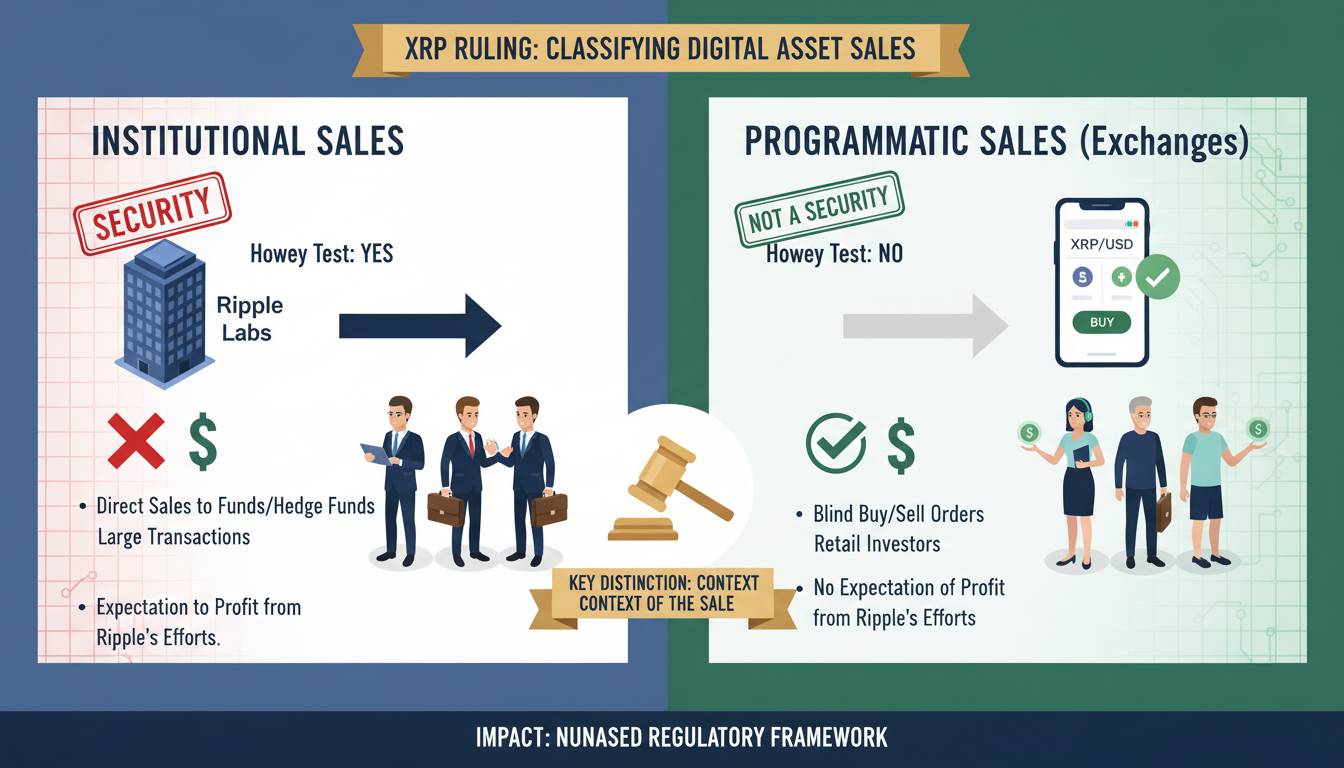
One unresolved question is whether the IRS will eventually classify certain cryptocurrencies as securities rather than property, which would bring them under different, and in some ways more favorable, tax treatment. The ongoing legal battles between the SEC and exchanges like Coinbase and Binance could reshape this landscape. For now, the property classification stands, but the legal and regulatory environment continues to evolve.
What this means for you: stay current, maintain meticulous records, and don’t assume today’s rules will still apply when you eventually close out your positions. The best tax strategy for day traders isn’t just minimizing today’s bill; it’s building a compliance infrastructure that adapts as the rules change.