
Bitcoin has no customer service number. No password reset. No “forgot your private key” link. When someone loses access to their Bitcoin, they’re not locking themselves out of an account—they’re watching a fortune dissolve into digital nothingness, completely beyond anyone else’s reach. Somewhere between 3 and 4 million Bitcoin has already been lost forever, according to estimates from Chainalysis, Glassnode, and other blockchain analytics firms. That number represents roughly $200 billion at current prices, sitting in wallets nobody can open.
This isn’t a bug in the system. It’s by design. Bitcoin was built to be sovereign money—to function without intermediaries, banks, or institutions that could freeze your funds. That same sovereignty means you’re fully responsible for your own security. Lose your keys, and you’ve lost your coins. No one can help you. This creates an unusual economic phenomenon: a deflationary asset that literally disappears from circulation while remaining technically “on the ledger” forever. Understanding what happens to lost Bitcoin matters not just for owners, but for anyone trying to understand cryptocurrency economics, scarcity, and the strange new world of digital ownership.
How Bitcoin ownership actually works
Before you can understand what happens when Bitcoin is lost, you need to understand what it means to own Bitcoin in the first place. This is where most people get confused, and it’s precisely where the lost Bitcoin problem begins.
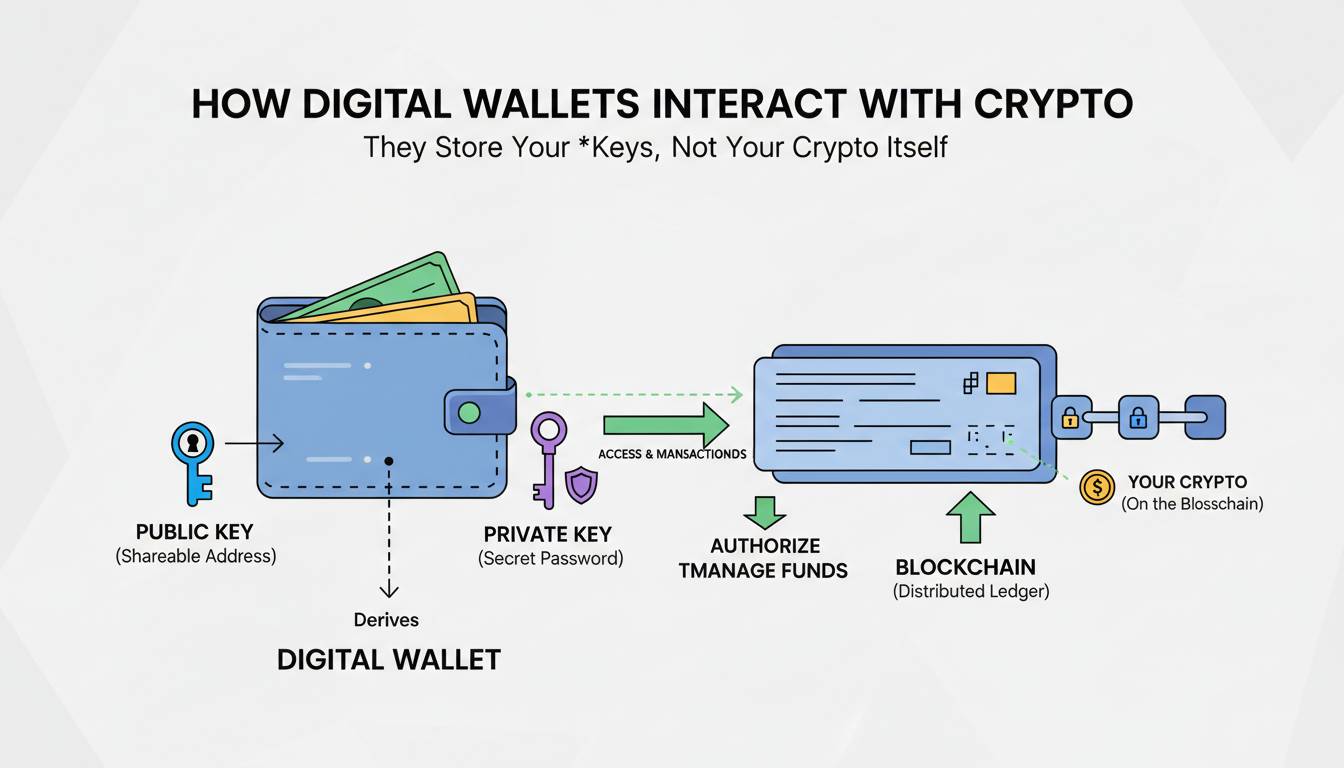
When someone “owns” Bitcoin, they don’t actually hold a coin anywhere. What they hold is a private key—a 256-bit number that looks like a long string of characters. This private key is mathematically linked to a public key, which generates your Bitcoin address. The blockchain records all transactions, but only the holder of the private key can authorize a transaction from that address. Think of it like this: your Bitcoin address is a transparent mailbox that everyone can see. The private key is the only key that opens it. Lose that key, and you’ve lost the ability to open the mailbox—forever.
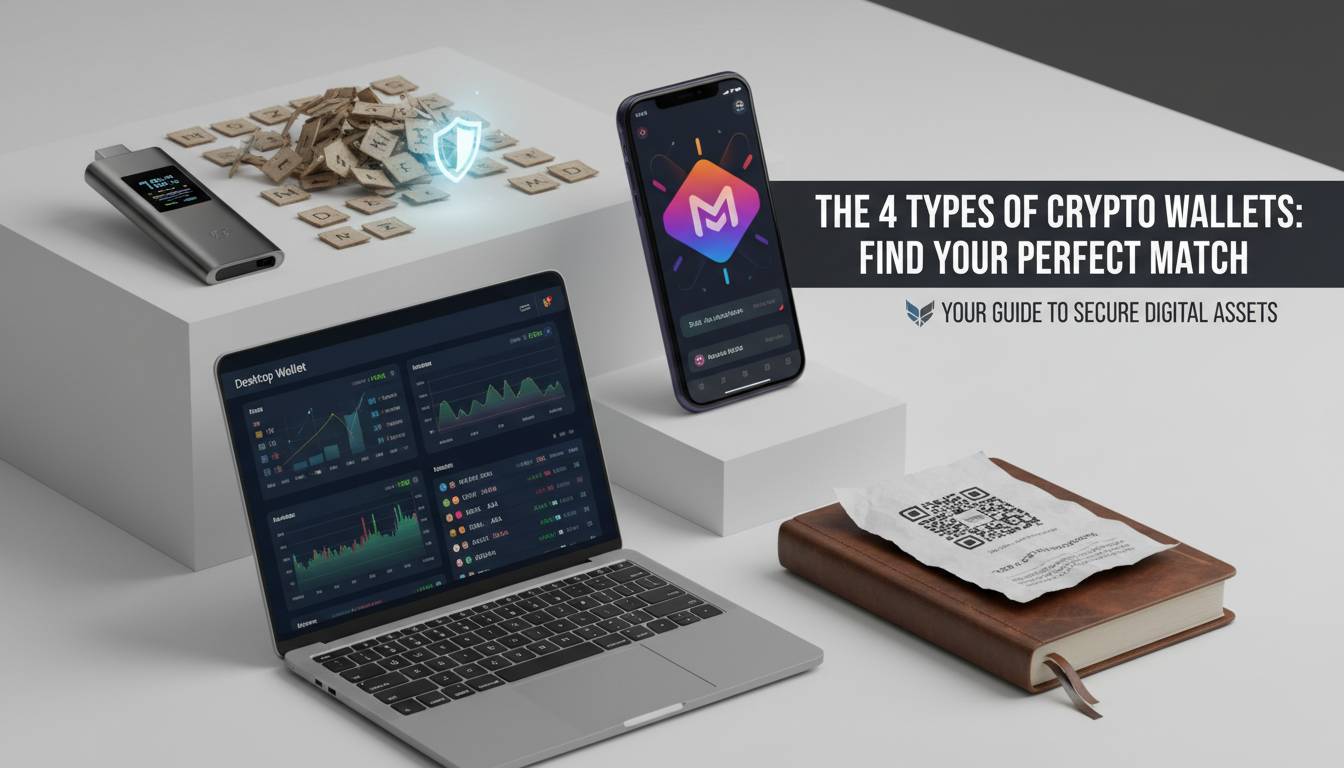
Wallet software generates and stores these private keys for you. Some wallets are software-based (like Exodus or Electrum), some are hardware devices (like Ledger or Trezor), and some are just pieces of paper with keys written on them. The critical point is this: if you lose access to your wallet’s backup phrase (usually 12 or 24 words), or if your hardware wallet is destroyed without a backup, the private key is gone. Not misplaced. Gone. The Bitcoin remains visible on the blockchain, sitting at an address that will never receive another transaction, because the only key that could move it no longer exists.
This is fundamentally different from losing a bank account. A bank can verify your identity and reset your password. Bitcoin has no such mechanism. The network doesn’t know who you are. It only knows cryptographic proof of ownership—and if you can’t provide that proof, you’re just another observer looking at coins you can never touch.
How much Bitcoin is lost forever
The numbers here are estimates, but they’re grounded in on-chain analysis rather than pure speculation. Chainalysis, a blockchain analytics company that works with governments and law enforcement, has estimated that approximately 3.7 million Bitcoin has been lost—either through lost keys, abandoned wallets, or the death of owners without succession plans. Other estimates range from 2.8 million to over 4 million, depending on methodology.
What does “lost” actually mean in this context? It means Bitcoin that hasn’t moved from an address in years, where the probability of recovery is functionally zero. This includes early mining rewards from 2009 and 2010 when Bitcoin was essentially worthless and people mined on computers they later discarded. It includes Mt. Gox, the Tokyo-based exchange that collapsed in 2014 after losing approximately 850,000 Bitcoin (about 4.2% of all Bitcoin that will ever exist). And it includes the more mundane losses: hard drives thrown away, paper wallets destroyed in house fires, hardware wallets lost in moves.
The distribution of lost Bitcoin is heavily weighted toward the early years. In Bitcoin’s first two years (2009-2010), mining was so easy that individual computers could generate substantial rewards. Many early miners didn’t understand that Bitcoin would ever have value. They left their mining software running, accumulated thousands of coins, and then forgot about it when the price stayed near zero for years. When Bitcoin began its climb toward $1, then $100, then $1,000, many of these early adopters had already lost access to their wallets. James Howell, a Welsh programmer, famously lost 7,500 Bitcoin (worth roughly $450 million at Bitcoin’s 2021 peak) when he threw away a hard drive containing his private key. The drive is now in a landfill, and the Bitcoin sits there still, unspent, untransferable—lost.
More recent losses tend to come from exchange failures, security mishaps, and inheritance problems. The FTX collapse in 2022 saw billions in customer funds disappear, though much of that was held by the exchange rather than lost to private key failures. What these more recent events highlight is that the problem isn’t just individual carelessness—institutional failures can also result in permanent losses.
What happens to lost Bitcoin on the blockchain
Lost Bitcoin doesn’t disappear from the blockchain. It stays there, recorded in the public ledger forever, visible to anyone who looks. The balance remains at that address. The transaction history is still there. From a purely technical standpoint, nothing has changed.
But here’s what does change: that Bitcoin is effectively removed from circulation. It cannot be spent. It cannot be sold. It cannot participate in any future transaction. Economically, it’s gone—even though it technically still exists as data on thousands of nodes around the world.
This creates a fascinating dynamic. Bitcoin’s supply is capped at 21 million coins. But the actual tradable supply is significantly lower due to permanent losses. As of early 2025, approximately 19.6 million Bitcoin have been mined. If we assume 3-4 million are lost, that means only about 16 million Bitcoin are actually available for use. And as time goes on, more will be lost. Some estimates suggest that roughly 1,500 Bitcoin are lost every day through various means—wallet failures, deaths without inheritance plans, simple human error.
The lost Bitcoin remains part of the blockchain indefinitely. There is no mechanism for the network to “recover” it or redistribute it. The private key is gone, and without the private key, the coins sit frozen at their address forever. It’s a strange form of digital permanence—the equivalent of burying gold in a desert and losing the map, except the gold is visible to everyone, perfectly preserved, completely inaccessible.
Can lost Bitcoin be recovered?
The honest answer is: almost never, and certainly not through any mainstream method. If you’ve lost your private key or your wallet backup, there is no service, no software, and no expert who can recover it. This isn’t like cracking a password—it’s mathematically impossible without the original key or a substantial portion of it.
There are a few rare edge cases worth mentioning. First, if you’ve lost your hardware wallet but still have your recovery seed phrase (the 24-word backup), you can simply purchase a new hardware wallet and restore your funds. This isn’t recovery in the traditional sense—you had the backup all along. Second, in cases where Bitcoin was stored on an exchange that later collapsed, some customers have recovered funds through bankruptcy proceedings. The Mt. Gox creditors, for instance, have been receiving distributions of recovered Bitcoin since 2021. But this is recovery from institutional failure, not from private key loss.
Third, there are theoretical attacks on older wallet encryption that might, in very specific circumstances, allow recovery. If someone used a weak password to encrypt their wallet file years ago, and that password is guessable, dedicated attackers might eventually crack it. But this applies to a vanishingly small number of cases—people who used weak encryption and whose wallets haven’t already been emptied by automated scripts that test common passwords against any exposed addresses.
What you should absolutely avoid are the recovery scams. Every week, thousands of scam emails and messages go out claiming to “recover lost Bitcoin” for a fee. These are frauds. They take your money upfront and deliver nothing. The Bitcoin blockchain is public and transparent—if someone could recover your funds, they could simply take them directly. They wouldn’t need to charge you a fee.
There’s also no technological solution on the horizon. Bitcoin’s security model is specifically designed to make key recovery impossible. Any mechanism that allowed password resets or key recovery would fundamentally undermine the system’s security. You can improve your security practices going forward, but you cannot undo a past loss.
The economic impact of lost Bitcoin
Lost Bitcoin has significant economic implications that extend beyond individual losses. The most direct effect is supply reduction. With a capped supply of 21 million coins, the actual circulating amount is substantially lower than the theoretical maximum. Some economists argue this creates a deflationary pressure that increases the value of remaining Bitcoin—a feature that Bitcoin’s proponents explicitly celebrate.
But the implications go deeper than simple scarcity. Lost Bitcoin affects everything from market capitalization calculations to valuation metrics. When analysts report Bitcoin’s market cap, they’re typically using the total mined supply (around 19.6 million) rather than the actual circulating supply (closer to 16 million). This means reported market cap figures are inflated by approximately 20%. Similarly, metrics like “Bitcoin’s stock-to-flow ratio”—a favorite among Austrian economics enthusiasts—may be skewed by the assumption that all mined Bitcoin remains available.
There’s also the inheritance problem. As Bitcoin matures, more and more holders will die without having transferred their keys. Estimates vary, but some analysts suggest that hundreds of thousands of Bitcoin may be trapped in estates where the deceased never shared their recovery phrases with family members. This represents a massive transfer of wealth that will never happen. In some cases, families have hired cryptocurrency forensic experts to search for wallet files on deceased relatives’ computers—sometimes successfully, more often not.
The deflationary effect is particularly interesting when compared to traditional currencies. Central banks can always print more money. Bitcoin’s protocol cannot be changed to create more coins. Lost Bitcoin makes the already-scarce asset even scarcer. Whether this is a feature or a bug depends entirely on your economic philosophy—but the reality is undeniable: lost Bitcoin permanently reduces the supply of what is already the most fixed-supply asset in human history.
Famous cases of lost Bitcoin
The human stories behind lost Bitcoin are often more compelling than the technical explanations. Here are some of the most notable cases.
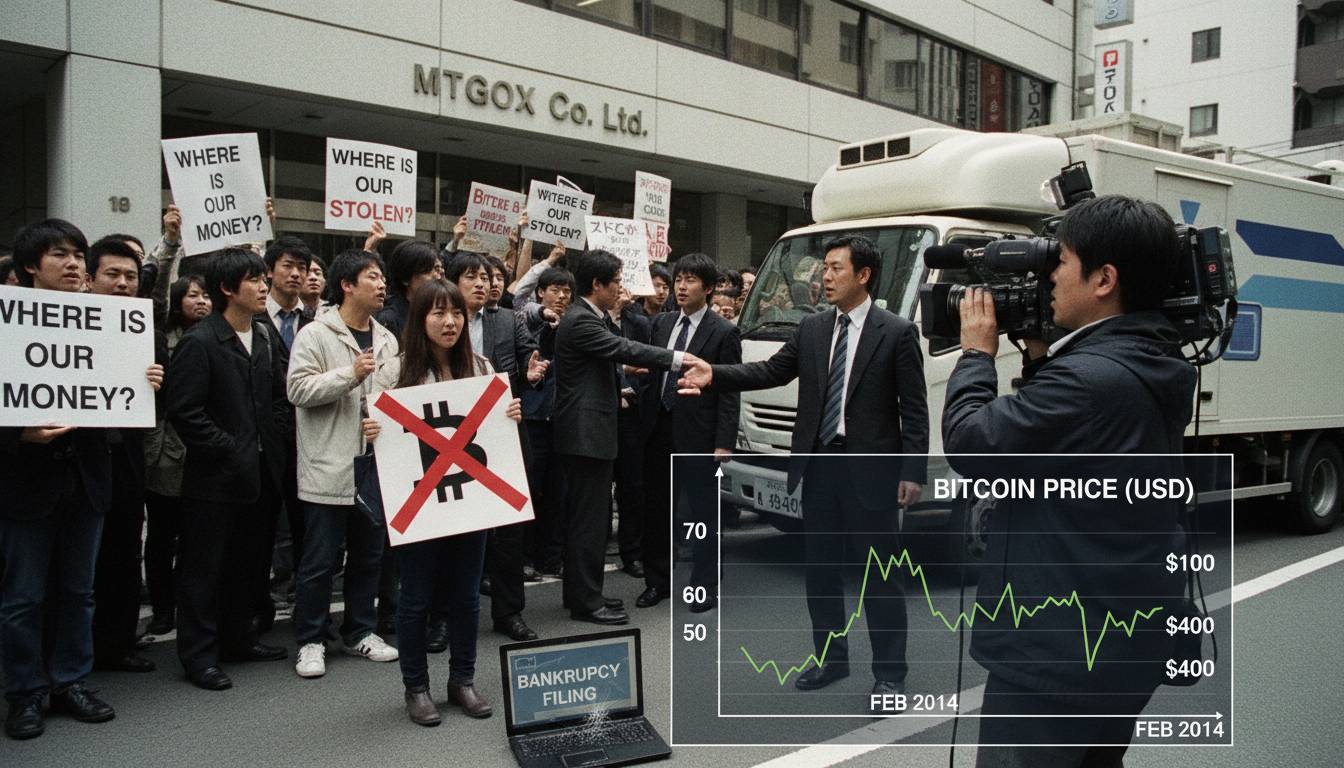
Mt. Gox remains the most infamous. The Tokyo-based exchange was the dominant Bitcoin trading platform from 2010 to 2014, handling over 70% of all Bitcoin transactions at its peak. When it collapsed in February 2014, approximately 850,000 Bitcoin belonging to customers vanished. The cause was a combination of security failures and apparent fraud by the exchange’s CEO, Mark Karpelès. Roughly 200,000 Bitcoin has since been recovered through bankruptcy proceedings, and creditors have been receiving distributions since 2021. But the collapse destroyed billions in value and shattered confidence in cryptocurrency exchanges for years.
James Howell’s hard drive is perhaps the most tragic. In 2009, Howell mined approximately 7,500 Bitcoin on his personal computer. When he upgraded his computer in 2013, he threw away the old hard drive without realizing it still contained his wallet file. He remembered his mistake three months later, but the hard drive had already been buried in a landfill. The local council has refused his requests to excavate the site. The Bitcoin remains there, under tons of trash, worth roughly $500 million at recent prices.
Stefan Thomas is another famous case. This German-American programmer was given 7,002 Bitcoin as payment for creating an animation video in 2011. He stored the private key on an encrypted IronKey hardware wallet and wrote down the password on a piece of paper. He has two remaining guesses before the wallet permanently locks. He’s already tried eight of his roughly ten password guesses. The wallet remains locked, and Thomas has stated he no longer thinks about it daily—though that was when Bitcoin was worth around $30,000.
The QuadrigaCX founder case took a different turn. Gerald Cotten, the founder of the Canadian exchange QuadrigaCX, died in 2018, taking the passwords to cold storage wallets with him. Approximately $190 million in cryptocurrency was locked, much of it probably lost forever. Except—it later emerged that Cotten may have been running a fraud, and the “lost” funds may have been misappropriated while he was alive. Not all lost Bitcoin cases are innocent accidents.
These stories share a common thread: the owners didn’t lose Bitcoin through theft or hacking. They lost it through the fundamental unforgiving nature of cryptocurrency’s security model. No one to blame. No one to call. Just digital keys to fortunes that can never be accessed.
Protecting yourself from accidental loss
Given everything above, the only rational response is to prevent loss in the first place. If you’re holding Bitcoin, here are the practices that actually work.
Use a hardware wallet. Software wallets on computers and phones are vulnerable to malware and phishing attacks. Hardware wallets store your private keys in a dedicated secure element that never exposes your keys to your computer. Brands like Ledger and Trezor have sold millions of devices, and while no security measure is perfect, hardware wallets represent the best available balance of security and usability.
Backup your recovery phrase properly. When you set up a hardware wallet, you’ll receive a recovery seed phrase—usually 24 words. Write this down on paper (or use a metal backup solution like Cryptosteel or Billfodl). Store it in multiple secure locations. One copy in your home, one in a safe deposit box at your bank, one with a trusted family member. Never store it digitally. Never take a photo of it. Digital copies get hacked.
Consider succession planning. This is the least discussed but arguably most important step. What happens to your Bitcoin if you die? Have you told a trusted person where your recovery phrase is stored? Have you included cryptocurrency in your will? Many people have lost significant fortunes because they died without telling anyone how to access their wallets. It’s an uncomfortable conversation, but it’s essential.
Test your backups periodically. Many people write down their recovery phrase, store it somewhere safe, and never look at it again—until they need it. Then they discover the paper has degraded, or the ink has faded, or they made a transcription error. Every year or two, restore your wallet on a fresh device using your backup to make sure it works.
Conclusion
Lost Bitcoin is not a problem that will be solved. There is no patch coming, no upgrade that will restore access to the millions of coins locked in inaccessible wallets. This is a permanent feature of Bitcoin’s design, not a bug to be fixed. The very security that makes Bitcoin valuable—your exclusive control over your funds—is the same thing that makes loss catastrophic and irreversible.
What we can do is understand the phenomenon and its economic consequences. Somewhere between 15% and 20% of all Bitcoin may already be lost. Every year, more coins will be lost to deaths, accidents, and simple forgetting. The result is a cryptocurrency that is even scarcer than its fixed supply suggests—and that scarcity will only deepen over time.
If you hold Bitcoin, the lesson is straightforward: treat your private keys with the same care you’d give to the deed to your house, the PIN to your bank account, or anything else of enormous value. Because in this system, there is no safety net. There is no customer support. There is only you, your keys, and the permanence of the blockchain.