Solana’s story has always had an uncomfortable thread running through it: the network, for all its speed and rock-bottom fees, has gone down more often than any of its major rivals. That’s not a dig—it’s just the record. Anyone thinking seriously about using Solana for DeFi, NFTs, or building apps needs to know what actually happened, not just the headlines.
So let’s look at it straight. How often does Solana go down, why does it happen, and is the tradeoff worth it for different users? I’ve been watching this since 2021, and what I’ve seen is messier than either side admits. It’s not just teething problems, but it’s also not the disaster some people make it out to be.
Solana’s mainnet launched in March 2020. For roughly a year, things were quiet—the network mostly served the NFT and DeFi crowds without major issues. Then late 2021 things got interesting, and 2022 was the roughest year by far.
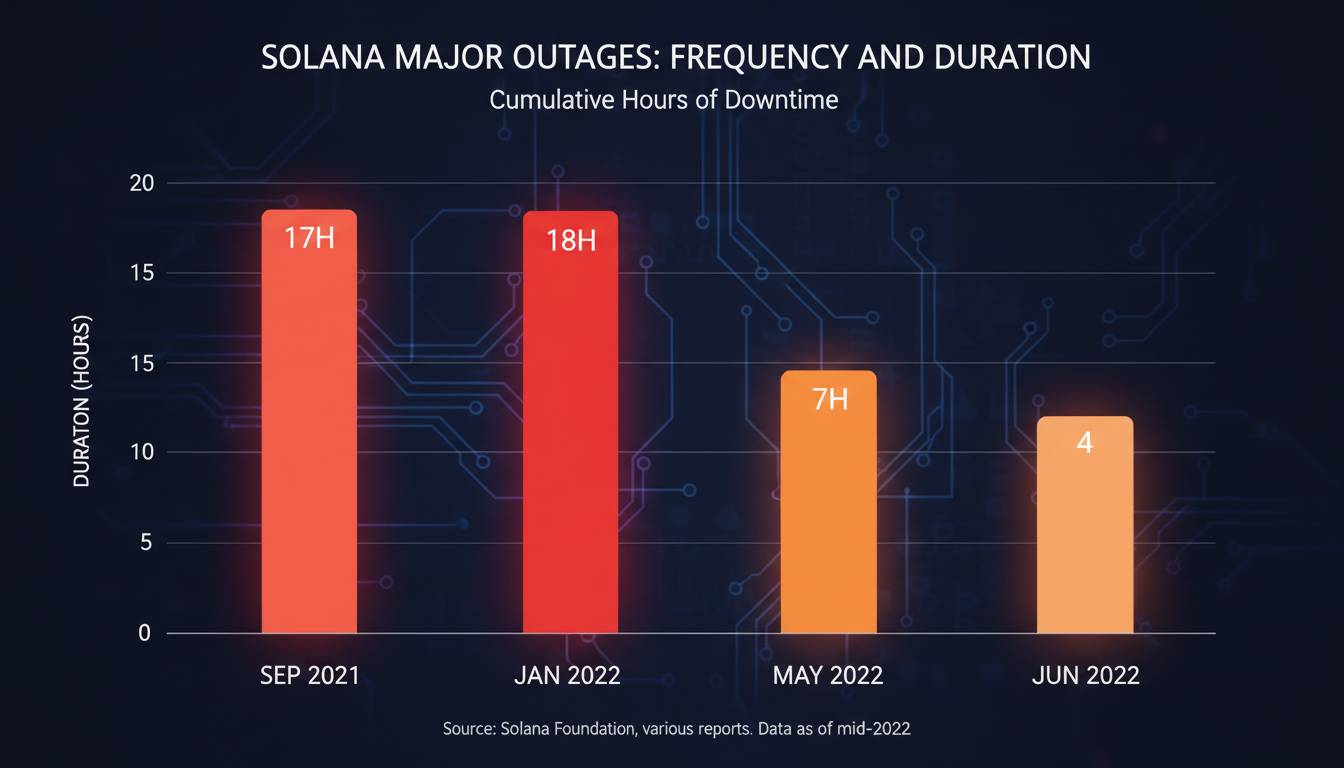
September 14, 2021 brought the first big incident that got everyone’s attention. The network stalled for about 6 hours. A bot attack during an NFT mint flooded the network with a specific transaction type, validators lost consensus, and everything stopped. This turned out to be a preview of what would happen again and again: Solana could handle massive throughput, but certain transaction patterns could crash the whole system.
January 25, 2022 was the worst outage up to that point. The network stopped producing blocks for around 18 hours—a long time in crypto. A bug in the nonce transaction feature combined with bot activity was the culprit. Users woke up to frozen transactions, exchanges paused SOL trading, and the team scrambled to push a fix. This was the incident that made institutional players seriously question whether Solana was ready for production use.
Spring 2022 brought a cluster of problems. April 30 saw another bot attack hit the Raydium liquidity pool, causing congestion that led to roughly 7 hours of downtime. Less than 24 hours later, on May 1, the network halted again. May 25 added one more incident to the list. By then, “Solana is down again” had become a running joke on crypto Twitter, and the reputation damage was real.
October 1, 2022, brought another 6-hour outage caused by a configuration error during a routine upgrade—validators fell out of sync. Things quietened down toward late 2022, though the damage was done.
2023 shifted the pattern. No major halts, though there were some brief periods of reduced function. By 2024 and into 2025, big outages had become uncommon. The network got more stable. But anyone making an honest assessment has to start with what happened in 2021-2022.
Why It Keeps Happening
The core issue comes down to a specific trade-off Solana made: speed over almost everything else. The network was built to prioritize throughput, and that choice created vulnerabilities that have shown up over and over.
Solana uses a proof-of-stake system with something called Tower BFT—a Byzantine Fault Tolerance mechanism that enables extremely fast block finality. Under normal conditions, this works beautifully. But when the network hits unexpected transaction patterns or edge cases, the same mechanisms that make it fast can cause rapid cascading failures.
The most common trigger has been bots during high-demand events. Solana can theoretically handle 65,000 transactions per second, but certain transaction types—especially those involved in NFT mints or token launches—can create computational patterns that choke the scheduler. When a sophisticated bot network floods the system with thousands of similar transactions, it can trigger a condition where validators can’t agree on block production. The network’s defense mechanism, designed to stop invalid blocks from being finalized, halts entirely instead of risking bad output.
Memory leaks in the runtime have caused several incidents too. The network’s aggressive caching and optimization, which enable its speed under normal conditions, can degrade when certain transaction patterns exhaust available memory. Patches have addressed specific memory leak scenarios, but the underlying architecture stays sensitive to these edge cases.
Client diversity has also been a factor. For most of Solana’s history, most validators ran the same client implementation. When that client had a bug, the whole network felt it. The Solana Foundation has been working to diversify the validator client landscape, but it’s still a work in progress.
One thing I’ll give the Solana team: they’ve been far more transparent about these issues than most crypto projects would be. They’ve published detailed post-mortems for each major incident, owned up to design decisions that caused problems, and poured resources into fixing things. That transparency is genuine. But it doesn’t change the fact that users and developers need to know these vulnerabilities exist.
What Outages Actually Mean for Users
“Solano goes down a lot” hides a more important question: what actually happens when the network halts, and who feels it?
For regular users trying to trade or transfer tokens, an outage just means waiting. Transactions don’t go through, but they also don’t go wrong. Once the network comes back, normal operations resume. Inconvenient, but rarely catastrophic.
For DeFi protocols, it’s more serious. During the January 2022 outage, lending protocols had active loans that couldn’t be liquidated when collateral values moved the wrong way. Decentralized exchanges couldn’t process trades during some of the most volatile periods of the year. The financial impact was real, though hard to pin down exactly—it showed up as lost trading opportunities more than direct losses.
The worst consequences have been psychological and reputational. Each high-profile outage reinforced the idea that Solana is unreliable, which affected institutional adoption, partnerships, and ecosystem growth. Some projects have openly cited stability concerns as reasons for building on other chains. That reputational hit may actually hurt more than any individual outage’s technical impact.
There’s also the centralization question. During outages, the Solana Foundation has historically had significant influence over the recovery process. While this intervention has generally been transparent and effective, it raises questions about how “decentralized” a network really is when one organization plays such a central role in fixing consensus failures.
The honest take is that for most casual users, Solana’s outages have been annoyances rather than disasters. For serious DeFi participants, developers building financial applications, or anyone needing guaranteed uptime, the historical record is more worrying. The network has gotten a lot better since 2022, but “a lot better” isn’t the same as “reliable.”
Comparing to Ethereum and Other Chains
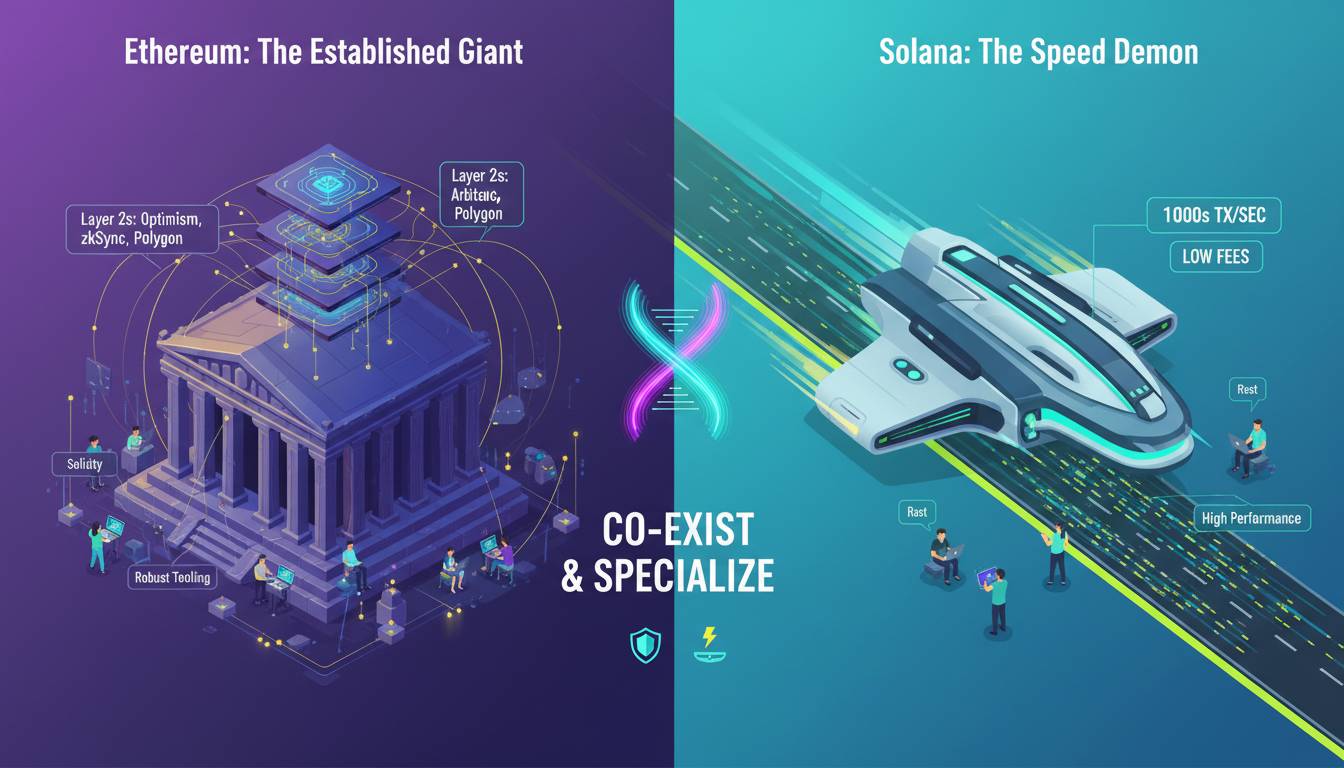
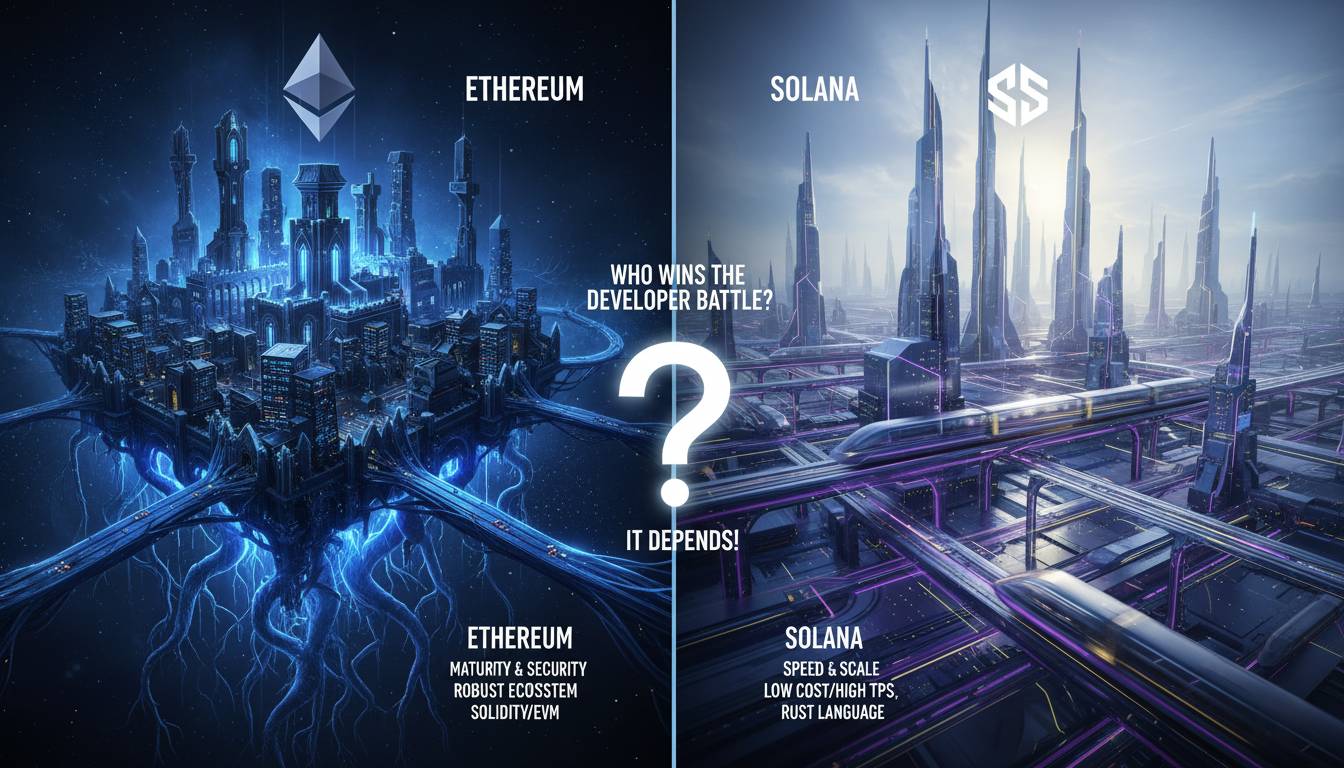
Ethereum isn’t the only blockchain that’s had outages—the difference is that Ethereum has them far less often.
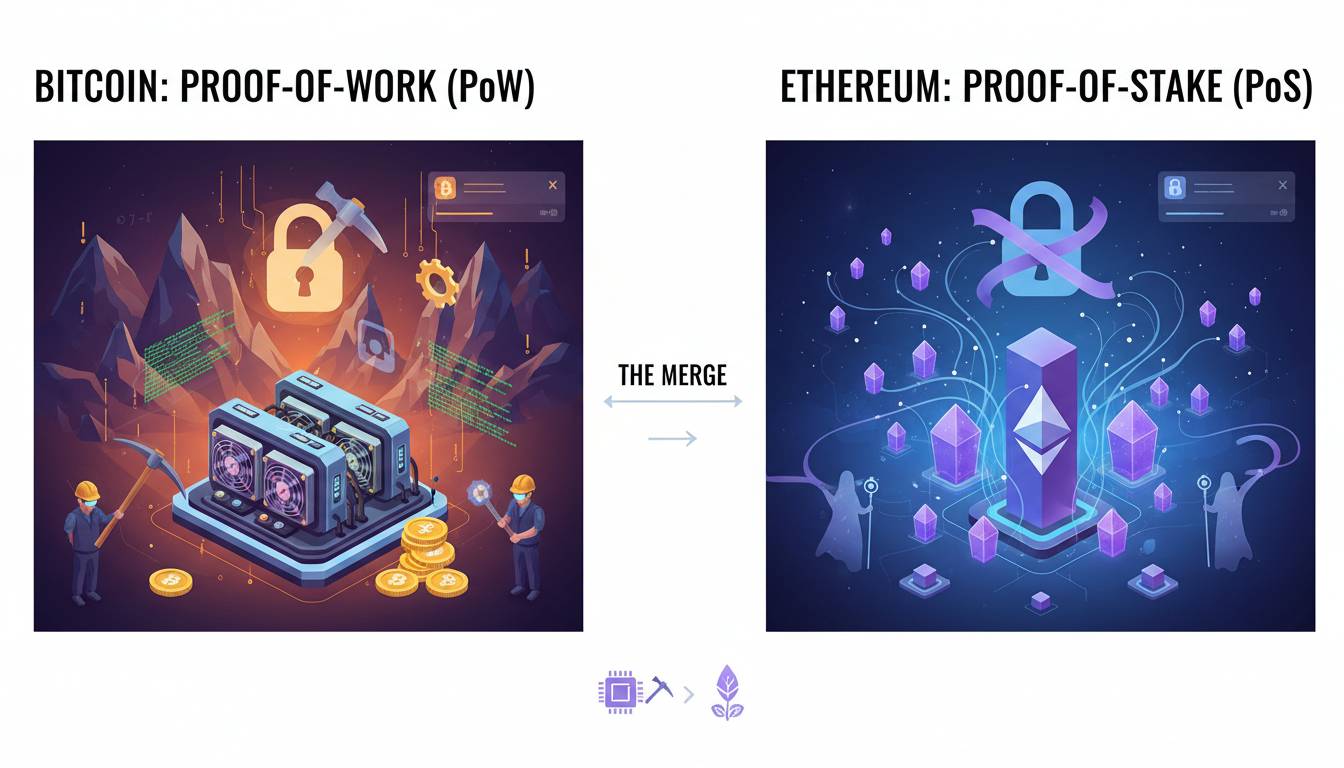
Ethereum’s most significant problem was September 2021, when a bug in the Geth client caused a chain split that took hours to fix. But Ethereum outages are exceptionally rare now. The network has been remarkably stable. The Merge transition to proof-of-stake in September 2022 went smoothly, and subsequent upgrades have been uneventful.
Polygon, Avalanche, and other Layer-1s have had occasional outages too, but none have Solana’s track record. That’s not to say these networks are perfect—each has had moments of degraded performance or brief halts—but Solana’s frequency and duration of problems stand out.
The nature of the incidents differs too. Ethereum’s rare problems usually came from client bugs in specific software, fixed once identified. Solana’s issues more often involved fundamental architectural sensitivities to transaction patterns—deeper design challenges rather than simple implementation errors.
For users picking a platform, the practical question is: do Solana’s speed and cost advantages justify higher reliability risk? The answer depends on what you’re doing. For casual NFT minting or occasional transfers, Solana’s occasional downtimes are manageable. For building financial infrastructure that needs guaranteed execution, the history is a real concern.
What’s Actually Changed
There’s a real case that Solana in 2024-2025 is different from Solana in 2022. Whether that’s enough to overcome the reputational damage is another question.
The technical fixes have been real. The Solana Foundation rolled out QUIC-based RPC systems to handle traffic spikes better, introduced local fee markets to stop single programs from hogging network resources, and made runtime optimizations that reduced vulnerability to the transaction patterns that caused past outages. These changes directly targeted the failure modes from earlier incidents.
The validator ecosystem has matured too. More diverse client implementations are in use now, infrastructure has gotten more robust, and the Foundation has invested heavily in monitoring and incident response.
The metrics back up the improvement story. Major outages in 2023 and 2024 were far less frequent than in 2022. The network handled demand spikes during subsequent bull markets without the catastrophic failures seen before.
But some observers stay skeptical. The improvements may have lowered the odds of past failure modes without eliminating the underlying architectural vulnerabilities. A network built for maximum throughput will always make different trade-offs than one built primarily for robustness. Solana’s core appeal—speed and low cost—inherently creates stability challenges that can be managed but never fully removed.
That uncertainty doesn’t mean Solana is a bad choice. It means the honest assessment is more complicated than “Solana is reliable now” or “Solana is unreliable.” The answer depends on what you’re building and how much downtime risk you can handle.
When Solana Makes Sense
So when does it actually make sense to use or build on Solana despite the history?
The strongest case is for use cases where speed and cost matter most and where temporary inaccessibility is tolerable. NFT marketplaces, casual gaming, social apps, and non-critical token transfers fit this profile. For these, Solana’s advantages—transactions in seconds not minutes, fees that are fractions of a penny not dollars—actually matter for user experience.
For DeFi protocols handling real value, the math is different. The 2022 outages caused real financial harm to users. While the network has improved, another major incident isn’t impossible. Protocols on Solana need solid fallbacks, clear user communication plans for when things go wrong, and honest risk disclosures.
The competitive landscape matters too. If other networks offer similar functionality with better stability, that’s a factor. Right now, Solana’s combo of speed, cost, and ecosystem depth is still unique among high-throughput chains, but that could change as rivals scale their own solutions.
Users and developers need to match their choice to their actual needs, not hype or reputation. Solana offers real advantages for many applications. It also carries real risks for others. The honest version of this article can’t tell you which category your use case falls into—only you can make that call based on your risk tolerance and requirements.
What’s Still Unclear
One thing should be clear by now: I can’t give you a neat conclusion about whether Solana “matters” despite its outages. What I can offer is clarity on what’s actually still up in the air.
The network has clearly improved since its rough 2022 period. Major outages are rare now, and the teams have addressed many specific vulnerabilities that caused past failures. Whether this improvement sticks or new failure modes emerge—I don’t know, and neither does anyone else. Not because I’m dodging the question, but because the underlying architecture makes trade-offs that can’t be fully eliminated.
What I can say with some confidence: Solana made it through its worst period and looks more stable than ever. The ecosystem has kept growing despite the outages, which suggests plenty of users think the performance benefits are worth the reliability risks. Whether that math works for you depends on what you’re building, what your users expect, and how you handle the moments when any decentralized network has problems.
The question isn’t really “does Solana go down?” The answer is plainly yes. The question is whether the whole package—speed, cost, ecosystem, community—justifies accepting that reality. That’s a call only you can make.