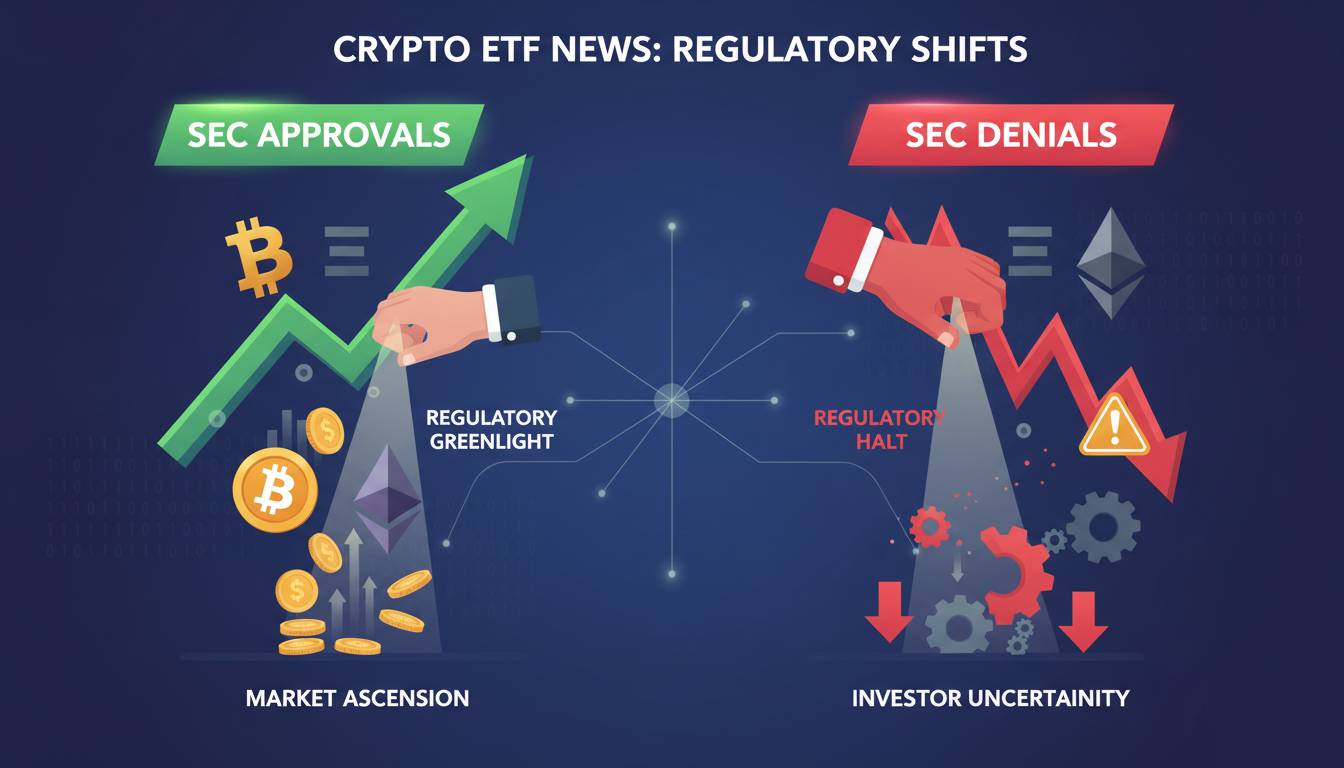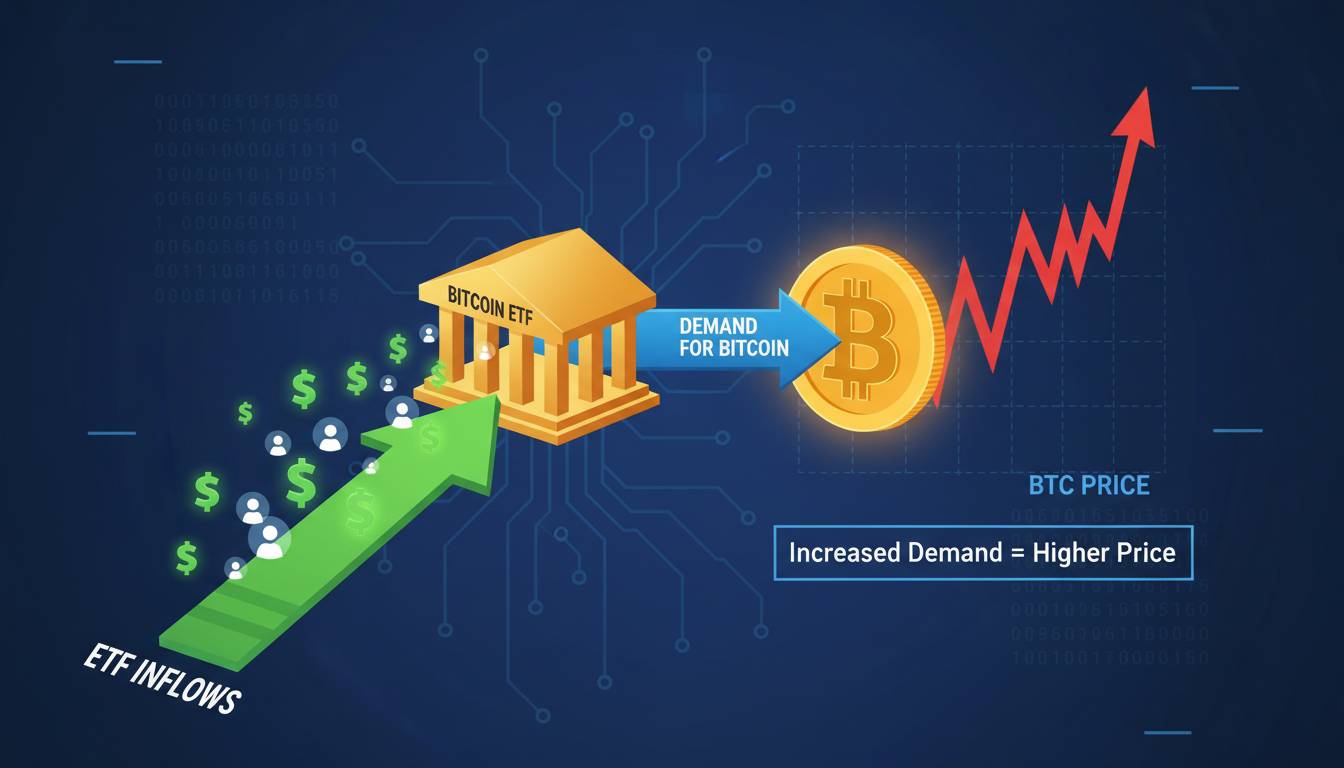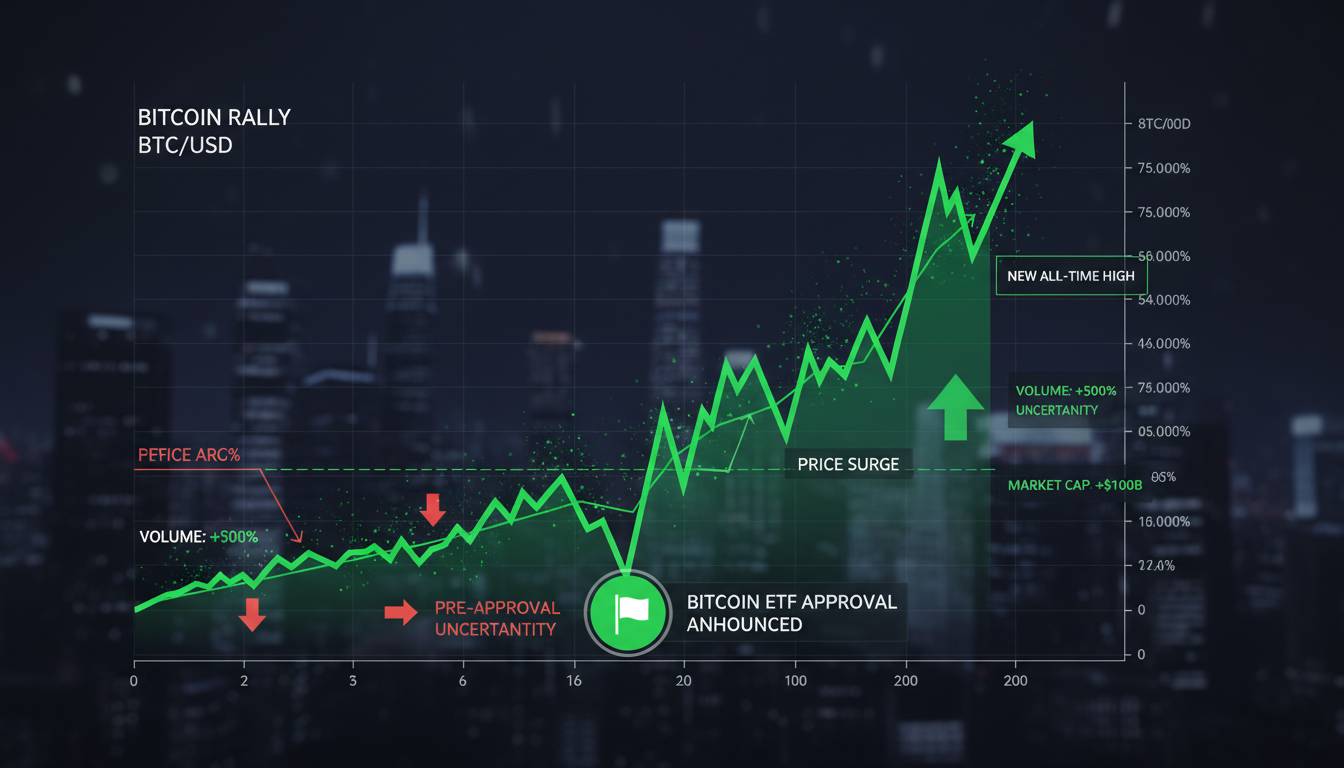
The conversation around crypto ETFs shifted dramatically in early 2024 when the SEC finally approved spot Bitcoin ETFs—ending a decade-long standoff between regulators and Wall Street. That approval, which came after multiple rejections and years of litigation, established a template that other cryptocurrency providers are now trying to replicate for Solana. But here’s what many analysts overlook: copying the Bitcoin ETF playbook for Solana isn’t simply a matter of following the same roadmap. The regulatory dynamics, market structure, and institutional appetite all diverge in ways that could make Solana’s path fundamentally different, even if approval eventually comes.
I’m going to walk through what actually makes a Solana ETF different from the Bitcoin products that launched earlier this year—not the surface-level comparisons, but the structural, legal, and market-specific factors that will determine whether this next generation of crypto ETFs succeeds or stumbles.
The Regulatory Backdrop: How We Got Here
The Bitcoin ETF approval in January 2024 didn’t happen because the SEC suddenly changed its philosophy. It happened because Grayscale Investments won a legal victory in August 2023, when the DC Circuit Court ruled that the SEC had acted “arbitrarily and capriciously” in rejecting Grayscale’s application to convert its Bitcoin Trust into an ETF. That court decision forced the SEC’s hand. The regulator could no longer justify denying spot Bitcoin ETFs on the grounds of market manipulation concerns when it had already approved futures-based Bitcoin products.
Solana doesn’t have that legal leverage. No court has ruled on a Solana ETF application in the same way. The regulatory path for Solana is less predetermined—it’s not simply waiting for the same legal pressure to materialize. Instead, applicants like VanEck, 21Shares, and Franklin Templeton need to convince the SEC that Solana’s market structure is robust enough to support an ETF, even without the explicit legal victory that Bitcoin ETFs enjoyed.
As of late 2024, the SEC hasn’t indicated any timeline for Solana ETF decisions. The agency has either delayed or failed to act on multiple applications, and Commissioner Hester Peirce has publicly noted that the regulatory framework for altcoin ETFs remains unclear. This matters because it means Solana ETF applicants face more regulatory uncertainty than their Bitcoin counterparts did—even though the Bitcoin precedent technically exists.
Underlying Asset Characteristics: Why the Crypto Matters
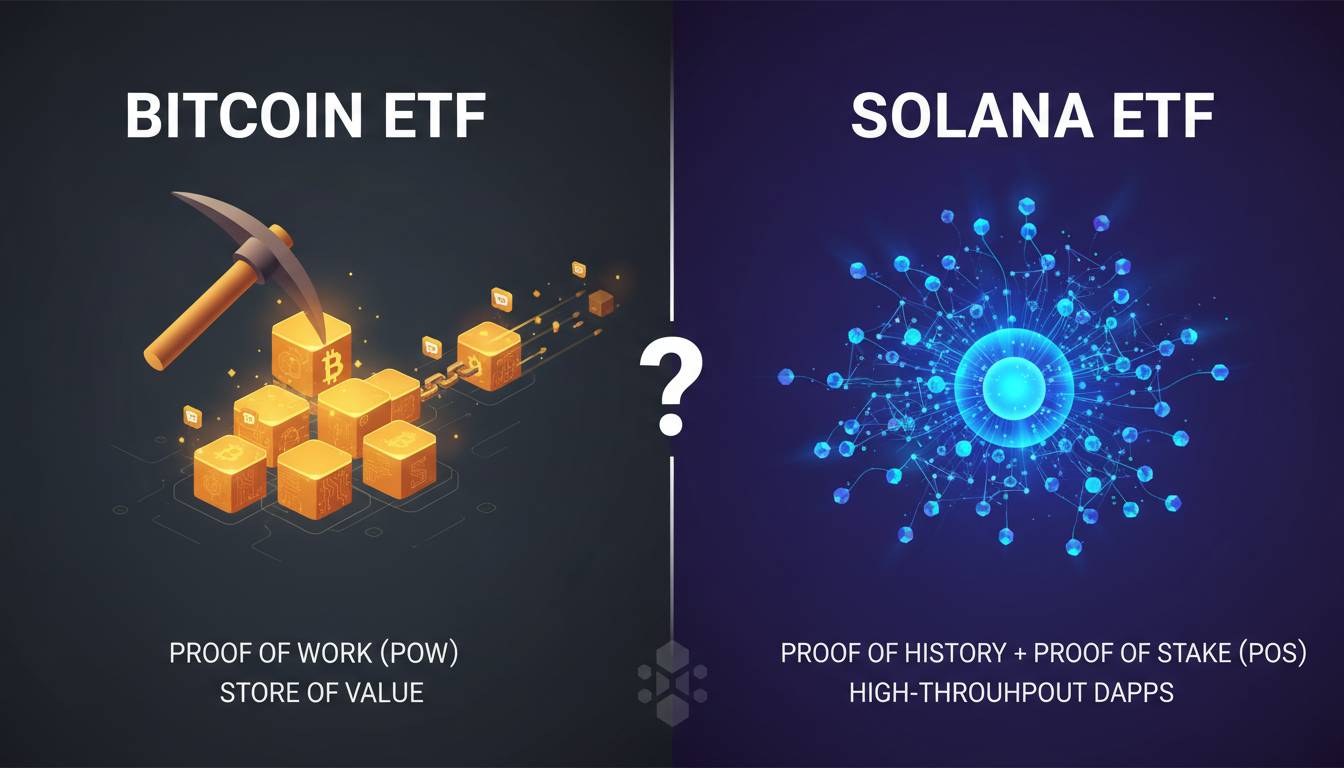
Bitcoin and Solana operate on fundamentally different technical architectures, and those differences create distinct risk profiles for ETF structures.
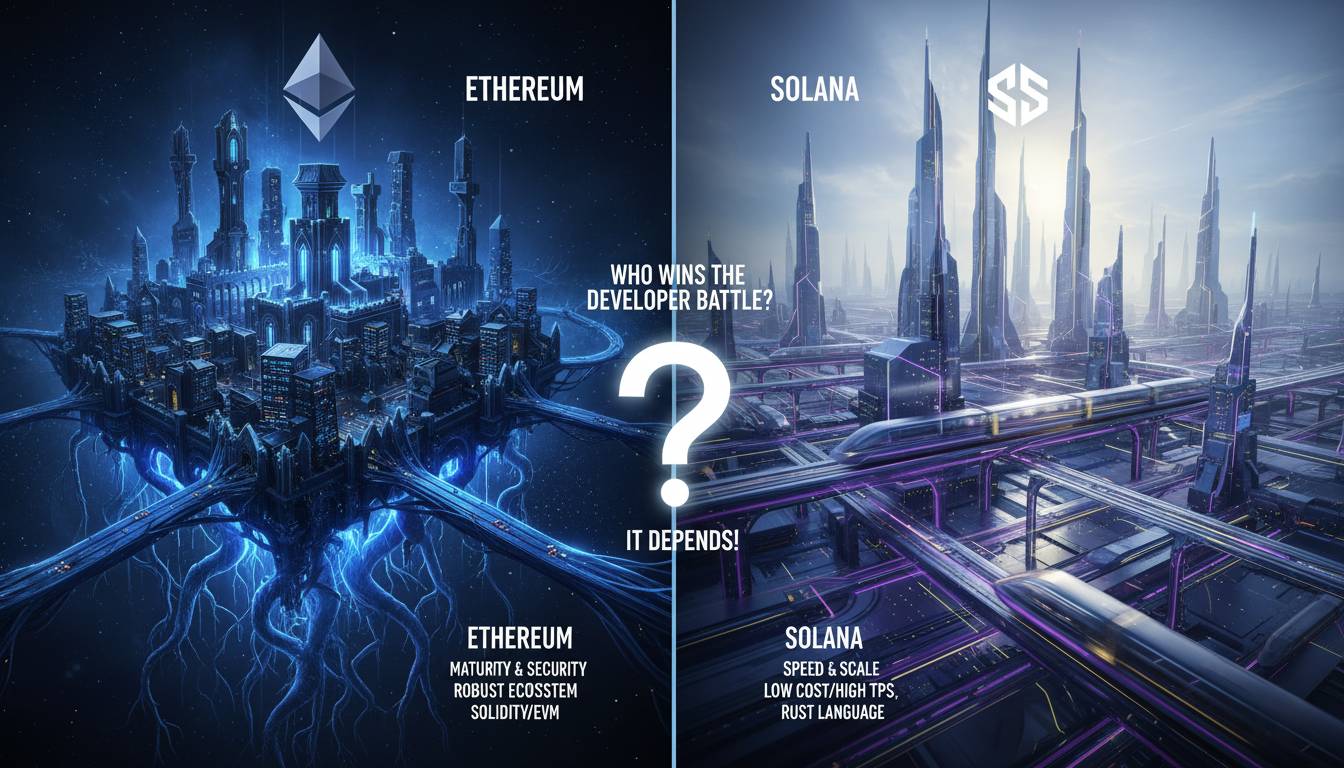
Bitcoin is the largest cryptocurrency by market capitalization, with the most liquid markets and the deepest institutional adoption. Its blockchain processes approximately 7 transactions per second—deliberately slow by design, prioritizing decentralization and security over throughput. This simplicity is actually a feature for ETF purposes: there’s less technical complexity for custodians to manage, fewer upgrade risks, and a more established ecosystem of service providers.
Solana, by contrast, processes up to 65,000 transactions per second under ideal conditions, making it one of the fastest layer-1 blockchains. That speed enables high-frequency use cases—decentralized exchanges, NFT marketplaces, payment applications—that Bitcoin’s network simply cannot support. But this sophistication comes with trade-offs. Solana has experienced multiple network outages in recent years, including a 19-hour blackout in September 2022 and several shorter incidents since. The network’s performance history is more turbulent than Bitcoin’s.
For ETF issuers, this creates a practical challenge. Custodians need to demonstrate that they can securely hold and safeguard the underlying asset. With Bitcoin, that’s a well-established process. With Solana, custodians face additional complexity around validator infrastructure, token staking (which is integral to Solana’s consensus mechanism), and the technical requirements for node operations. Not all custodians have built out these capabilities yet, which could limit the number of issuers who can actually launch a Solana ETF even if regulatory approval comes through.
Market Structure and Liquidity Differences
The Bitcoin ETF market that launched in January 2024 benefited from years of liquidity accumulation in Bitcoin futures, options, and the Grayscale Bitcoin Trust itself. When the ETFs went live, billions of dollars flowed in within days—not because crypto markets were new to institutions, but because the infrastructure was already mature.
Solana’s market is smaller and less developed. Its market capitalization hovers around $50-80 billion depending on price movements, compared to Bitcoin’s $800 billion-plus. Trading volumes are significantly lower, and the derivatives market is far less robust. There are fewer Solana futures products, minimal options activity, and no equivalent to the Grayscale trust that could serve as an institutional on-ramp.
This liquidity gap matters for ETF pricing and arbitrage. ETFs rely on authorized participants to create and redeem shares based on the underlying asset’s value. When markets are deep and liquid, this mechanism works smoothly. When markets are thinner—as Solana’s certainly are—there’s more risk of price divergence between the ETF share price and the underlying token. That’s not an insurmountable problem, but it’s a real structural difference that affects how issuers and market makers approach the product.
Some analysts—including those at JP Morgan—have suggested Solana could capture significant market share from Ethereum in the ETF space if approved, given its faster transaction times and lower fees. But that’s speculative. What we can say with confidence is that Solana’s market structure today is less prepared for a large-scale ETF launch than Bitcoin’s was in January.
Custody and Security Considerations
The custody landscape for crypto ETFs has evolved rapidly since the Bitcoin products launched, but the requirements for Solana-specific custody add new layers of complexity.
Bitcoin custodians have developed sophisticated multi-signature and cold storage solutions over more than a decade. Companies like Coinbase Custody, BitGo, and Fidelity Digital Assets have established clear operational frameworks for ETF-level custody. They’ve passed audit requirements, built insurance layers, and demonstrated the ability to handle the volume and velocity of ETF creation and redemption.
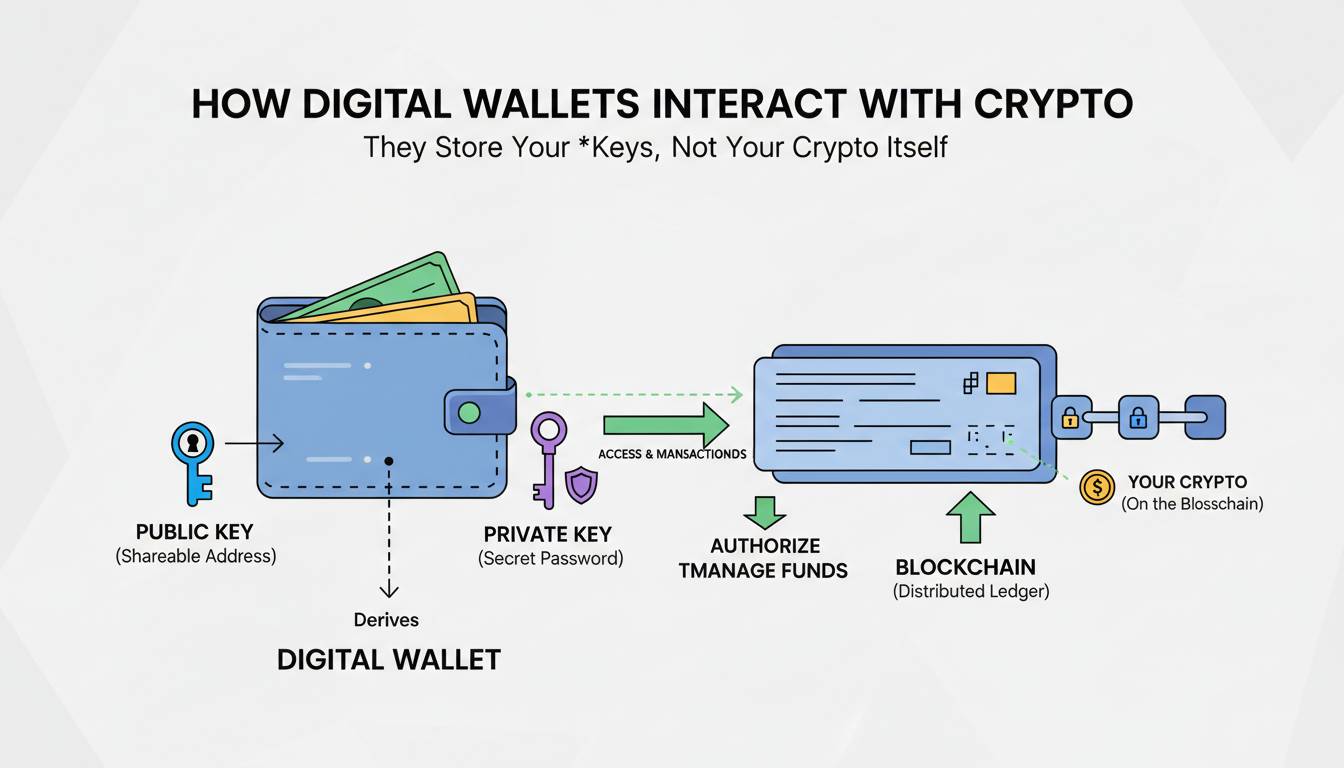
Solana custody is catching up but remains less standardized. The token’s technical requirements—particularly around staking, which Bitcoin doesn’t involve—create novel operational considerations. When a custodian holds Solana, they need to manage staking operations to maintain network validation rights and capture staking rewards. This wasn’t part of the Bitcoin ETF custody model. Some custodians have begun offering Solana staking as part of their services, but the industry hasn’t yet converged on standardized practices the way it has for Bitcoin.
Additionally, Solana’s token economics differ from Bitcoin’s fixed supply schedule. Solana has an inflationary model (though the inflation rate has decreased over time), which means ETF issuers need to account for ongoing token issuance when calculating net asset values. This is a relatively minor technical detail, but it adds friction to the fund administration process.
The Role of Classification: Commodity vs. Security
Whether a cryptocurrency is classified as a commodity or a security has massive implications for ETF viability—and this is an area where Solana and Bitcoin diverge in ways that aren’t always obvious.
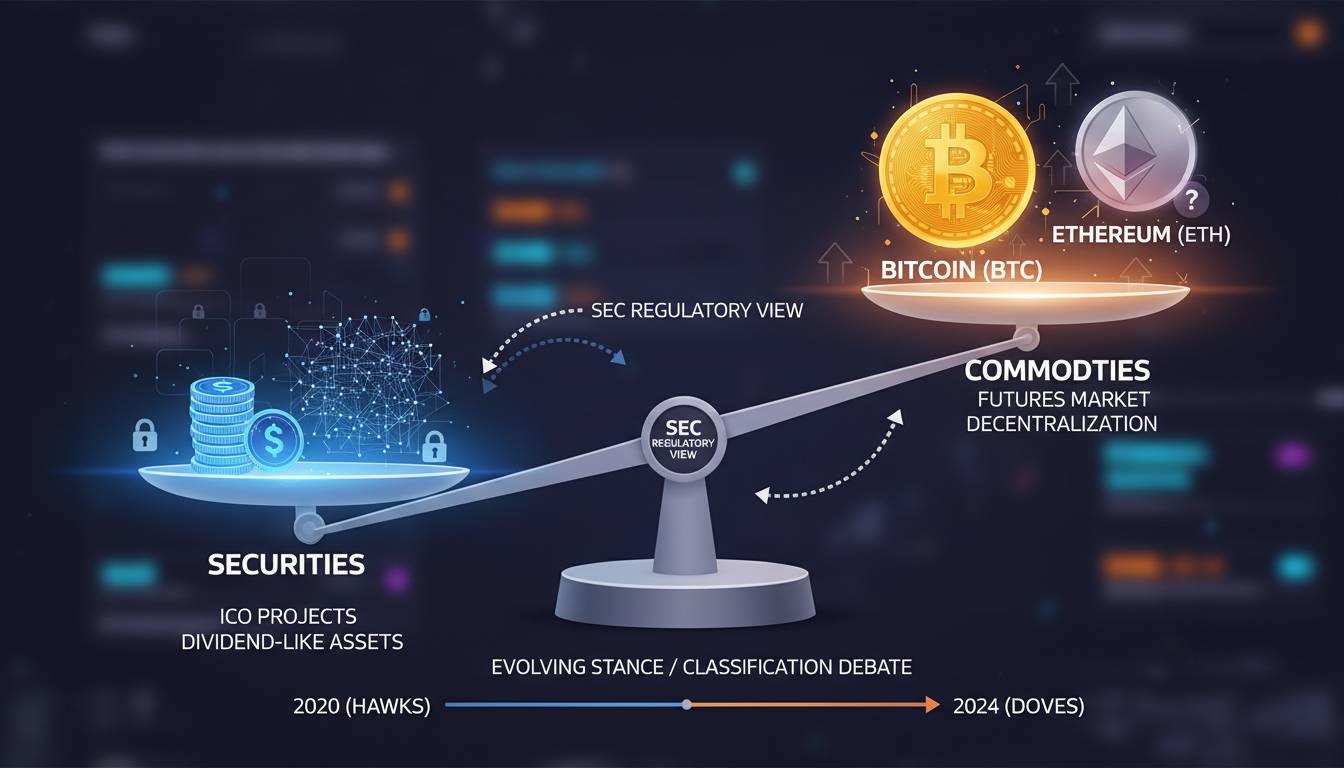
Bitcoin has largely been treated as a commodity by US regulators. The CFTC has authority over Bitcoin futures and derivatives, and the SEC’s own chair, Gary Gensler, has repeatedly stated that Bitcoin is not a security. This classification gave the SEC a clearer path to approve Bitcoin ETFs, even if the agency resisted for years.
Solana occupies a more ambiguous position. The SEC has historically taken the position that many altcoins—including Solana—qualify as securities because they were sold in initial offerings that constituted investment contracts. The agency’s 2023 enforcement actions against Binance and Coinbase explicitly named Solana as a security in their complaints. While these are allegations, not rulings, they signal that the SEC’s institutional position on Solana is fundamentally different from its position on Bitcoin.
This classification question isn’t resolved. Even if a Solana ETF were approved, the underlying legal uncertainty could create downstream complications—particularly if a future administration or court decision reclassified Solana’s status. Bitcoin’s commodity classification feels settled in a way that Solana’s simply does not.
Timing and Market Readiness
When Bitcoin ETFs finally launched in January 2024, the market was ready. Years of anticipation had built demand, and institutions had already allocated capital to crypto exposure through trusts and futures. The result was a massive first week of trading volume—over $10 billion in notional volume across all issuers.
A Solana ETF launch would face a different timing calculus. The crypto market has cooled significantly since early 2024, with institutional appetite more cautious and retail interest somewhat diminished. Solana’s price has been volatile, and the broader altcoin sector has struggled to attract the sustained capital flows that Bitcoin commands.
That said, there’s a counterargument worth considering: if Solana ETFs launch when the market is quieter, the initial trading dynamics might actually be healthier. The Bitcoin ETF launch in January was so frenzied that some market makers struggled to keep up with order flow. A more measured launch could allow the market structure to develop more sustainably.
No one knows when approvals might come. Multiple analysts have suggested late 2025 as a realistic window if the SEC begins approving altcoin ETFs in 2025, but that’s guesswork. The regulatory process has been unpredictable, and the SEC hasn’t committed to any timeline.
Investment Considerations: What Actually Changes for Investors
For actual investors, the practical differences between a Bitcoin ETF and a Solana ETF would come down to a few key factors.
Volatility is the most obvious. Solana is significantly more volatile than Bitcoin—its price swings more dramatically in both directions. A Solana ETF would therefore be a more aggressive allocation than a Bitcoin ETF, suitable for investors with higher risk tolerance and longer time horizons who believe Solana’s growth potential exceeds Bitcoin’s.
Correlation is another factor. Bitcoin and Solana prices tend to move together with the broader crypto market, but the correlation isn’t perfect. A Solana ETF would offer some diversification benefit within the crypto space, though investors should be realistic about how much diversification exists between two assets that often rise and fall together.
Expense ratios will also matter. Bitcoin ETFs launched with competitive fee structures—some as low as 0.19%—and issuers have been lowering fees to attract flows. Solana ETFs would likely launch with higher expense ratios given the smaller expected asset base and greater operational complexity. Whether issuers can drive fees down over time depends on scale acquisition.
I’m skeptical of the narrative that Solana ETFs will automatically attract the same institutional demand as Bitcoin ETFs. Institutions have spent years building Bitcoin allocation frameworks. Solana would require new due diligence processes, new custody solutions, and new risk models. That’s not impossible, but it’s not automatic either.
The Competitive Landscape: Solana, Ethereum, and What’s Next
While Solana gets attention as the next potential ETF candidate, Ethereum already has a head start. Ethereum futures ETFs launched in 2023, and spot Ethereum ETF applications are pending with the SEC—though the agency’s approach has been even more cautious than with Bitcoin. If Ethereum spot ETFs get approved first, they’d establish the template for altcoin ETFs in a way that makes Solana’s path easier. If Ethereum faces prolonged delays, that doesn’t bode well for Solana.
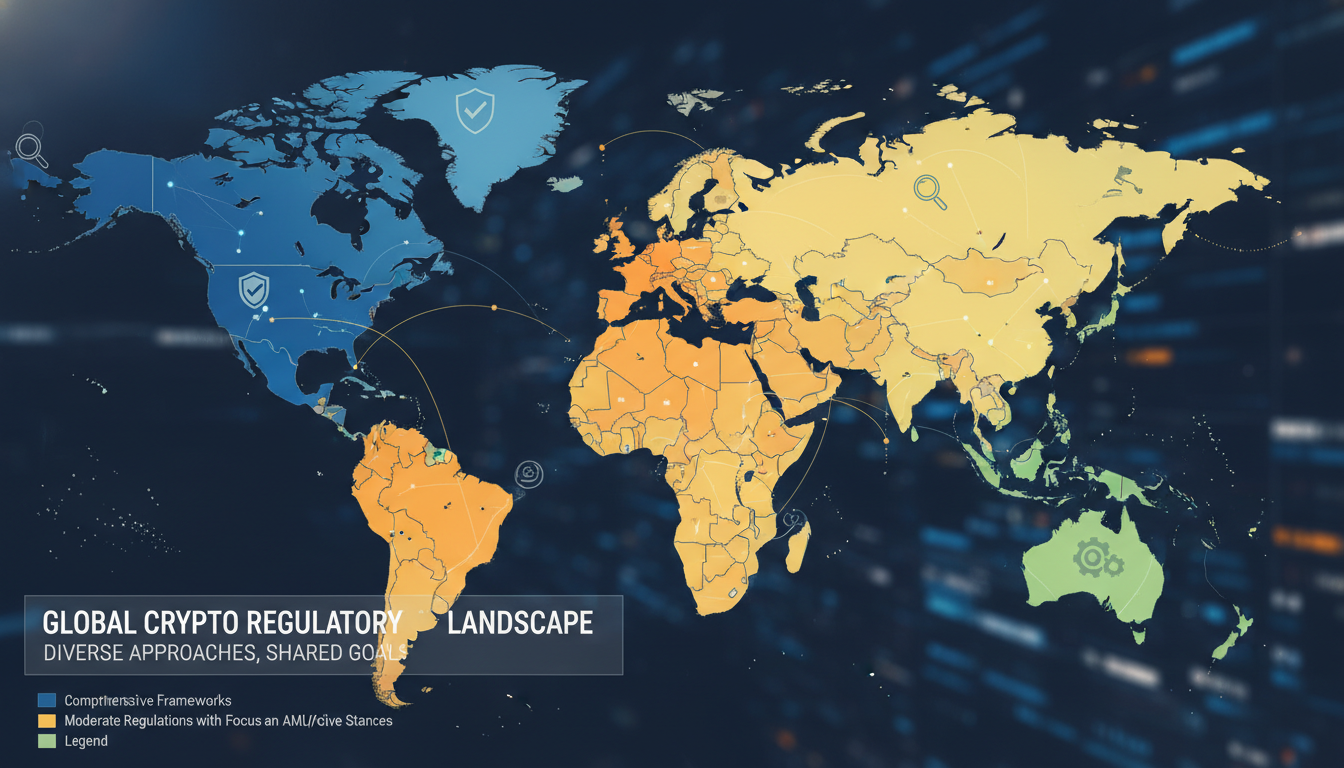
The broader question is whether crypto ETF approvals will remain a US-centric phenomenon or expand globally. Canada, Europe, and Australia have already approved various crypto ETP products, though none have the same规模和 market影响力 as a US-listed spot ETF. The US regulatory environment matters enormously because of the sheer size of American capital markets and the institutional infrastructure that operates within them.
What’s clear is that the crypto ETF conversation has moved beyond whether these products can exist to which cryptocurrencies will be included. Bitcoin proved the model works. The next few years will determine how broadly that model extends.
Looking Forward: What Remains Unresolved
The gap between Bitcoin ETF approval and Solana ETF approval isn’t just a matter of time—it’s a function of regulatory precedent, market maturity, asset characteristics, and institutional readiness that don’t have clean solutions. Even if Solana ETFs receive approval in the next year or two, the products will look structurally different from their Bitcoin predecessors in ways that matter for investors, issuers, and market makers alike.
What remains genuinely unresolved is whether the SEC will eventually take a more permissive stance on altcoin ETFs or whether Bitcoin will remain a unique case driven by specific legal and market circumstances. The agency’s composition could shift. The classification questions could evolve. The market could change in ways that make Solana more or less attractive to institutional allocators.
For now, the smartest approach is to watch the regulatory signals closely, understand the structural differences outlined here, and resist the temptation to assume that Solana will simply follow Bitcoin’s path. It won’t. The question isn’t whether crypto ETFs expand—it’s how and when, and what that expansion means for the assets that get included.