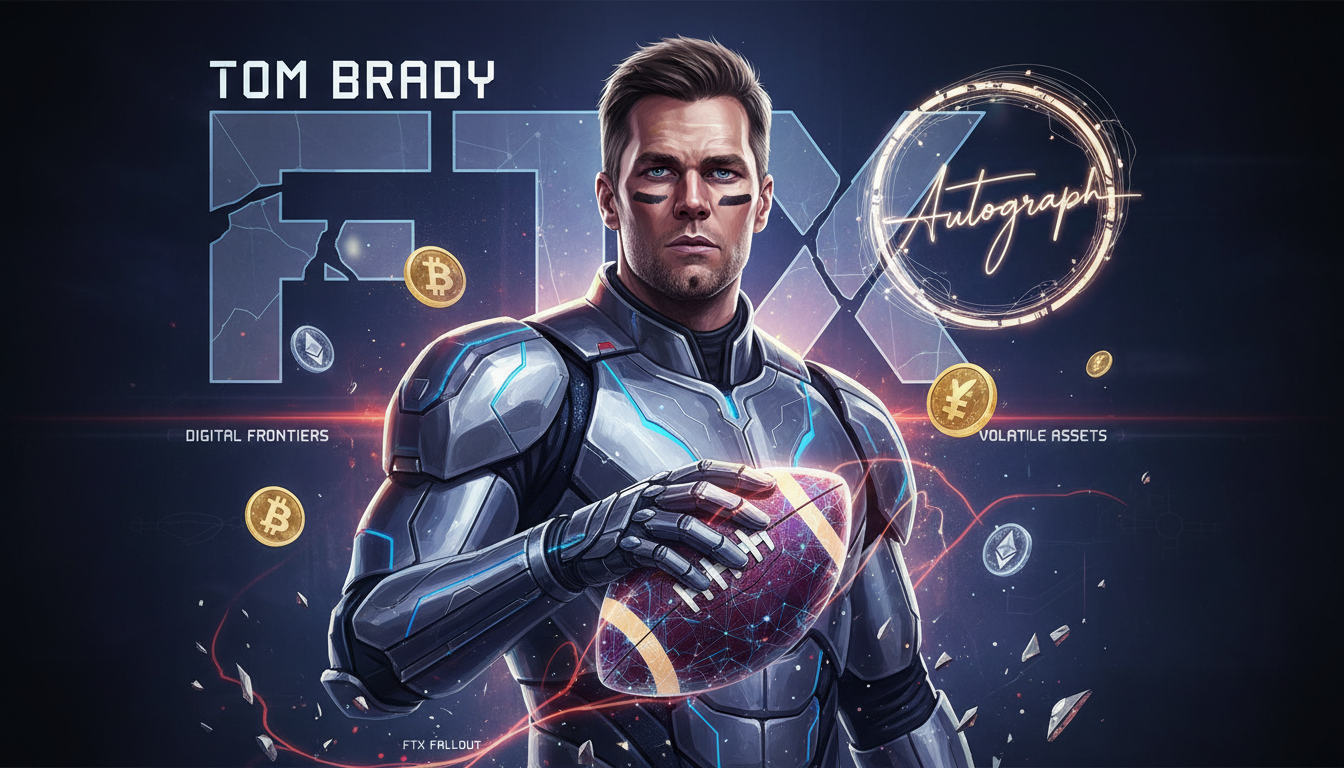
Tom Brady’s journey with cryptocurrency is marked by ups and downs—from prominent endorsements to legal entanglements and cautious reinvestment. Here’s what’s current:
In short, Brady suffered substantial losses after promoting the now-defunct crypto exchange FTX, whose collapse in late 2022 led to bankruptcy and criminal convictions. More recently, he’s made a strategic return by investing in Catena Labs, a Boston-based fintech startup blending AI and regulated stablecoins to create an “AI-native financial institution.” A judge has dismissed most of the legal claims against him related to FTX, though a few limited state-level violations remain possible.
The FTX Saga: Endorsement and Fallout
Tom Brady once stood front and center in FTX’s marketing, appearing in high-profile ads with his then-wife, Gisele Bündchen. He was reportedly paid around $30 million in equity, which became worthless after FTX collapsed in November 2022.
That collapse triggered a class-action lawsuit from disgruntled investors. However, in May 2025, most claims against Brady and other celebrity endorsers were dismissed. U.S. District Judge K. Michael Moore ruled that the plaintiffs failed to prove the stars knew about FTX’s fraudulent operations or intended to mislead the public.
Still, two claims under state securities laws in Florida and Oklahoma remain active, giving plaintiffs the opportunity to amend their case if they can strengthen their evidence.
A Cautious Return: Backing Catena Labs
After the FTX fiasco, Brady is stepping back into the crypto world, but this time in a more calculated way. He’s one of the investors in Catena Labs, a Boston-based fintech startup raising $18 million alongside top firms like a16z Crypto, Breyer Capital, Circle Ventures, and Coinbase Ventures.
Catena plans to develop an AI-native financial infrastructure using regulated stablecoins such as USDC. Its goal is to enable autonomous AI agents to make payments and transact securely and efficiently.
“The next‑generation financial ecosystem, which combines digital assets and AI, will be held,” Brady stated, underlining his belief in a more transparent, tech-driven financial future.
This marks a shift from passive endorsement toward active participation in building infrastructure, suggesting a more deliberate approach.
Why It Matters
-
Reputation & Caution
Brady’s endorsement of FTX raised questions about celebrity responsibility. His new venture in Catena could signal a more informed and considered path forward. -
Intersection of AI and Finance
Catena embodies a rapidly emerging trend. As AI agents handle more financial tasks, the backbone for these interactions needs to evolve—Brady’s involvement spotlights that shift. -
Legal Aftermath Still Lingers
While most liability from the FTX lawsuit has been dropped, ongoing state-level claims mean legal risks aren’t entirely cleared. This adds nuance to Brady’s crypto narrative.
What to Watch Next
- How Catena Labs develops—will Brady remain a visible participant or stay behind the scenes?
- Progress (or resolution) of remaining state-level legal claims related to FTX.
- Whether other athletes follow Brady’s path from endorsement to strategy and infrastructure-building in crypto finance.
Conclusion
Tom Brady’s crypto story has come full circle. He started as a high-paid ambassador for FTX, only to experience the fallout of its collapse. Now he’s reinvesting in the crypto ecosystem—but this time on his own terms, targeting innovation at the intersection of AI and finance. That’s a smarter, more strategic stance that signals growth, both personally and for the sector.
FAQs
1. How much did Tom Brady lose in the FTX collapse?
He received around $30 million worth of FTX equity—most of which became worthless after the platform went bankrupt in 2022.
2. Is Tom Brady still facing legal trouble over FTX?
Most of the federal claims were dismissed in May 2025 due to lack of evidence that he knew of FTX’s fraud. Some state-level claims in Florida and Oklahoma remain unresolved.
3. What is Catena Labs and how is Brady involved?
Catena is a fintech venture building AI-native financial infrastructure using regulated stablecoins. Brady is part of an $18 million funding round backed by venture firms like a16z Crypto.
4. Why does Brady’s investment in Catena matter?
It shows a strategic departure from mere brand promotion to infrastructure-building in crypto. Catena represents an evolving trend in AI-enabled financial services.
5. Did Brady express regret over FTX?
While he hasn’t openly said he regretted the deal, his move into Catena and clean legal outcome suggest a more cautious, forward-looking strategy after the setback.