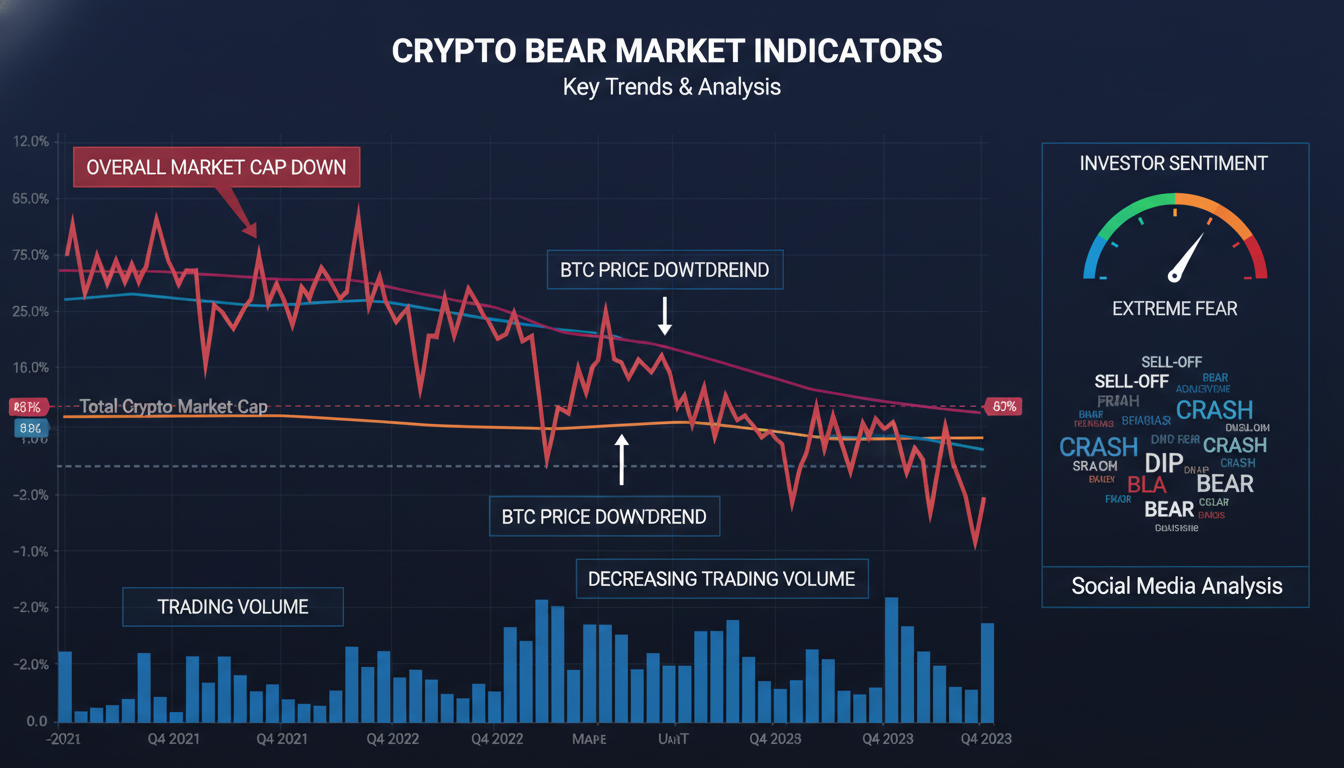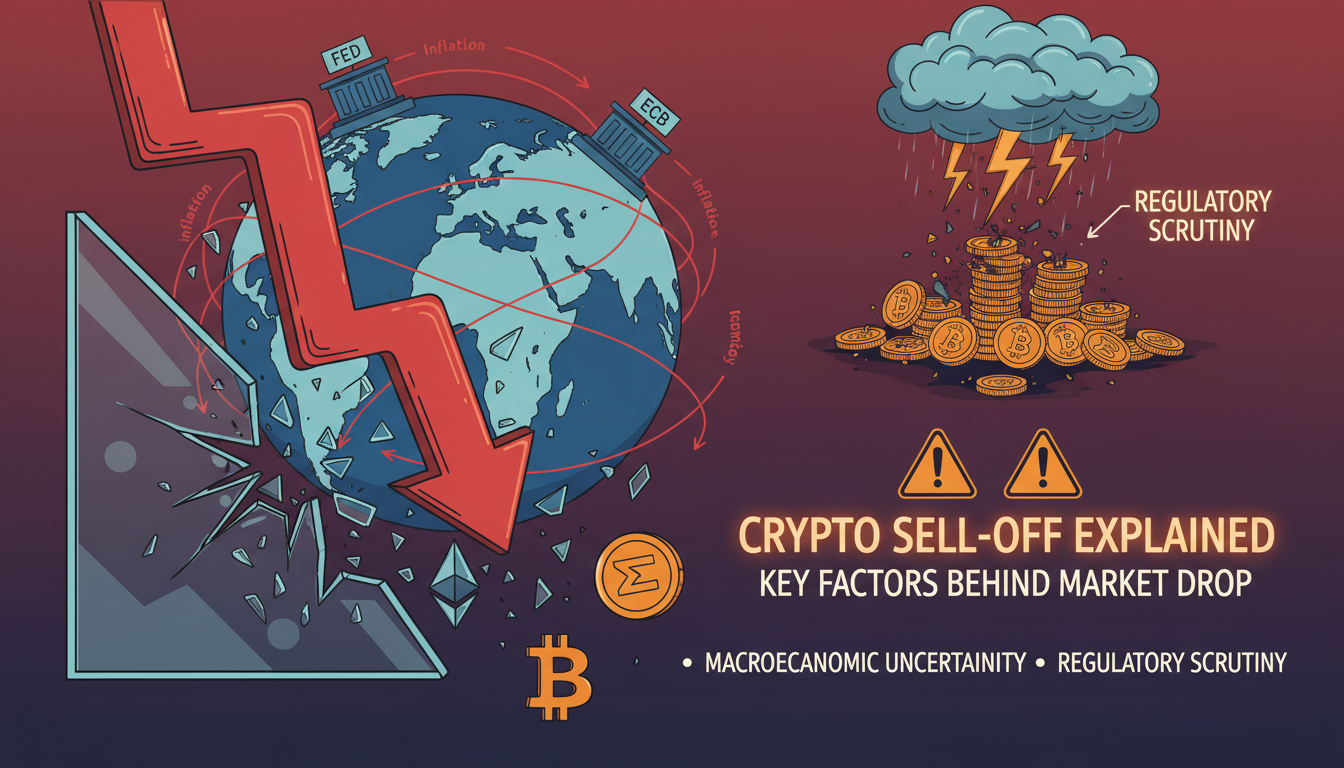

The crypto market is crashing due to a mix of macroeconomic pressures, sweeping liquidations, regulatory uncertainty, and shifting investor sentiment. Rising interest rates, a hawkish Federal Reserve stance, and geopolitical tensions have pulled liquidity away from speculative assets like cryptocurrencies, triggering mass sell-offs, ETF outflows, and forced liquidations that spiral into steep price drops.
Understanding the Crash: Key Drivers at Play
1. Macro Headwinds and Fed Policy Uncertainty
Persistent fears around U.S. monetary policy are weighing heavily on crypto. The nomination of Kevin Warsh as the new Federal Reserve Chair—known for a hawkish track record—has spooked markets. His potential reluctance to cut rates, paired with structured tightening, makes risk assets like crypto less appealing. This has elevated the U.S. dollar and pushed down speculative demand.
2. Geopolitical Tensions and Trade Risks
Markets are also jittery due to rising geopolitical risks—especially between the U.S. and Iran—and tariff threats targeting multiple global players. Investors are pulling back from riskier assets amidst uncertainty, further pressuring cryptocurrencies.
3. Leverage Liquidations: The Domino Effect
Crypto traded with extreme leverage in late 2025. The inevitable correction triggered massive liquidations:
– Over $2 billion in forced liquidations occurred during early February crashes
– One-day liquidations in excess of $2.65 billion swept across more than half a million traders
These events sped up price declines dramatically as margin calls compelled more selling.
4. Institutional Pullback via ETF Outflows
U.S. spot Bitcoin and Ether ETFs have seen significant outflows—hundreds of millions daily. BlackRock, Fidelity, and others have withdrawn vast sums, reducing institutional demand and removing stability from the market.
5. Sentiment Collapse: Fear Spreads Fast
Crypto isn’t immune to panic. The Fear & Greed Index has plummeted into “extreme fear” territory, signaling widespread capitulation. Technical breakdowns, including drops below key support levels like the $80,000 cluster for Bitcoin, have triggered automated selling and worsened market psychology.
Real-World Impact: Voices from the Market
“Bitcoin breaching the 2021 all-time high of $69,000 is significant, but it doesn’t rule out further short‑term downside.”
— Matt Howells Barby, VP at Kraken
Retail investors remain split: longtime believers continue average-cost strategies, while newer entrants feel the sting of unrealized losses. MarketWatch profiles investors like Corey Geho, who holds firm despite major drawdowns, and Tayleb Brooks, who entered near the high and now questions their position amid growing abstraction in crypto’s financial layers.
Charting a Path Forward: What to Watch Next
Potential Catalysts for Stability or Recovery
- Rate Cut Speculation: Any signal of easing by the Fed could draw risk appetite back to crypto
- Oversold Technical Levels: BTC and ETH RSI indicators suggest possible short-term rebounds ahead
- Institutional Resilience: Continued structural ETF infrastructure bolsters long-term credibility
Risks That Could Prolong the Downturn
- Sticky Inflation and Fed Inflexibility: If interest rates hold or rise, risk assets may stay depressed
- Regulatory Headwinds: Ongoing ambiguity around stablecoin laws and global frameworks could deter investors
- Persistent Liquidity Gaps: Fragmented markets and shallow order books continue to amplify volatility
Concluding Takeaways
The crypto downturn of early 2026 is the result of a volatile convergence: macro tightening, geopolitical headwinds, margin liquidations, institutional redemptions, and sentiment collapse. Though painful, current conditions may set the stage for a reset—especially if monetary policy shifts or market sentiment improves. Investors should brace for continued volatility, and consider defensive strategies, balanced positioning, and clear risk thresholds.
FAQs
Why did Bitcoin and Ethereum fall so hard, so fast?
Because multiple stress points came together—Fed uncertainty, geopolitical risks, leveraged positions blowing up, huge ETF outflows, and market-wide fear—sparking cascading sell-offs.
Are we near the bottom yet?
Some technical indicators show oversold levels, particularly in the RSI. That said, short-term relief might happen before any real recovery takes hold.
Can regulation help stabilize crypto?
Yes, clear federal frameworks like the proposed Clarity Act could encourage institutional inflows. But delays in passing such laws leave uncertainty lingering.
Should investors watch macro trends more closely now?
Absolutely. Crypto is increasingly tied to broader markets. Liquidity conditions, interest rate policy, and global risk sentiment are key signals moving forward.
How critical are ETF flows right now?
Very critical. As large institutional players reduce exposure via ETF outflows, overall liquidity and support in crypto markets weaken, magnifying price swings.
What should new investors keep in mind?
Set clear risk limits, consider low-cost averaging rather than full exposure, and stay aware of macro and technical market cues.