The financial world has been asking this question for nearly a decade, and the honest answer keeps shifting. Ripple’s technology demonstrably outperforms SWIFT on speed and cost — that’s not debated. What remains genuinely contested is whether technical superiority translates into real-world displacement, or whether the incumbent’s moat runs deeper than any blockchain can breach. The answer matters less for the technology than for what it reveals about how traditional finance protects its turf.
This isn’t a simple binary. To understand whether Ripple poses an existential threat to SWIFT, you need to understand what each actually does, where the real advantages lie, and why adoption numbers alone don’t tell the whole story.
What SWIFT Actually Does
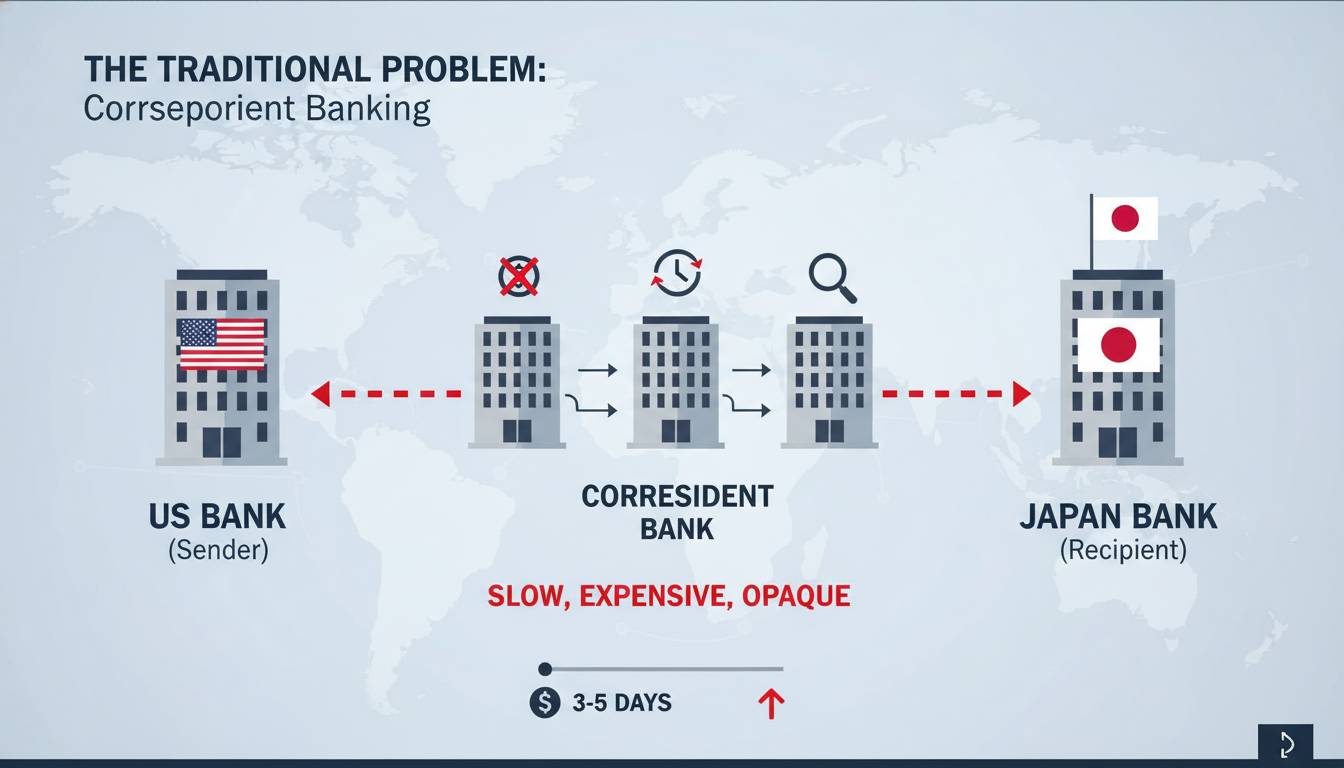
SWIFT stands for the Society for Worldwide Interbank Financial Telecommunication, and it was founded in 1973 by a consortium of banks that needed a standardized way to communicate payment instructions across borders. Here’s the critical point that many articles get wrong: SWIFT is not a payment system. It’s a messaging network. It tells Bank A in New York to send money to Bank B in London — but the actual movement of funds happens through correspondent banking relationships that predate SWIFT by centuries.
Every day, SWIFT processes roughly 42 million messages across its network. That figure comes from their own 2024 transparency reporting, and it represents an almost incomprehensible volume of global financial communication. The institution connects over 11,000 financial institutions in more than 200 countries and territories. When someone says SWIFT is “the backbone of global banking,” they’re not exaggerating — they’re describing a monopoly so entrenched that most people don’t even realize it exists.
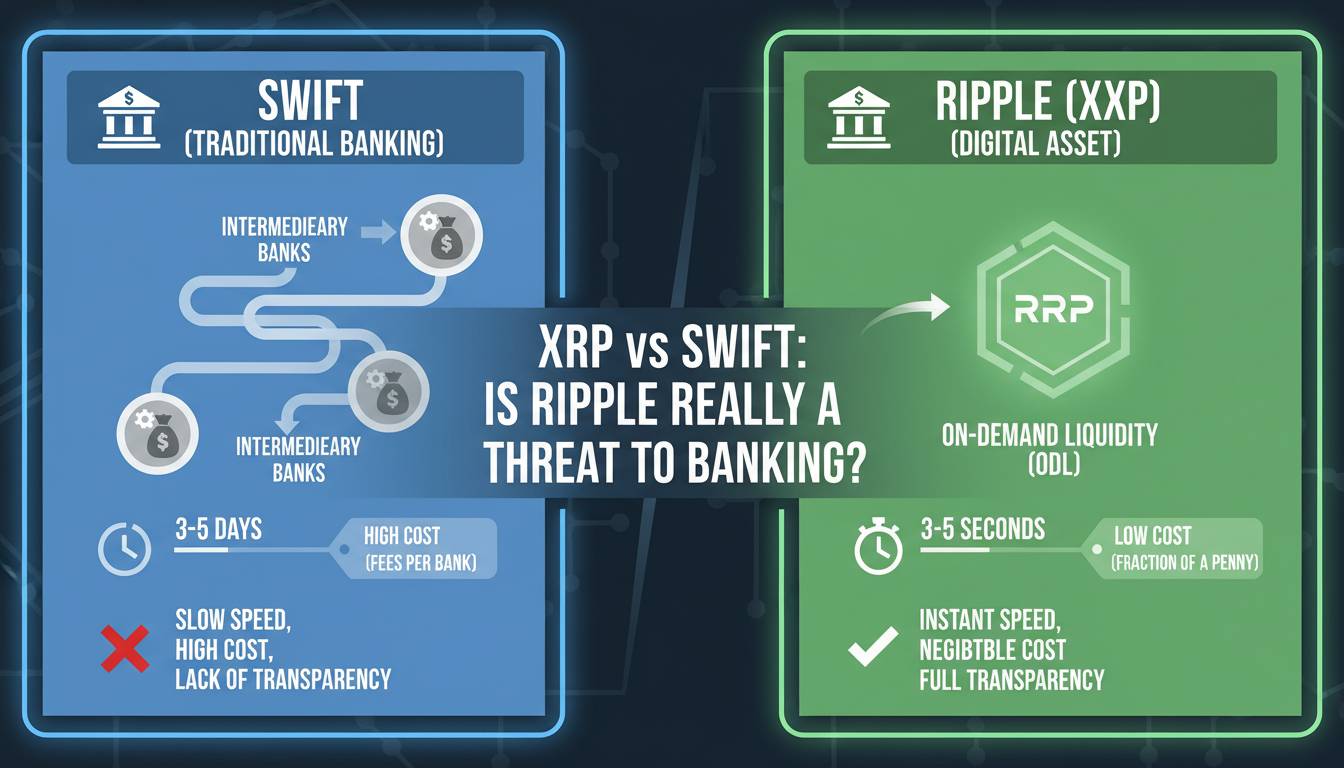
The transaction process works like this: a bank sends a SWIFT message (typically using the MT103 format for single customer credit transfers) to a correspondent bank, which then routes the actual funds. This creates a chain of intermediaries, each taking a cut and adding time. For a cross-border payment from the U.S. to Europe, you’re looking at typically one to five business days for the funds to clear, though “same-day” has become more common on popular corridors. The fees vary wildly — banks might charge anywhere from $10 to $50 per outgoing international wire, and that’s before correspondent banks take their own slice.
The limitations are real and well-documented. The legacy MT103 messaging standard, while reliable, was never designed for the instant settlement era. Settlement happens separately through correspondent accounts, which creates settlement risk — the period between when the message is sent and when funds actually move is where things go wrong. Nostro and vostro accounts (balances that banks hold in foreign currencies at correspondent banks) tie up enormous amounts of capital. For years, SWIFT has been incrementally upgrading to ISO 20022 standards and launching new initiatives like SWIFT gpi (Global Payments Innovation), which aims to improve speed and transparency. But these are evolutionary upgrades to a system built on aging architecture.
What Ripple Actually Is
Ripple Labs, founded in 2004 as OpenCoin and rebranded in 2013, developed two distinct things that often get conflated: the XRP Ledger and the RippleNet network. Understanding the difference matters for this comparison.
The XRP Ledger is a decentralized blockchain — open-source, distributed, and maintained by a global community of validators. XRP is the native cryptocurrency, designed to bridge different currencies and enable fast, low-cost transactions. The ledger can settle transactions in three to five seconds, and the cost per transaction is a fraction of a cent (typically $0.0001 or less, compared to fractions of a dollar). This isn’t theoretical; you can look at real-time XRP Ledger transaction fees on any blockchain explorer. The network handles millions of transactions daily with relatively minimal congestion, though it experienced significant stress during the December 2020 and January 2021 market peaks.
RippleNet is the company’s enterprise product — a network of financial institutions using Ripple’s technology for cross-border payments. This is where things get interesting for the SWIFT comparison, because RippleNet operates in two modes: one using the XRP cryptocurrency as a bridge currency, and another (called RippleNet Direct) that doesn’t require XRP at all. Many of Ripple’s banking partners initially signed on for the messaging and compliance advantages without actually using XRP. This is a point that gets lost in the “XRP vs SWIFT” framing — the competition isn’t always apples-to-apples.
The company has pursued partnerships aggressively. As of late 2024, Ripple claims partnerships with over 100 financial institutions globally, including notable names like Santander, UBS, Bank of America (through pilot programs), and dozens of regional banks. But “partnership” is a deliberately vague term in this context. It can mean anything from a full production deployment to a pilot program to a memorandum of understanding that never progressed. Distinguishing between these categories is essential for understanding Ripple’s actual market penetration.
XRP vs SWIFT: The Direct Comparison
The most honest way to compare these two systems is to look at the metrics that actually matter for cross-border payments: speed, cost, accessibility, security, and network effects.
Speed is where XRP clearly wins. Settlement in three to five seconds versus one to five business days is not a close comparison. SWIFT’s gpi initiative has reduced some corridors to near-real-time — certain payments now clear within minutes — but this requires both banks to be on the gpi platform and doesn’t eliminate the correspondent banking chain entirely. XRP settles directly on the ledger, removing the intermediate steps.
Cost is similarly lopsided. XRP transactions cost fractions of a cent. SWIFT transfers involve multiple layers of fees — the sending bank’s charge, correspondent bank fees, receiving bank fees, and currency conversion margins. A $10,000 international wire might carry $25 to $75 in explicit fees, plus hidden costs in the exchange rate spread. Ripple’s cost advantage is dramatic for high-volume transfers, though the real-world savings depend heavily on whether institutions actually pass those savings to customers.
Centralization is where the comparison gets philosophically complicated. SWIFT is a centralized consortium owned by its member banks — it’s a utility controlled by the institutions it serves. The XRP Ledger is decentralized in principle, but XRP itself is partially held by Ripple Labs (approximately 48 billion XRP at various points, though the company has placed significant portions in escrow). Critics argue this creates centralized control over a supposedly decentralized network. The December 2023 SEC ruling clarified that XRP itself is not a security when sold to retail investors on exchanges, but the question of institutional control remains. For banks deciding whether to trust a cryptocurrency network versus a bank-owned consortium, the centralized nature of SWIFT might actually be a feature, not a bug — it means accountability and established governance.
Adoption is where SWIFT remains utterly dominant. While Ripple boasts “100+ partners,” SWIFT connects over 11,000 institutions. More importantly, most Ripple partnerships have not scaled to meaningful transaction volumes. MoneyGram, once Ripple’s most visible partner, discontinued its use of XRP for cross-border payments in 2021 after the SEC lawsuit made the regulatory landscape untenable. The volume of actual XRP-based transactions remains a fraction of what SWIFT processes daily.
Security and reliability both have track records to consider. SWIFT has maintained 99.99% availability and has handled billions of transactions without catastrophic failure. The XRP Ledger has also operated reliably, though it’s faced periodic congestion and has the inherent vulnerabilities of any blockchain — smart contract risks, validator collusion concerns, and the ever-present possibility of a 51% attack (though this is considered unlikely given the validator network).
The Real Adoption Picture
Here’s where the hype meets reality. Ripple’s list of banking partners looks impressive on paper, but the actual transaction volume tells a different story. Most of the prominent “Ripple partners” have conducted pilots or limited rollouts rather than full production migrations. Santander, for example, launched a One Pay FX service using Ripple technology in 2018, but it remains a relatively small part of the bank’s overall cross-border operations. The majority of international payments still flow through traditional channels.
SWIFT, meanwhile, hasn’t been standing still. The gpi initiative, launched in 2017 and continuously enhanced since, addresses many of the criticisms leveled at the network. As of 2024, over 3,500 institutions across 90+ countries have enrolled in SWIFT gpi, and the platform processes hundreds of billions of dollars daily. The May 2023 launch of SWIFT’s new ISO 20022 migration strategy represents a significant modernization effort. They’re not ignoring the competitive threat — they’re evolutionizing to meet it.
What Ripple hasn’t cracked is the liquidity problem. Cross-border payments require liquidity on both ends — you need someone willing to hold the destination currency. XRP solves this theoretically by providing a universal bridge, but the bridge only works if there’s sufficient liquidity on both sides of every transaction pair. Building that liquidity takes time and volume, and the chicken-and-egg problem is real: banks won’t adopt XRP until there’s sufficient liquidity, but liquidity won’t materialize until banks adopt XRP.
Is Ripple Actually a Threat?
Here’s where I need to be honest about what I actually think versus what’s conventional wisdom.
The case that Ripple poses a genuine threat rests on a simple logic: blockchain technology is objectively superior for cross-border settlement on speed and cost. Over time, superior technology tends to win. The banking industry has shown willingness to adopt new technology when the economics make sense, and Ripple’s unit economics are compelling. If even a few major corridors demonstrate that XRP-based settlement works at scale, network effects could accelerate adoption rapidly.
But the counterargument is more nuanced than most articles acknowledge. SWIFT isn’t just a technology — it’s a political and regulatory infrastructure. Banks choose SWIFT because it provides regulatory compliance, legal recourse, and established relationships. Switching to a cryptocurrency-based system means navigating unfamiliar regulatory terrain, accepting different risk profiles, and rebuilding correspondent banking relationships from scratch. The “superior technology” argument assumes that banks make purely economic decisions, but they don’t — they make institutional decisions that prioritize stability, compliance, and relationships.
The SEC lawsuit, even after the July 2023 ruling that XRP is not a security when sold on exchanges, created lasting damage to Ripple’s institutional credibility. The uncertainty alone was enough to make risk-averse banks pause. While the ruling was favorable, the years of litigation created an adoption gap that Ripple is still trying to close.
I think the most honest assessment is that Ripple represents a credible competitive threat to specific corridors and use cases rather than an existential threat to SWIFT’s core franchise. Remittance corridors — especially the U.S.-Mexico and U.S.-Canada routes where speed matters and traditional banking is expensive — are where XRP has the best shot. If you want to send money from Texas to Guadalajara, XRP-based services like BitRemit or the various Ripple-powered products have real advantages. For corporate treasury operations moving large volumes between major currencies at established banks, SWIFT’s gpi improvements may be sufficient.
The wildcard is CBDCs (central bank digital currencies). Several central banks are exploring blockchain-based payment systems, and if wholesale CBDC adoption accelerates, the underlying technology could look more like the XRP Ledger than traditional SWIFT messaging. Ripple has positioned itself to work with CBDC implementations. Whether this becomes a threat to SWIFT depends on how quickly central banks move and whether they prefer consortium approaches over public blockchains.
The honest admission I have to make is that I don’t know how this plays out. The technology case for Ripple is strong. The institutional and regulatory case for SWIFT is stronger in the near term. Five years from now, we might see meaningful XRP adoption in specific corridors, or we might see SWIFT’s modernization efforts render the competitive threat moot. What I can say with confidence is that the question isn’t settled, and the answer depends heavily on regulatory developments, central bank decisions, and whether Ripple can move beyond pilots to actual production volume.
Frequently Asked Questions
Will XRP replace SWIFT?
Not in the foreseeable future. SWIFT’s network effects, regulatory integration, and institutional trust create a moat that won’t be crossed by a cryptocurrency alone. More likely is coexistence — XRP gaining share in specific corridors while SWIFT remains the default for most international payments.
Do any major banks use XRP for cross-border payments?
Several banks have piloted or partially deployed Ripple’s technology, but most have not publicly committed to XRP as their primary settlement mechanism. The 2020-2023 SEC uncertainty significantly slowed adoption. Current usage is a fraction of SWIFT’s volume.
What is the main advantage of XRP over SWIFT?
Speed and cost. XRP settles in seconds at near-zero cost, while SWIFT transactions typically take days and involve multiple fee layers. Whether these advantages matter enough to trigger institutional migration is the open question.
Is Ripple regulated?
Ripple Labs is subject to U.S. securities law following the SEC case, and it operates in a regulatory gray area globally. SWIFT, by contrast, operates under bank regulatory frameworks and has explicit government support. This regulatory difference is a significant factor in institutional adoption decisions.
The Bottom Line
Ripple has built genuinely impressive technology. The XRP Ledger does what it claims to do — settle transactions faster and cheaper than any traditional system. But technology doesn’t automatically win markets, especially when those markets are dominated by institutions that prioritize stability over efficiency and have invested decades in existing infrastructure.
The threat to SWIFT is real, but it’s a threat of erosion rather than displacement. If you’re looking for a simple answer — “yes, Ripple is killing SWIFT” or “no, Ripple is irrelevant” — the honest response is that neither narrative is accurate. What’s happening is more interesting: a slow-moving competition where blockchain technology is forcing traditional finance to evolve, regardless of whether XRP specifically wins the settlement layer.
The next five years will tell us more. Watch the remittance corridors, watch CBDC development, and watch whether Ripple can move past pilots into genuine production volume. The answer won’t be a dramatic takeover — it’ll be a gradual shift in where certain types of transactions settle. And if you’re in the financial industry, that’s the story that matters, not the ideological debate about whether cryptocurrency will “destroy” banking.